Laboratory Automation
Vision Solutions for medical diagnostics and scientific applications
Basler offers a broad range of high-performance cameras and embedded vision solutions designed for laboratory automation in life sciences and medical imaging. Whether you're building systems for sample handling, diagnostics, or AI-assisted analysis, our components deliver the speed, resolution, and reliability needed for reproducible results and high-throughput workflows.

High image quality and speed
Capture sharp, detailed images quickly — whether fully automated or fine-tuned per application.Customizable hardware and software
Our project teams work with you to design tailored solutions that meet your lab’s specific needs.Long-term product availability
Future-proof your system design with products that stay available and supported over time.Industry-leading reliability
Basler cameras have one of the lowest failure rates in the industry — built for continuous, 24/7 operation.
Vision applications in lab automation
From diagnostics to drug discovery, vision systems play a critical role in automating laboratory workflows. Basler’s cameras and software help enable accurate, high-throughput imaging for a wide range of medical and scientific tasks.

Process automation & Quality control
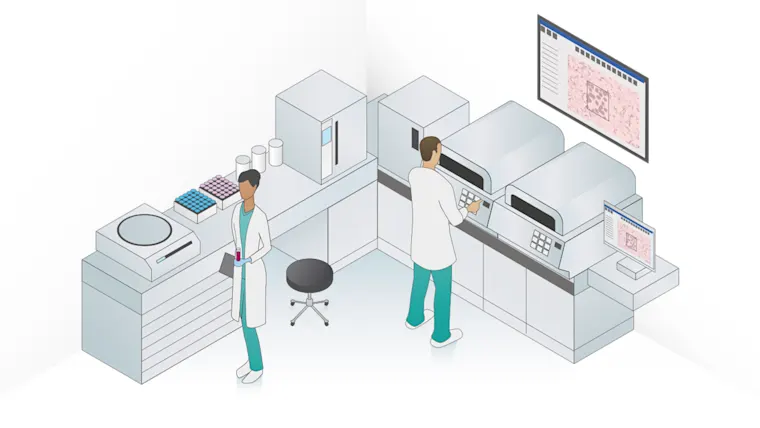
Vision-guided automation replaces manual steps with faster, more reliable processes — improving sample traceability, documentation, and efficiency. Common tasks include:
Sample identification and sorting
Contactless liquid level detection
Barcode and label recognition
Sample management and audit trails

Bio-imaging
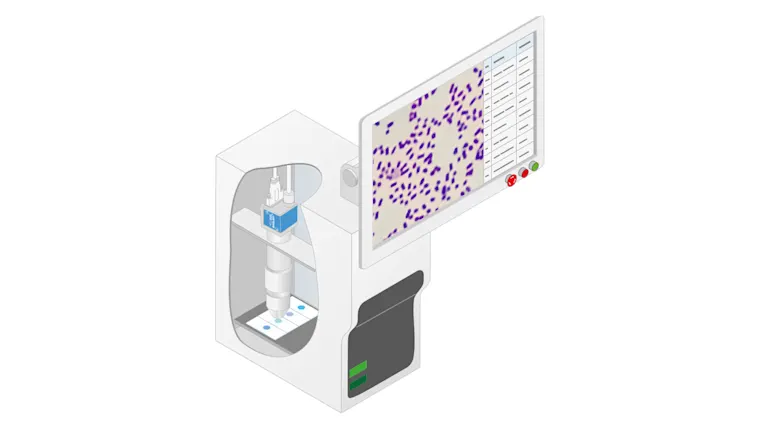
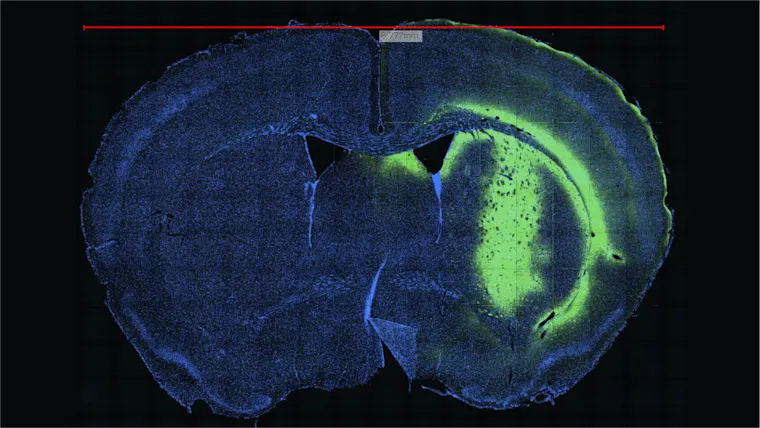
High-resolution imaging supports both research and diagnostic applications. Computer vision enables digital slide scanning and cell imaging at scale. Use cases include:
Cancer research and tissue diagnostics
Histopathology and morphology
Fast processing of large sample volumes

Automated microscopy
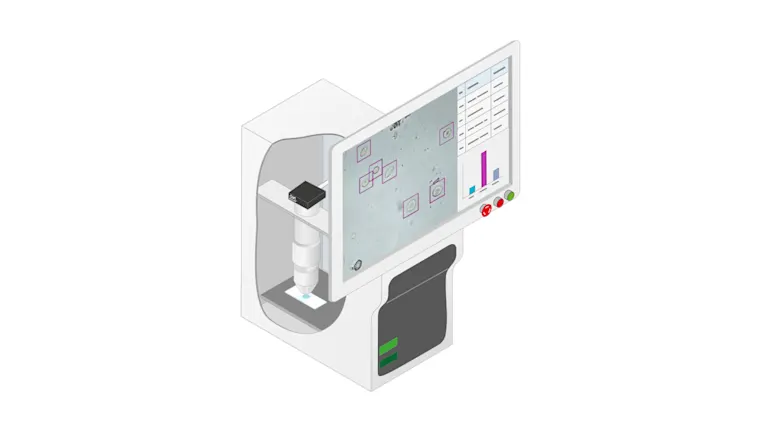
Basler cameras support automated microscopy platforms used in IVD, drug screening, and digital pathology. From entry-level devices to high-content screening systems, vision enables:
Fast cell counting and classification
AI-supported disease detection
Fluorescence and brightfield imaging
Application examples in laboratory automation
From sample handling to diagnostics and analysis, vision technology can improve speed, accuracy, and consistency across a wide range of laboratory workflows. Basler’s tailored solutions support high-throughput automation while helping reduce cost and complexity.

Most popular products
For efficient and reliable machine vision applications in this industry, the following Basler products are often the best choice: