The Unique Beyond Features from Basler
Our ace 2 Pro and ace 2 X UV cameras offer unique features that provide immediate added value in terms of performance enhancement and cost savings in operating your vision system. The Beyond features are often patented or patent-pending and are particularly characterized by unique functionalities when compared to industry standards.
Faster frame rates with GigE thanks to Compression Beyond
Does the bandwidth of Gigabit Ethernet limit the performance of your machine vision application?
Compression Beyond uses the available GigE bandwidth more efficiently, enabling significantly higher frame rates without complex hardware upgrades.
Maximum GigE with minimum effort: Compression Beyond
Gigabit Ethernet for Machine Vision (GigE Vision) offers many advantages in the field of professional image processing. For example, multi-camera systems can be optimally implemented, and distances of up to 100 meters can be bridged with cost-effective network cables. At the same time, the data rate of up to 120 MB/s is perfectly suited for many image processing applications.
However, the current trend towards higher resolutions and faster frame rates is increasingly driving the desire for higher data rates. The leap to ten times the data rate made possible by new interface technologies, such as CoaXPress 2.0 and 10GigE, is often not necessary for these applications and would involve significantly higher costs.
The solution: more efficient use of bandwidth. Compressing data directly in the camera makes frame rates in the two-to-threefold range a reality, depending on the image content in question.
How does Compression Beyond work?
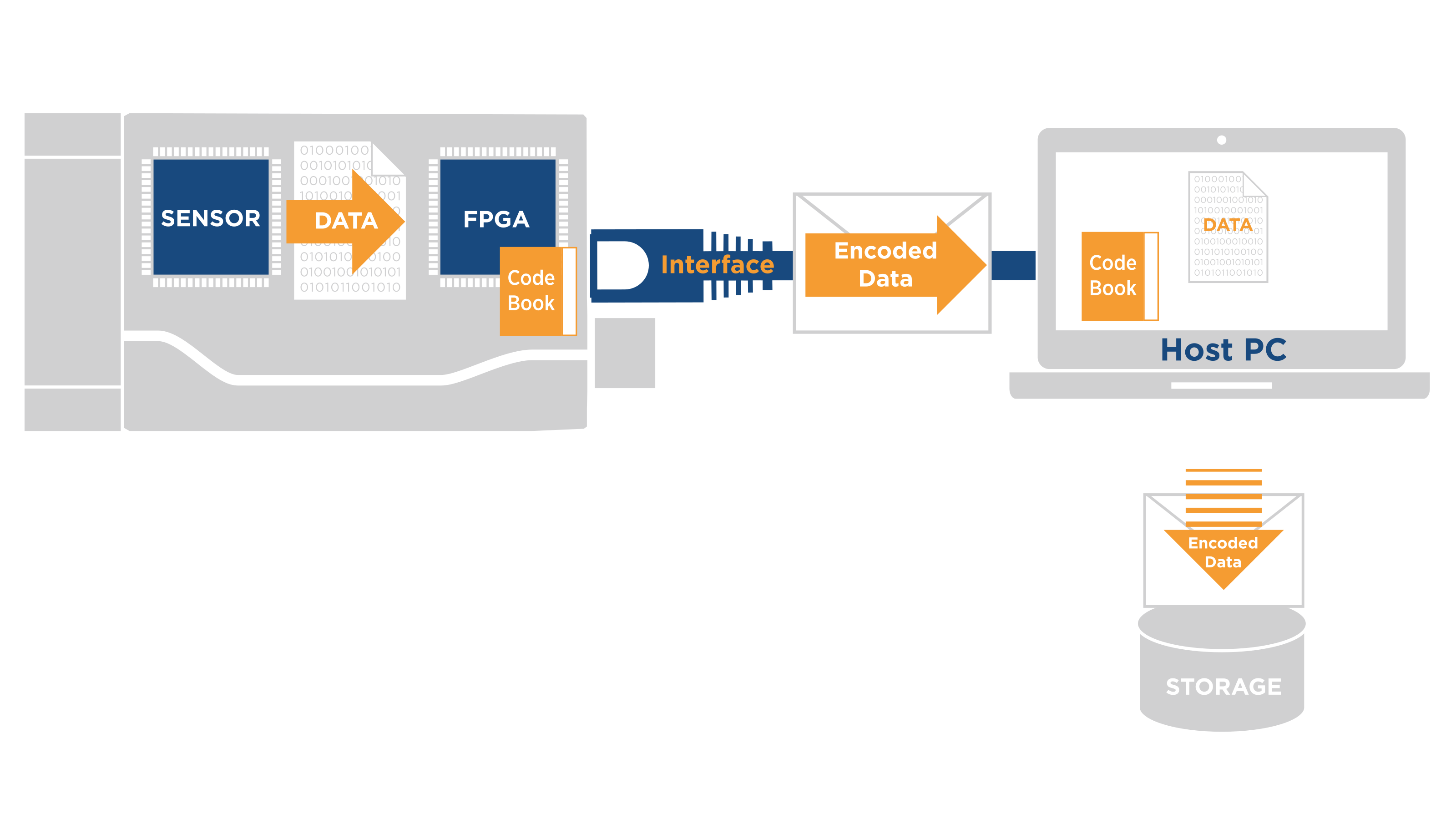
Compression Beyond compresses image data directly in the camera using a powerful FPGA. Redundant image information is efficiently reduced to significantly decrease the amount of data to be transmitted.
Coding per the Basler Codebook
The Compression Beyond feature is based on a codebook developed by Basler and optimized for machine vision applications, making it unique in the market. The principle of entropy coding enables lossless compression of image data, which means the image quality is fully preserved while the amount of data is significantly reduced.
In addition, the image data can also be saved in a compressed format, which saves storage capacity and consequently costs.
Not every application requires the same level of compression. To give our customers as much leeway as possible here, we go one step further: To help you find the optimal balance between image size and image quality for your application, you can individually adjust the compression factor and also select even stronger, but then lossy compression to achieve the best result for your requirements. Explore the FAQ about the feature.
Compression Beyond FAQ
Find answers about Compression Beyond, including questions on image quality, performance, bandwidth utilization, and system integration.
Compression Beyond Feature | Compression Rate | FPS | Bandwidth | CPU Loading | Memory Loading |
|---|---|---|---|---|---|
OFF | N/A | 4.2 | 102.8 | 17-34% | 48% |
ON: Lossless Compression | Lossless 70 | 6 | 36.7 | 28-37% | 49% |
ON: Lossy Compression | Fixed Ratio 50 | 4.8 | 51.5 | 36-48% | 48% |
7. How reliable is Compression Beyond?
It is just as reliable as any Basler GigE or USB 3.0 cameras. Compression beyond feature does not sacrifice the reliability of image data transfer in any way. Our standard deviations test on different vision tasks shows the high reliability of the image results.
Standard deviation test results based on 100 test images/mode.
Compression Beyond Feature | Compression Rate | Pattern X | Pattern Y |
|---|---|---|---|
OFF | N/A | 0.011 | 0.01 |
ON: Lossless Compression | Lossless 70 | 0.012 | 0.023 |
ON: Lossy Compression | Fixed Ratio 50 | 0.009 | 0.015 |
Standard Deviation Max - Min | 0.003 | 0.013 |
Pixel Beyond - pixel size as needed
시야각(FOV)은 그대로 유지하면서 해상도만 낮추고 싶으신가요? 일반적인 비닝(Binning) 배율의 제약으로 원하는 설정을 적용하기 어려우신가요? 더 높은 프레임 레이트를 구현하거나 단종된 센서를 보다 쉽게 대체하고 싶으신가요?
Pixel Beyond를 사용하면 애플리케이션 요구 사항에 맞게 센서의 유효 픽셀 크기를 유연하게 설정할 수 있습니다.
Pixel sizes as desired – Pixel Beyond makes it possible
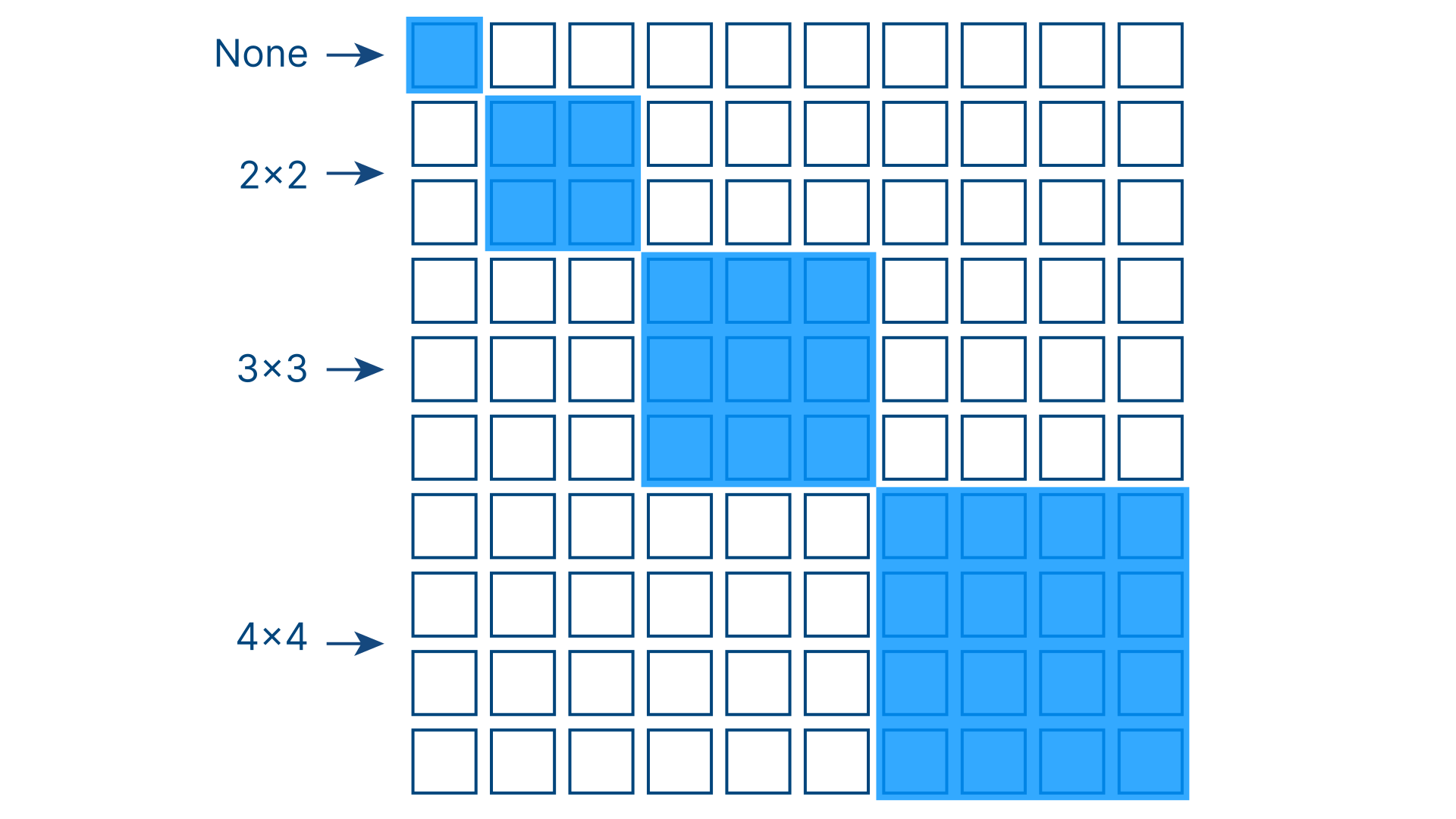
Combining the values of neighboring pixels of a sensor is called binning. There can be different reasons for binning: some users want to increase the brightness in their images, and others want to reduce the amount of data. Some need higher frame rates, and others are looking for a straightforward replacement for their discontinued sensor.
Binning can help with all of these objectives. Binning can be used to reduce the resolution while maintaining the field of view, and to improve certain sensor values, such as the signal-to-noise ratio (SNR) and dynamic range. In theory, this reduces the amount of data to process, increases the frame rate, and shortens the exposure time or makes the images brighter. In practice, however, the disadvantage is that conventional binning is based exclusively on integer factors.
How does Pixel Beyond work?
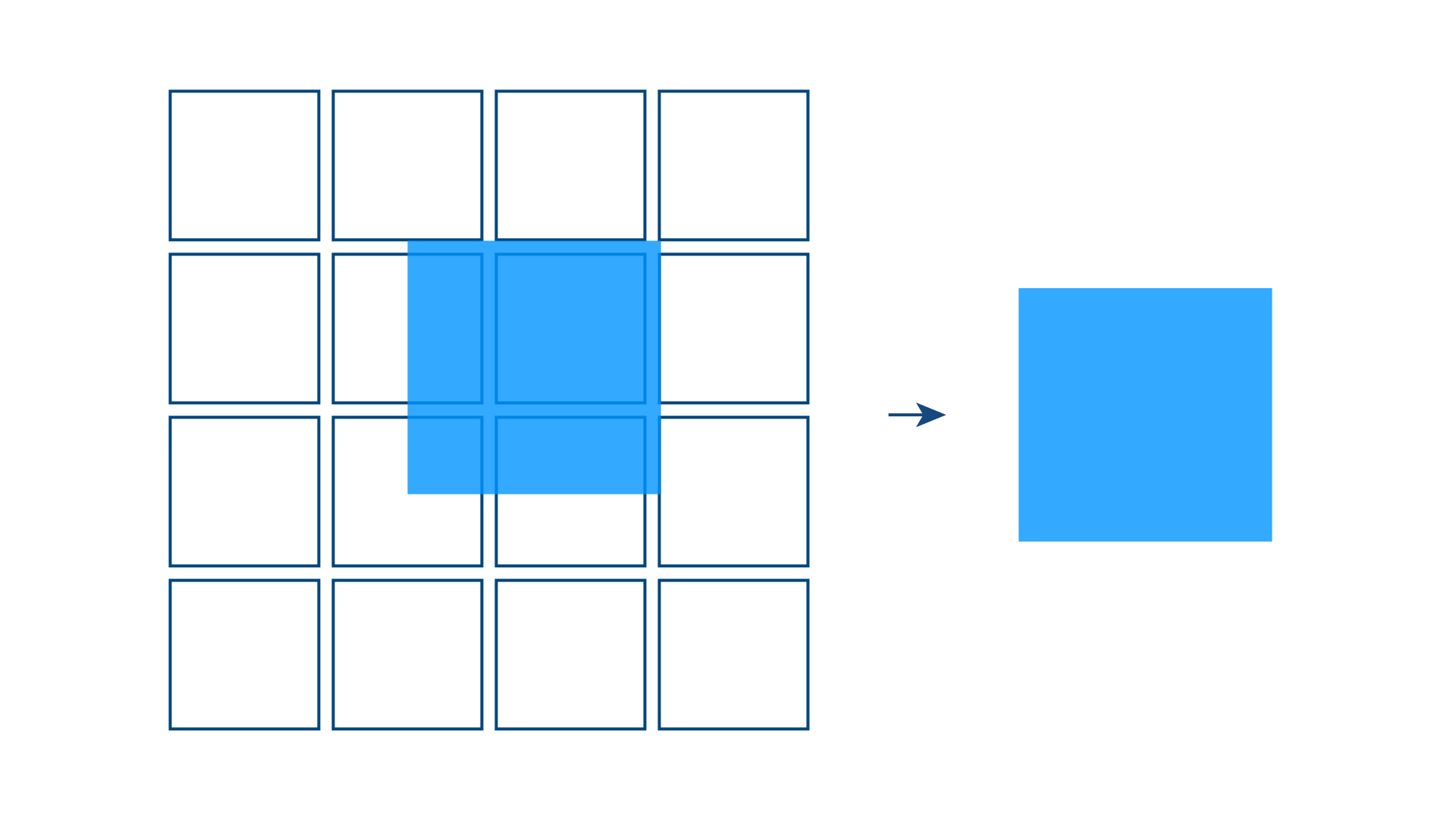
The preprocessing of pixels takes place directly in the camera using a powerful FPGA. This is based on an interpolation method developed by Basler, specifically optimized for industrial machine vision applications.
As a result, different sensor characteristics can be realistically simulated and the available bandwidth can be used more efficiently.
At the same time, the amount of data to process on the host side is reduced, enabling higher frame rates and more efficient system designs.
More flexibility in sensor replacement
Pixel Beyond enables flexible adjustment of resolution and pixel size, making it possible to realistically simulate various sensor characteristics.
As a result, discontinued sensors can be replaced more easily in many cases, without having to carry out a complete system redesign.
Benefits of Pixel Beyond
Flexible resolution adjustment
Enables freely scalable resolutions without being limited to fixed integer binning factors.
Higher frame rates and reduced data volumes
Reduces the amount of data to process on the host side and enables more efficient use of available bandwidth.
Field of view remains intact
Resolution can be reduced without changing the field of view of the vision system.
Simplified sensor replacement
Different sensor characteristics can be simulated realistically, allowing existing vision systems to continue operating without extensive redesign.