Deterministic Vision Control: Detect and React Within the Same Frame
FPGA-based HDR imaging with real-time serial device control
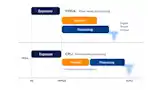
In high-throughput vision systems, image processing and device control are typically separated, requiring a CPU round-trip—where image data is transferred to the host for processing, evaluated in software, and then returned as control signals that introduces timing variability. Basler FPGA-equipped frame grabbers execute both within the same pipeline. Image enhancement and control signals are generated directly from the data stream, enabling detection and response within the same frame cycle without dependency on host timing.
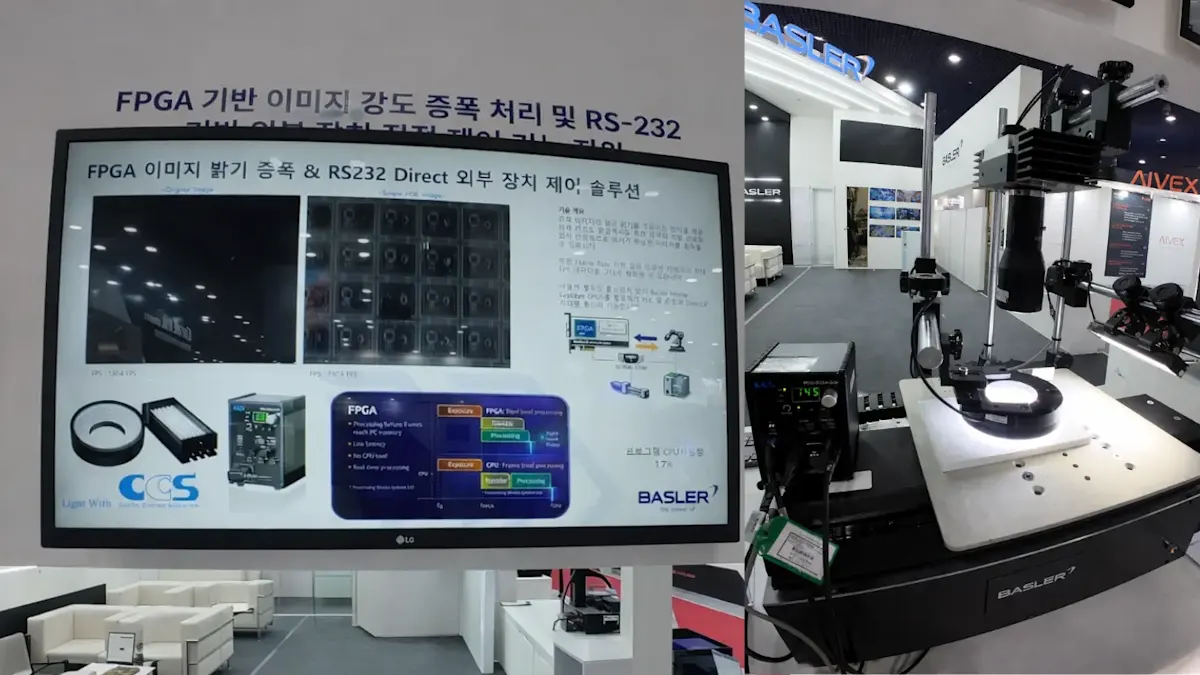
Image enhancement and control in one pipeline
In vision systems, different processing architectures serve different roles. FPGA-based processing is applied when image enhancement and control must execute within the same data stream, with deterministic timing. Typical applications include high-speed inspection and image-driven control scenarios, where both image quality and response timing must be maintained within the same processing pipeline.

Overcoming latency and image consistency challenges with FPGA
Addressing timing constraints in image-driven control
In vision systems where control decisions depend directly on image results, timing between detection and response becomes critical. In conventional architectures, image data must first be transferred to the host for processing before control signals are generated. This introduces latency and timing variation due to software execution, system load, and synchronization between components.
FPGA-based frame grabbers address this by executing image evaluation and control logic directly on the incoming data stream. Control signals are generated immediately based on image content, eliminating the host round-trip and ensuring consistent timing for real-time control.
Ensuring image quality before decision at production speed
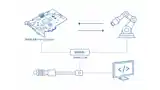
In high-speed inspection, image quality directly determines detection reliability. Variations in reflectivity or lighting conditions require per-frame image enhancement before meaningful evaluation can occur. When preprocessing is performed on the host, data transfer and processing delays limit its effectiveness at production speed.
On FPGA, image enhancement (e.g., HDR tone mapping) is applied at full frame rate before the data leaves the grabber. Image evaluation and control decisions operate on the same processed data stream, ensuring both stable input quality and predictable response timing within the same cycle.
Interested? Discuss your needs with us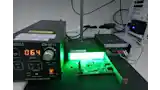
Use Case: Real-time lighting control
In AOI systems, lighting conditions must be adjusted dynamically to maintain consistent inspection results across varying surfaces and processes.
A practical implementation of this approach is FPGA-based lighting control, where image-derived metrics (e.g., brightness) are used to drive external device signals in real time.
For a detailed implementation of this control loop— including signal generation, interface handling, and system integration, read our Use Case: FPGA-Based Real-Time Lighting Control and Signal Processing
When control depends directly on image content, sending data through the host introduces latency and timing variability. Implementing both processing and control on the FPGA keeps execution deterministic and aligned with the image stream.
Key takeaways: Deterministic imaging and control on FPGA
When image results must directly drive control actions, FPGA enables a tightly coupled and deterministic execution path.
Detection and response occur within the same cycle, removing dependency on host timing
Deterministic execution ensures consistent behavior, independent of system load or OS scheduling
Image processing and control run in a single FPGA pipeline, simplifying architecture and reducing latency
Products for this solution
Looking to implement a comparable solution? These products will help you.