Reliable OCR Verification of Expiry Dates in Packaging Environments
Enabling continuous, in-line validation of printed date codes in production
Modern packaging lines require reliable in-line verification of expiry dates and batch codes to reduce human inspection errors, improve traceability, and maintain stable production throughput. This use case examines how machine vision systems with OCR capabilities enable automated, in-line verification of expiry dates, ensuring reliable detection of labeling errors in high-speed packaging environments.
Expiry date verification:
A missing step in quality control
In many food & beverage production environments, expiry dates are printed at high speed during the packaging process. While these printing systems are generally reliable, verification of the printed dates are often not integrated into the production line. Manufacturers typically rely on manual spot checks by operators or assume that the printing process is functioning correctly.
This creates a quality control gap, as missing, incorrect, or unreadable date codes may remain undetected during production. In high-speed lines, manual inspection is difficult to perform consistently and reliably. If defects are discovered downstream, or after products reach the market, they can lead to recalls, compliance issues, production waste, and brand damage.
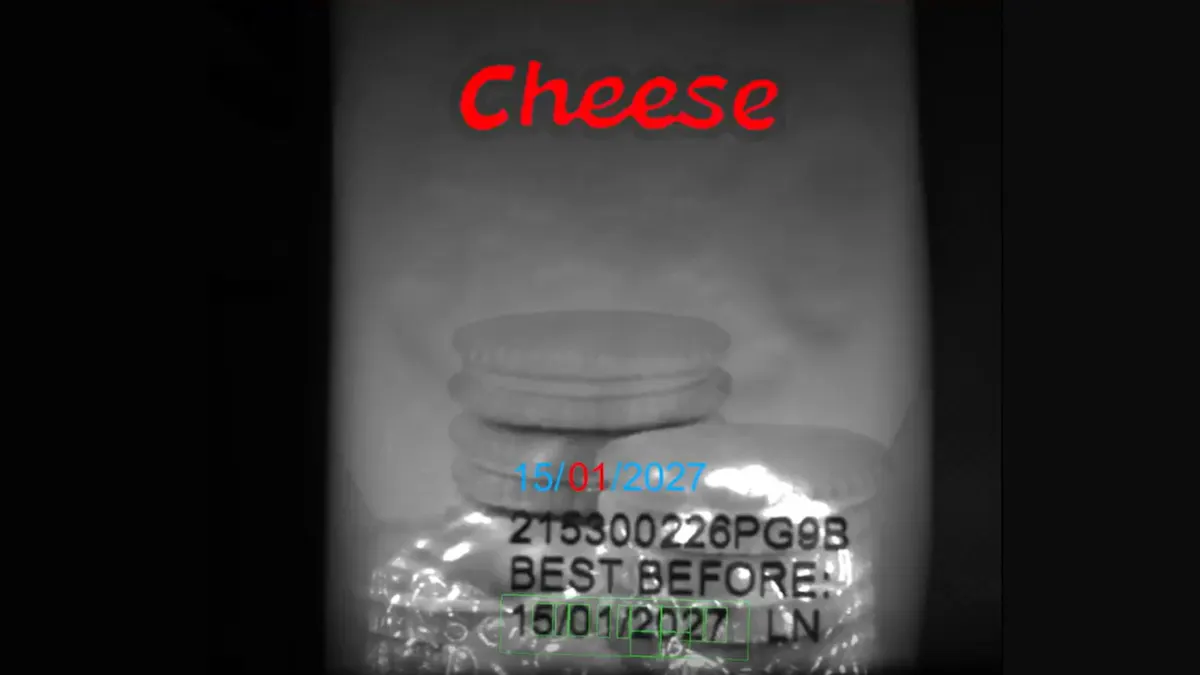
NIR-Enhanced OCR for Inline Expiry Date Inspection
Converting printed characters into machine-readable data directly on the production line allows for continuous, in-line detection of incorrect, missing, or unreadable dates. Combined with NIR-enhanced sensors the system enhances character visibility, allowing OCR algorithms to reliably read and verify dates even under challenging conditions.

Stable verification across challenging packaging conditions
The vision system captures printed expiry dates directly on the packaging line and converts them into machine-readable data for real-time validation. As a result, manufacturers can ensure consistent labeling quality, reduce reliance on manual checks, and prevent costly errors before products leave the factory. OCR verification distinguishes between correctly printed expiry dates (OK) and products with incorrect expiry date labeling (NG).

Enhanced imaging performance for packaging applications
Basler ace 2 cameras featuring the OmniVision OG05C NIR-enhanced sensors improve the visibility of printed characters by reducing reflections and increasing contrast between the code and the packaging surface. In packaging applications, reflective materials, uneven surfaces, and inconsistent print quality can make conventional inspection unstable.
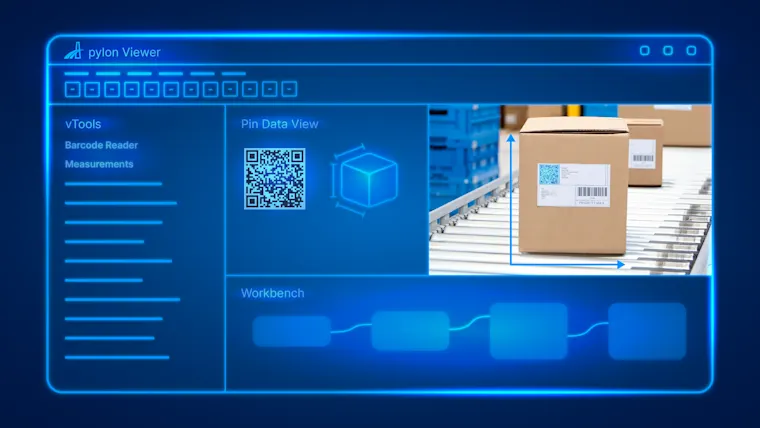
pylon vTools OCR software enables automated expiry date verification by converting printed characters into machine-readable data directly on the production line.
Key features include:
Improved character contrast for more reliable code reading
Reduced glare and reflection effects on reflective packaging materials
Stable performance across varying packaging conditions
High-speed image acquisition for inline production environments
Reliable detection of incorrect, missing, or unreadable expiry dates
Expiry date verification is often underestimated in packaging lines, with many manufacturers relying on manual checks or assuming the printing process is stable. We frequently see issues such as missing or incorrect dates going unnoticed, especially under high-speed conditions where operators cannot inspect every product. With vision-based OCR inspection, expiry dates can be automatically verified on every product, ensuring that incorrect or unreadable codes are reliably detected and removed from the line, significantly improving labeling accuracy and reducing the risk of costly recalls.
Benefits for food and beverage packaging manufacturers
Automated expiry date inspection helps manufacturers improve quality control and reduce operational risks.
Key benefits include:
Prevent product recalls by detecting incorrect expiry dates early in production
Verify printed dates automatically on every package
Reduce dependence on manual inspection by operators
Improve compliance with labeling regulations
Maintain consistent quality across high-speed production lines
By integrating automated inspection into the packaging process, manufacturers can ensure that labeling errors are detected immediately rather than after products have already been shipped.
Get expert advice on OCR solutions for packaging applicationsProducts for this solution
Looking to implement a comparable solution? These products will help you.