High-speed Ball Grid Array Inspection in Semiconductor and PCB Packaging
High-Precision Inspection with Advanced Image Pre-Processing Operators
Ball Grid Array (BGA) technology is widely used in semiconductor packaging and PCB assembly, enabling high I/O density in a compact footprint. Before packaging, BGA inspection focuses on verifying the quality of the solder balls themselves, ensuring they are complete, round, uniform in size, and precisely aligned within the array. After reflow, inspection shifts to verifying solder joint quality and placement accuracy, confirming that each BGA is correctly positioned and securely bonded to the PCB.
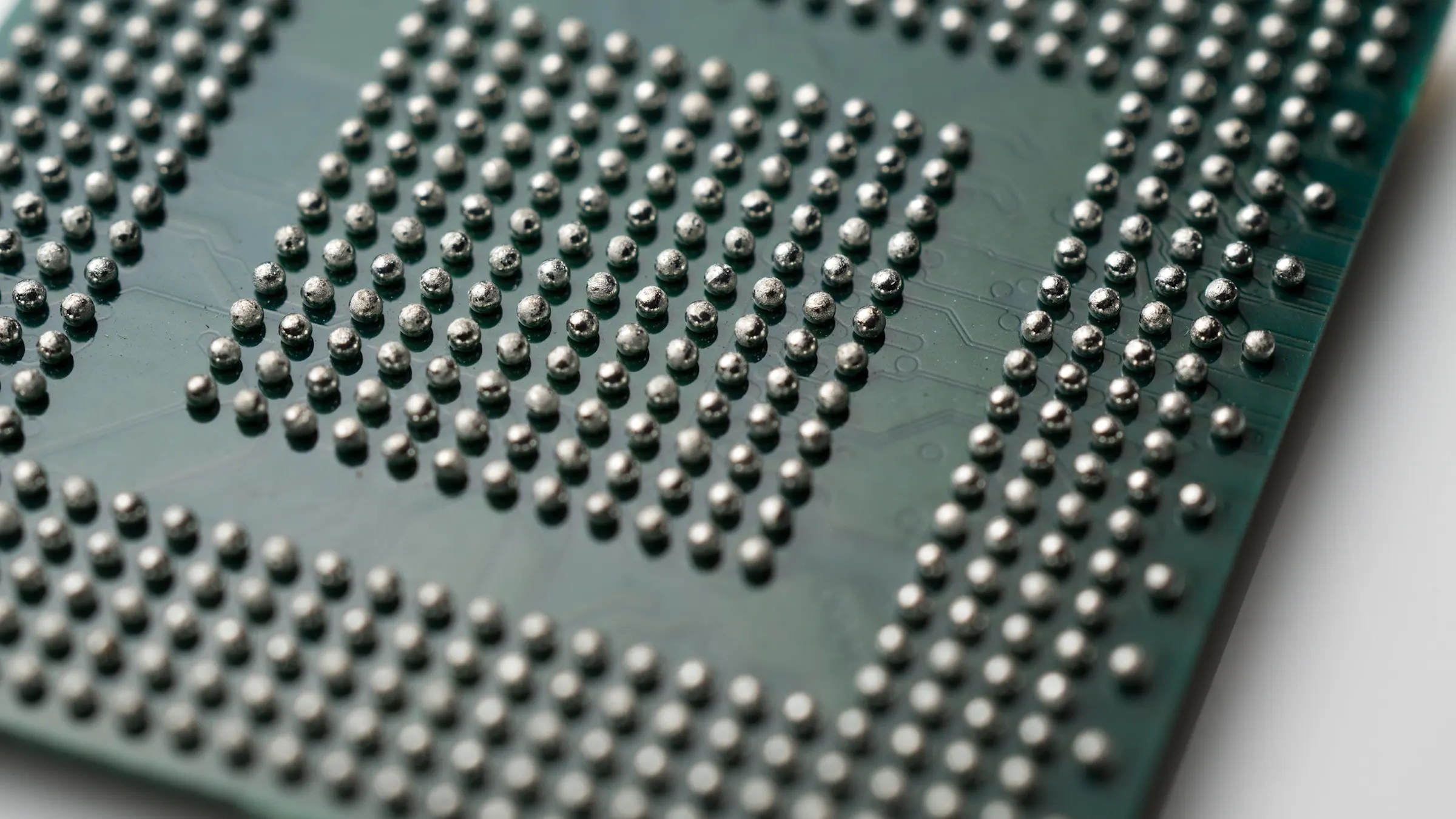
BGA inspection across semiconductor and PCB packaging
With the advancement of integrated circuit technology, packaging evolved from early DIP (Dual In-line Packaging) to QFP (Quad Flat Packaging) and QFN (Quad Flat No-lead Packaging). As chips became more complex and I/O requirements continued to increase, BGA packaging (with its bottom ball grid structure) has become the mainstream solution and is widely used in consumer electronics, such as smartphones, tablets, motherboards, and digital cameras. Compared with traditional packages, BGA can accommodate more connection points within the same footprint while providing shorter electrical paths, thereby improving signal integrity and overall performance.
In semiconductor packaging, Ball Grid Array (BGA) inspection is critical to ensure there are no missing balls, diameter variations, or coplanarity defects that can impact yield. During PCB assembly (SMT), BGA solder joint inspection focuses on hidden joints beneath the package, where defects such as voids, head-in-pillow, and opens can lead to reliability issues.
With package sizes ranging from small devices to large flip-chip BGAs with thousands of balls, BGA defect detection requires high precision—from hundreds down to tens of microns. Advanced AOI BGA inspection systems enable accurate inspection of fine-pitch features, improving yield, reliability, and overall inspection performance.
Four key vision aspects in BGA inspection
Comprehensive BGA inspection requires a combination of techniques. On the 2D level, AOI is used to verify whether ball pitch is uniform, the matrix aligns with the design grid, and the array is complete without missing or extra balls. 3D AOI checks solder ball height and coplanarity. In addition, X-ray inspection is required to reveal internal defects, such as voids, head-in-pillow, and opens.
Solder ball quality inspection
The first task in BGA inspection is to verify whether each solder ball is acceptable. Typical defects include missing balls, oversized or undersized balls, burrs, and misalignment. In early systems, Basler industrial cameras with only 0.3 MP resolution were sufficient for basic inspection. In recent years, as pitch continued to shrink and accuracy requirements increased, the industry steadily upgraded from 0.3 MP → 5 MP → 20 MP+, with higher camera resolution bringing greater sensitivity and lower false detection rates.
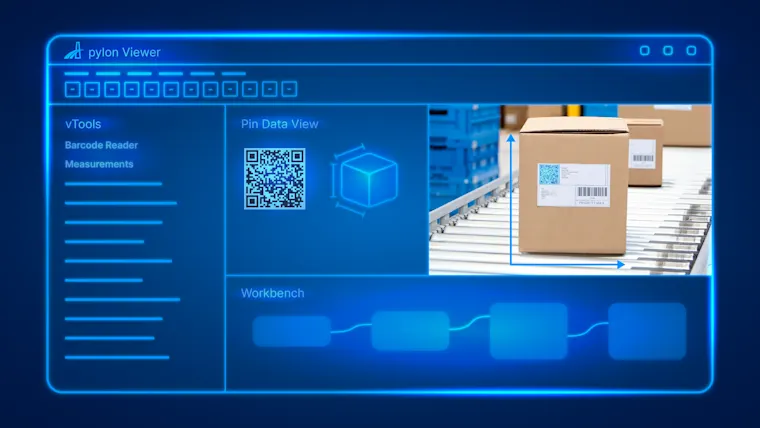
Once BGA images are acquired, feature extraction and classification are carried out using image processing software. Tools such as pylon vTools can extract ball shape features (e.g., roundness) and area (oversized or undersized indicating excess or insufficient solder). Threshold segmentation is then applied to complete the quality check.
Consistent image quality and reliable ball alignment
BGA inspection requires both clear imaging under reflective conditions and precise localization of solder balls. As ball pitch shrinks to 0.5 mm and below, even slight optical instability or focus variation can affect measurement accuracy. Basler cameras and frame grabbers integrate advanced to optimize image quality and geometric precision directly at the source. Key features such as HDR imaging, Blob Analysis, Shape Centroid Finder and Focus Stacking enhance contrast, ensure accurate feature mapping, and provide reliable measurement data - all essential for high-speed, fine-pitch BGA inspection.




3D coplanarity and height measurement
In addition to individual ball inspection, BGA arrays must also be validated as a whole for pitch, alignment, and completeness. Relying on 2D AOI alone cannot reveal lifted balls, height deviations, or substrate warpage, all of which impact long-term reliability. Modern inspection therefore includes 3D techniques. Structured light 3D inspection (fringe projection) remains a common approach, generating full-array height maps quickly to identify subtle deviations. In this way, the system can capture slight height differences, reflect process variations or package warpage, and process 3D data rapidly with advanced algorithms. This allows balls outside tolerance to be detected accurately while maintaining line takt time. For higher accuracy demands, laser triangulation has also become a mainstream solution.
Stable connectivity and processing reliability
High-throughput BGA inspection requires vision systems that can operate reliably over extended periods. Any connection interruptions or processing delays can create bottlenecks on production lines with cycle times measured in seconds.
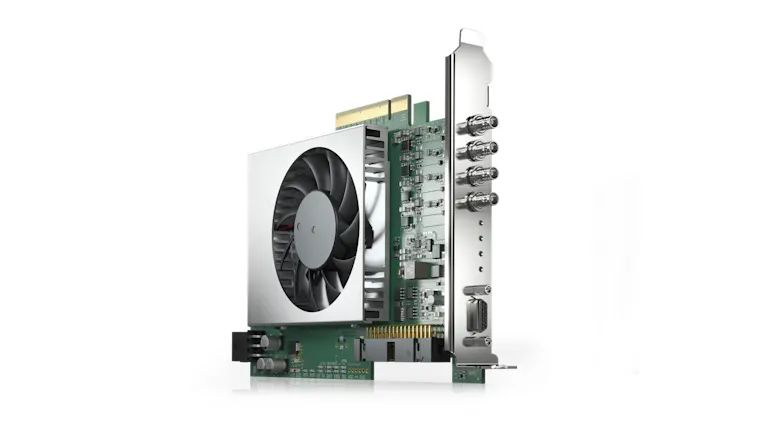
Our solution uses industrial-grade camera architectures and robust communication protocols to ensure continuous operation under demanding conditions. With CoaXPress or GigE Vision interfaces and FPGA-based preprocessing, the system guarantees uninterrupted data transfer and deterministic throughput.
These FPGA-level pre-processing steps reduce the host CPU load and simplify integration while ensuring consistent image quality and measurement precision during continuous operation. This combination of stable connectivity and hardware acceleration provides the reliability required for high-speed semiconductor and PCB packaging lines.
Having worked with many BGA inspection systems, I’ve seen how on-board preprocessing directly influences system stability and overall performance. Beyond the advanced features mentioned in this use case, functions such as real-time FFC, noise reduction, and user-defined filtering are just as important in daily integration work. Implementing these directly on the camera or frame grabber helps keep the image quality consistent and processing loads predictable, which makes system tuning much more efficient.

Ensuring perfect BGAs at full speed
High-resolution imaging: 5–20 MP+ cameras with pylon vTools enable seamless feature extraction and precise ball measurements.
Exceptional consistency: stable imaging across batches supports reliable algorithms and reduces false calls.
Industrial reliability: robust interfaces and FPGA preprocessing ensure uninterrupted high-speed operation.
Products for this solution
Looking to implement a comparable solution? These products will help you.