Telecentric Lenses
For precision in every detail
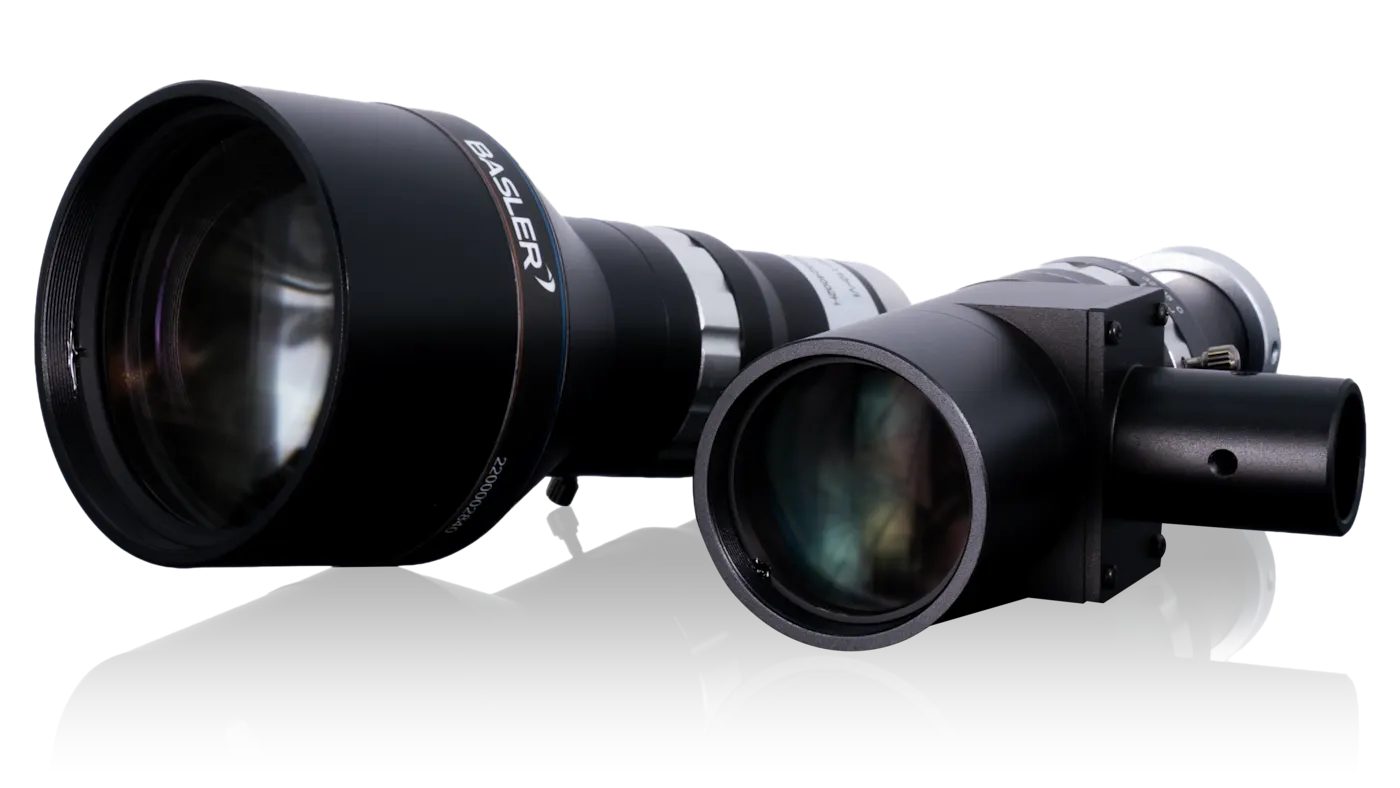
If you want to perform precise measurements in your application, telecentric lenses are the right choice. They maintain a constant magnification and eliminate perspective distortion, enabling precise dimensional measurements and reliable detection of small details.
Wide selection
Lenses for sensor sizes up to 1.2" and with resolutions up to 21.4 MPVariable iris
Lenses with adjustable aperture available to adjust the amount of lightCoaxial illumination
Lenses available with and without integrated coaxial illuminationBi-telecentric
1.2" lenses are double-sided telecentric for high-precision measurement tasks
Our telecentric lenses

How telecentric lenses work
In a telecentric lens, the main ray — a central light ray that passes from an object point through the lens — runs parallel to the optical axis in a specific space. There are three types of telecentric lenses.
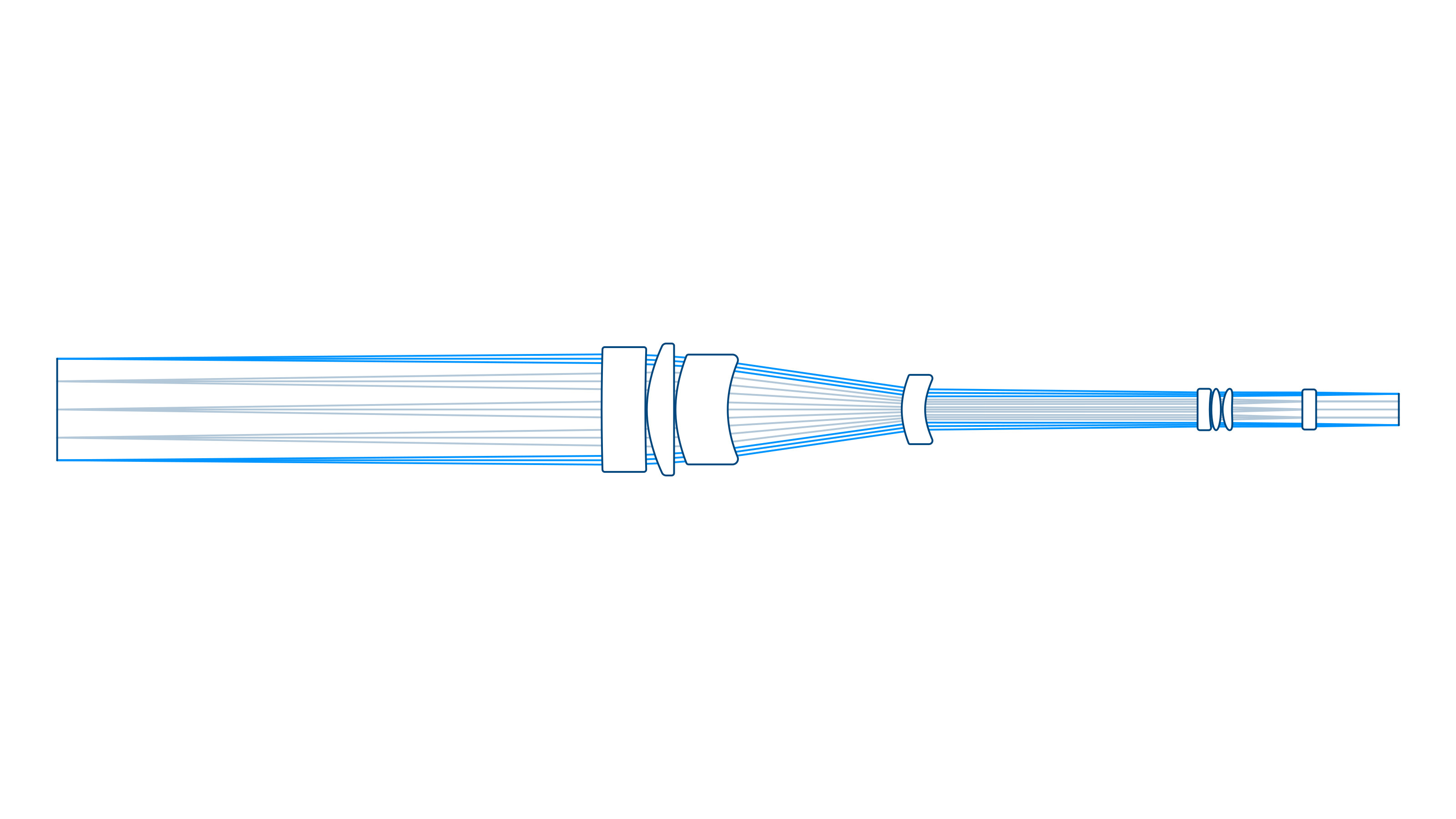
Object-side telecentric
The principal rays on the object side run parallel to the optical axis, so that no perspective errors occur at different object distances.
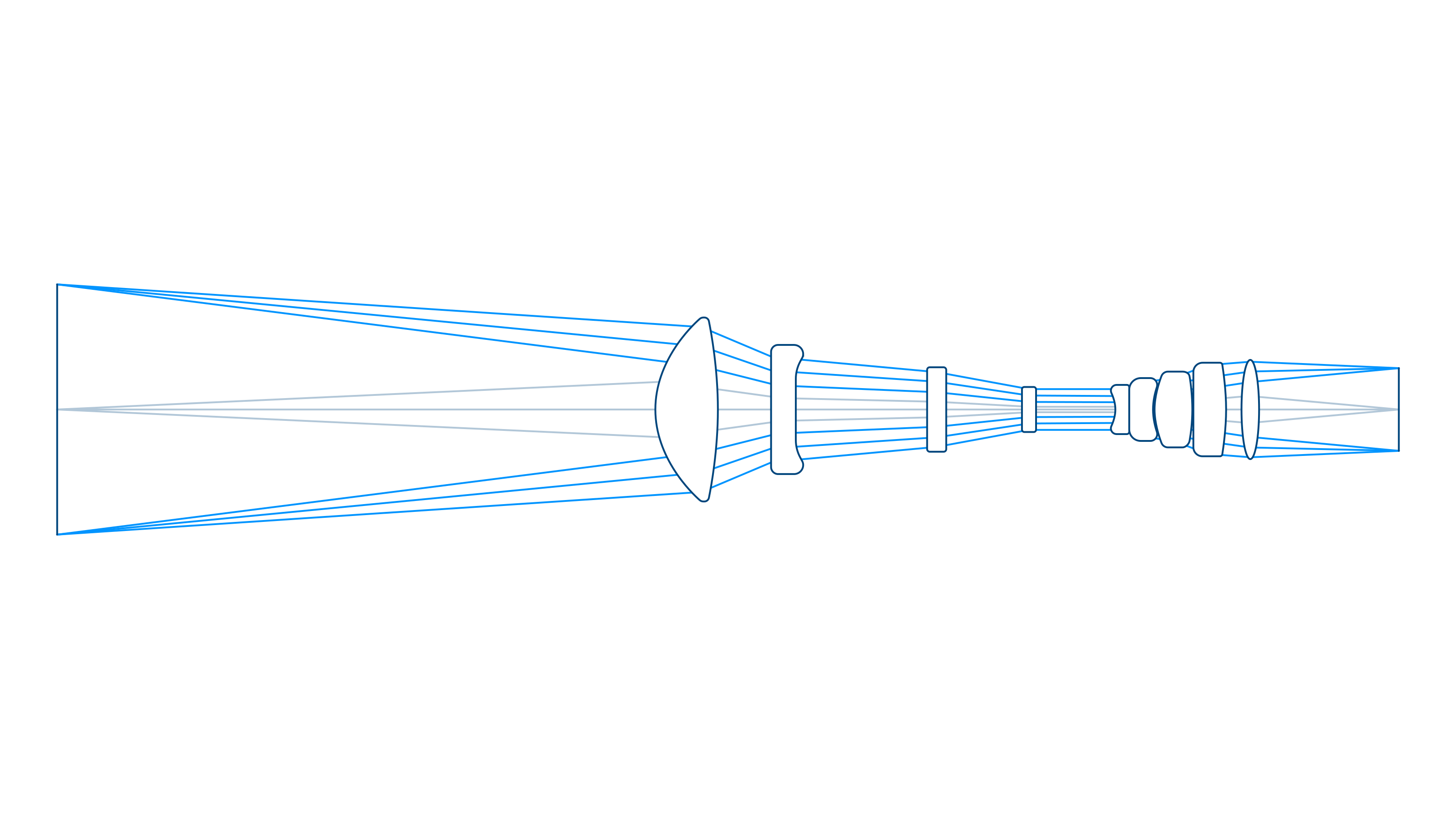
Image-side telecentric
The principal rays on the image side run parallel to the optical axis — ideal for sensors that are not positioned exactly in the focal plane.
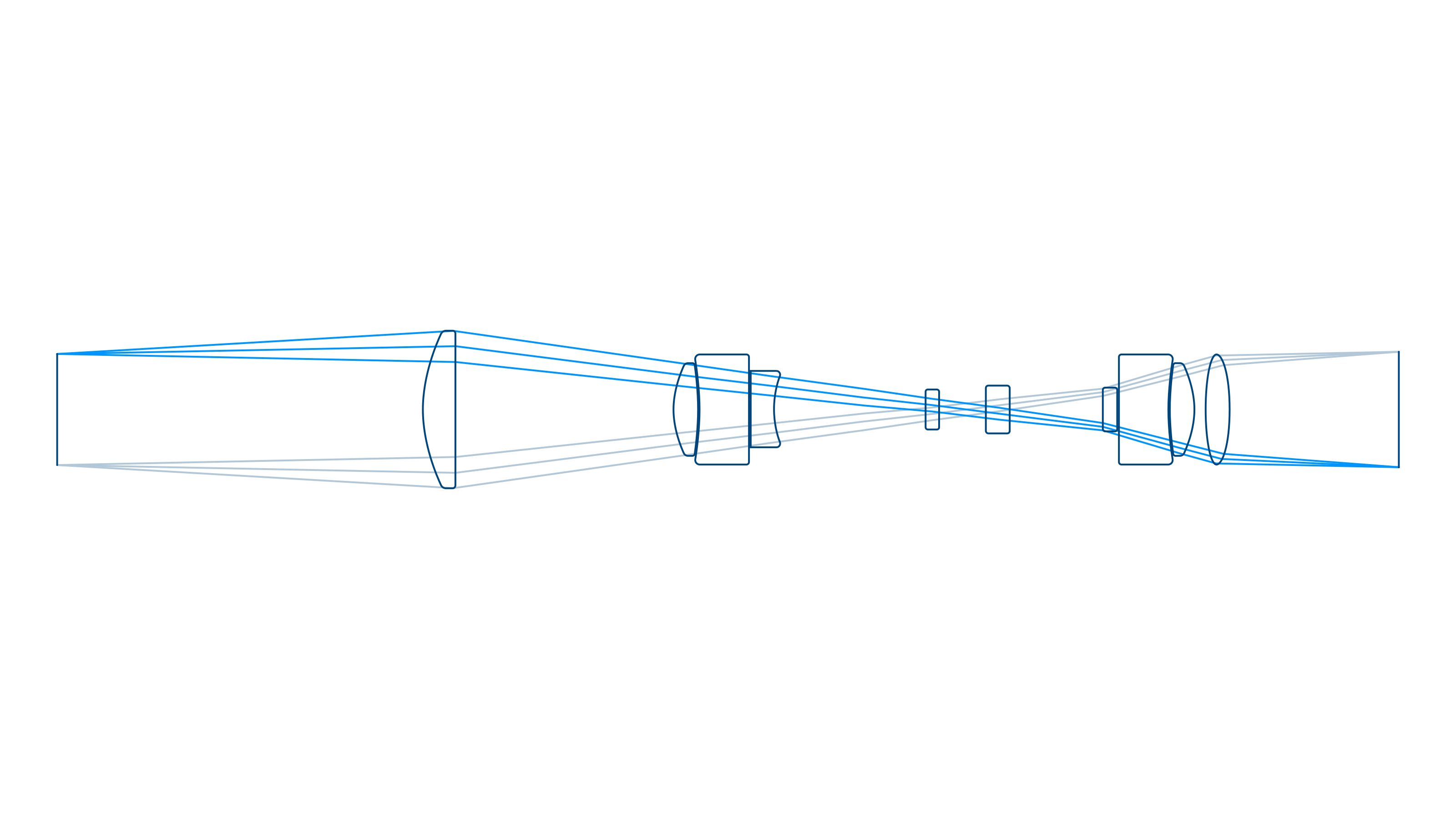
Bilateral telecentric
The principal rays run parallel on both sides, ensuring maximum accuracy for high-precision measurement applications.
Telecentric lenses with variable iris
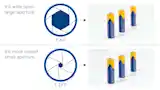
With telecentric lenses, featuring a variable iris, the amount of light and, in some cases, the depth of field can be regulated.
The adjustability of the iris diaphragm offers flexibility. However, reducing the aperture can alter the telecentric property. If the aperture is closed too much, the light bundle no longer runs strictly parallel, which can result in dimensional deviations or vignetting.
A variable iris diaphragm is particularly useful when different lighting conditions need to be compensated and the contrast or depth of field requires slight adjustment.
To the lensesTelecentric lenses with coaxial light coupling
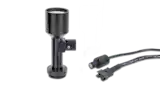
Telecentric lenses with coaxial light coupling combine the function of a lens with an illumination unit. The object is illuminated directly along the optical axis for uniform viewing. The light is coupled in laterally from a light source (often an LED) and directed into the optical axis via a semi-transparent mirror or beam splitter.
This principle is particularly suitable for smooth or reflective surfaces and ensures high-quality imaging when inspecting materials such as wafers, glass, metals, displays, and microchips.
Advantages of telecentric lenses
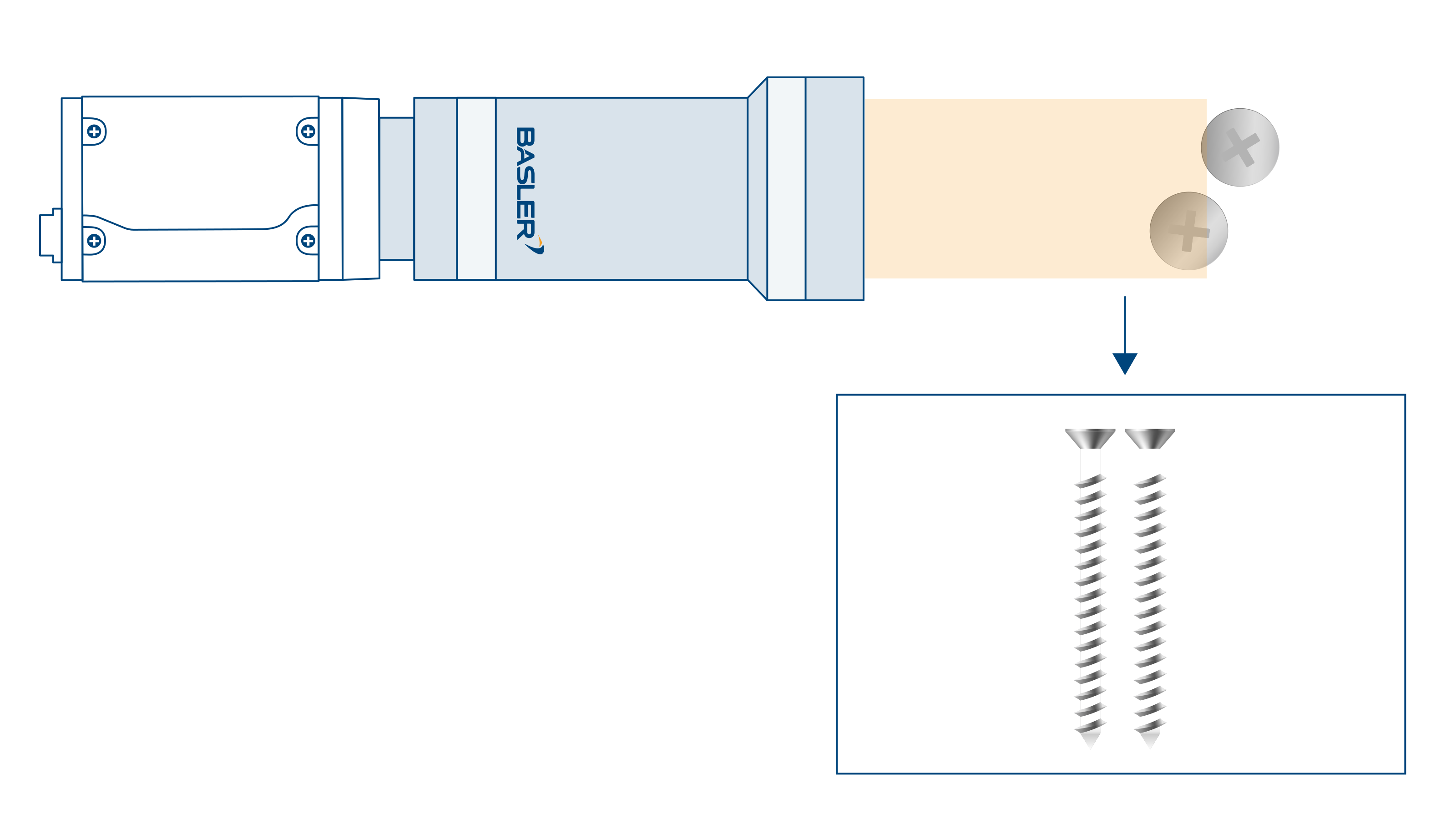
True-to-scale imaging
Enables precise measurements by keeping the object's image size constant regardless of the object's distance.
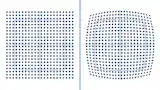
Distortion-free imaging
Ideal for applications where a precise representation of the object is required, due to parallel object edges remaining parallel in the image.

Shallow depth of field
Enables measurement tasks with a clear reference plane, allowing for a sharp focus on one object area while other areas remain out of focus.
Application areas for telecentric lenses
Telecentric lenses are suitable for a wide range of applications that require precision and low distortion.
Industrial dimensional control and inspection
Metrology (e.g., diameter, gap, and position measurement)
Electronics manufacturing (e.g., printed circuit board inspection)
Micromechanics and medical technology
High-precision 2D or 3D measurement systems