TDI Line Scan Cameras
Applications, Operating Principle, Benefits
TDI (Time Delay Integration) cameras are special line scan cameras that integrate light signals over several lines. Designed for high cycle rates, they shift the image line by line to increase illumination intensity and reduce motion blur. They are frequently used in wafer and semiconductor inspection and automated optical inspection (AOI).
The most important facts about TDI
Precise image processing even with fast movements and low light
High sensitivity and low noise
Used in semiconductor, display, and electronics production as well as industrial inspection
Function by integrating several sensor lines during movement
Modern CMOS TDI sensors: Fast, low-noise, energy-efficient, and calibration-intensive
Typical areas of application for TDI line scan cameras
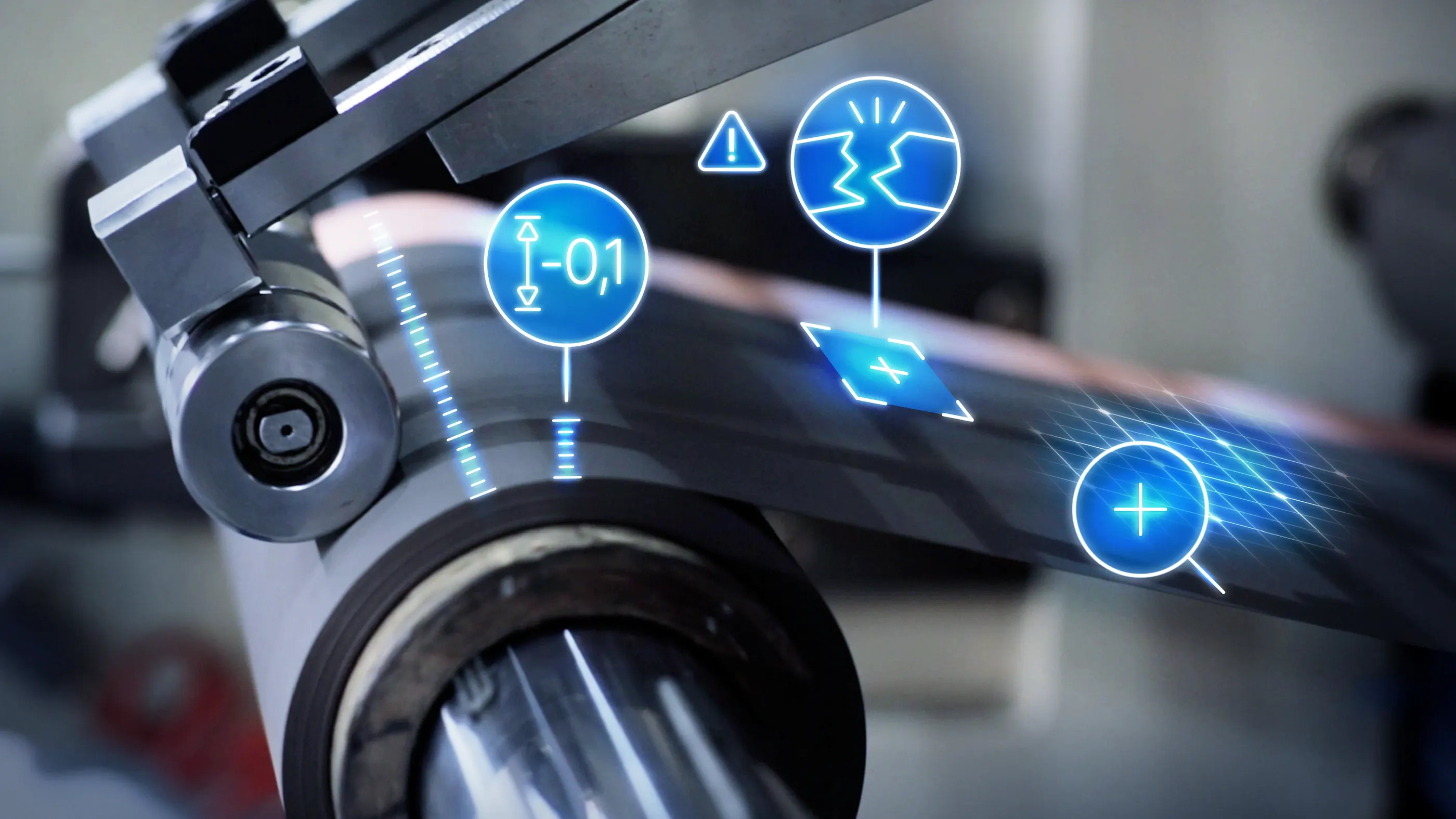
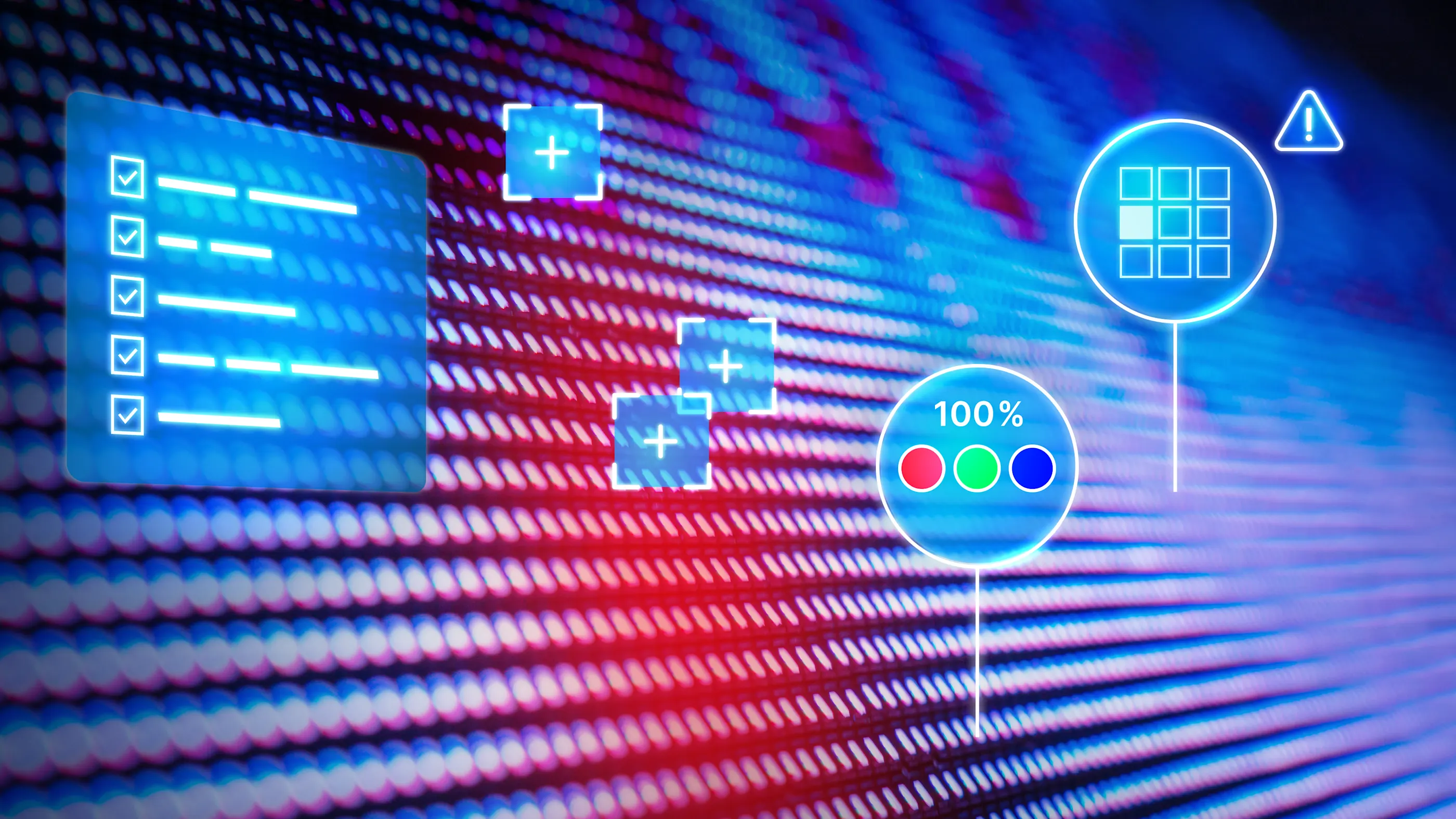
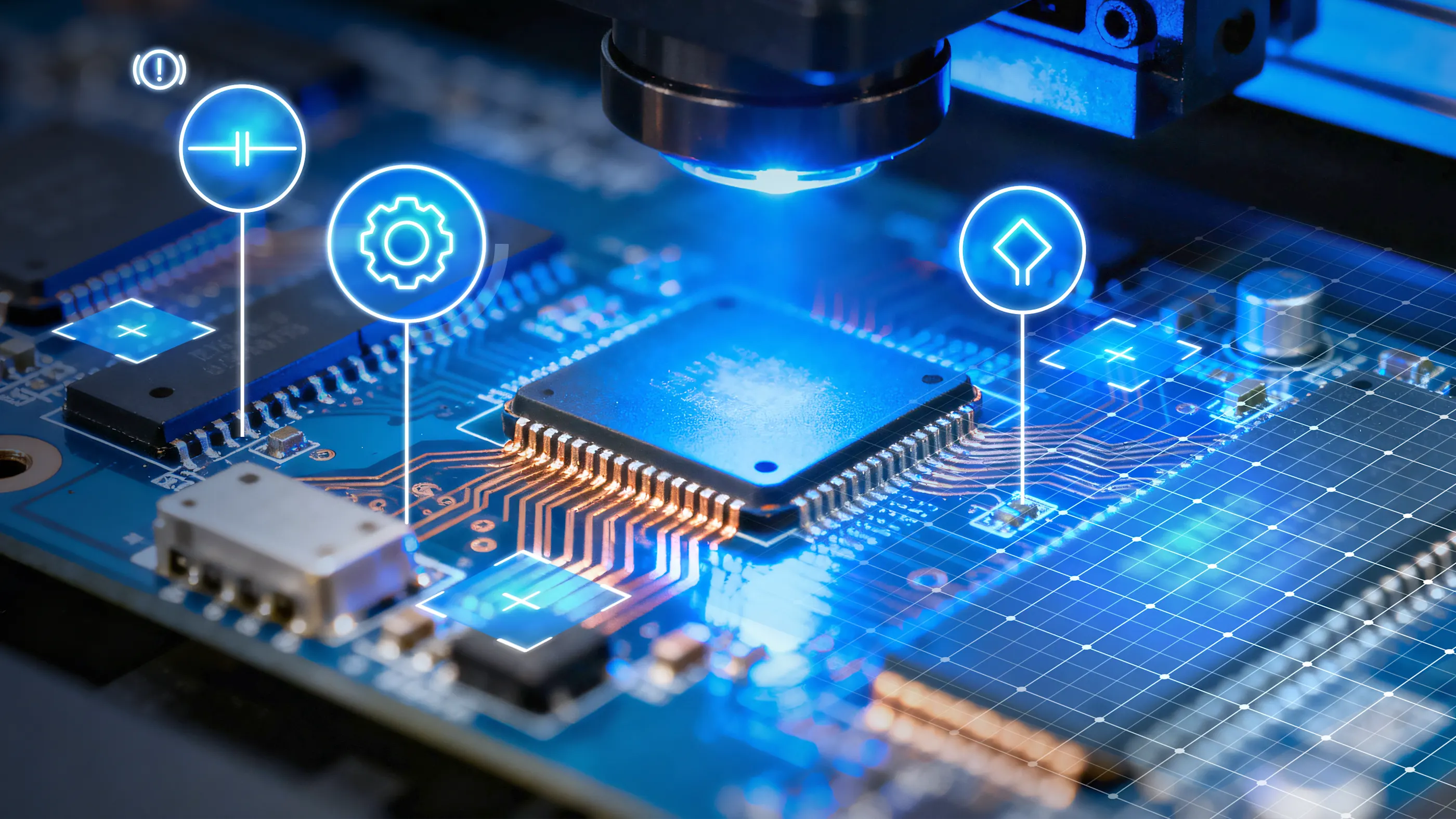
TDI cell cameras are designed for applications that require fast movements and low illumination levels. Because of the time-delay integration principle, in which several sensor lines gradually add the signal along the direction of movement, they achieve high sensitivity with low noise. They are preferred in semiconductor, display, and electronics production, where precise and reliable inspection at high process speeds is crucial.

Differences between TDI and standard line scan cameras
TDI is suitable for low-light or very fast processes where classic line scan cameras are not sufficient. TDI line scan cameras also differ in terms of exposure and signal processing; they integrate several steps during movement. This increases light sensitivity and reduces noise.
Aspect | Classic line scan camera | TDI line scan camera |
Sensor structure | 1 (or a few) step(s) | Many consecutive steps (e.g., up to 256 levels) |
|---|---|---|
Sensitivity | Reference level (single sensor step) | Sensitivity increases with the number of TDI levels (N-fold) |
Light requirement | High illuminance required, as signal is only integrated once | Lower illuminance, as the signal is integrated over several steps |
Max. Object speed | Limited speed range | Significantly higher speeds with the same amount of signal |
Motion blur | Critical for fast movement | Reduced, as the same point is "exposed" several times |
Costs | Low | Medium to high (due to the complex system design) |
TDI signal amplification: Principle and advantages of light integration
By integrating multiple exposure steps, modern TDI line scan cameras achieve up to three times higher sensitivity and an extended dynamic range. This leads to improved signal quality in low-light conditions and more precise capture of details in bright and dark image areas, which increases the reliability and efficiency in industrial inspection processes.

Step 1: Entering the first step
When an object passes under a TDI line scan camera, the first pixel step of the sensor detects the reflected light and converts it into an electrical charge. This charge is recorded and added again at each subsequent integration stage. Depending on the camera, the sensor comprises 16 to 256 such stages, which significantly increases the signal strength and therefore the sensitivity.

Step 2: Charge transfer
As soon as the object has moved exactly one pixel step further, the charges collected in the first step are passed on to the next pixel stage and added to the new light information there. This process is repeated step by step until the summed signal is read out. The result is a significantly enhanced image with an improved signal-to-noise ratio compared to conventional line scan cameras.

Step 3: Integration (adding)
When these charges arrive in the second step, the pixels in this line capture the light from the same point on the object again. The new charges collected in the process are added or integrated to the existing charges (which came from the first step). This multiple light detection and charge integration ensures maximum signal strength per pixel.

Step 4: Repeat over all steps
This process of shifting and adding is repeated across all stages of the TDI sensor. The charges "move" along the sensor, always synchronized with the moving object, and collect more and more light information from the exact same point of the object with each step.

Step 5: Reading out the end step
When the accumulated charges reach the last step of the sensor, they are read out. The resulting pixel value contains the summed light information of a point across all integration steps. This produces a stronger, less noisy signal that resolves fine differences in brightness and enables more precise evaluations in low light conditions.
Exposure control and synchronization for TDI line scan cameras
TDI line scan cameras place high demands on synchronization and exposure control. Calibration is complex and must be precise in order to avoid distortions. The exact coordination between camera movement and object movement is crucial to ensure consistently high image quality.

Synchronization and calibration
With precise control systems and synchronization hardware, the camera is precisely matched to the object speed. Our frame grabbers offer integrated trigger and synchronization functions that evaluate encoder signals and generate precise line triggers and start/stop signals for the TDI line scan camera. Calibration and maintenance compensate for drift and wear and ensure synchronization for consistent image quality.

Control of object movement and image capture
Adaptive controls detect speed variations and dynamically adjust camera settings. The image remains stable even with changing motion profiles; the measured values also remain accurate. This reduces delays and precisely adjusts exposure and focus parameters.

Clear images in any light
Clear images in all lighting conditions require uniform, sufficiently strong lighting, with additional light sources or IR light for better contrast, if required. Using the CoaXPress-over-Fiber (CoF) interfaces with high data throughput in the Gbit/s range and minimal latency (microseconds to a few milliseconds), the high image quality is transmitted almost in real time. The image data is therefore immediately available for fast, process-related decisions.
Conclusion: TDI offers high image quality under difficult conditions
TDI line scan cameras enable high image quality with particularly fast movements and low light.
Areas of application: Inspection in semiconductor production, printed circuit board and flat screen testing, and others.
Differences to conventional line scan cameras: Multiple signal integration across several sensor lines instead of a single exposure, resulting in significantly higher sensitivity and a better signal-to-noise ratio.
How it works: The image of a moving object is captured line by line; the electrical charge of each line is passed on and added in synchronization with the object's movement.
Challenges: Stable lighting and precise synchronization of object movement, sensor scanning, and calibration are required, and there is sensitivity to drift.

TDI Vision System from Basler
The TDI vision system from Basler offers a powerful and reliable basis for your project needs. We work with you to develop a future-proof, state-of-the-art system specifically tailored to your requirements: the racer 2 XL TDI line scan camera, for example, delivers superbly illuminated images at top speeds with 256 TDI levels. With our support, a future-proof solution is created, featuring individual components that are customized to your application.
Frequently asked questions about TDI line scan cameras
TDI line scan cameras capture an object across many sensor lines and add together the signals from several exposures. This results in significantly higher sensitivity and image quality, especially in low light or with fast movements.
TDI technology is particularly efficient in high-speed inspection systems, for example, in semiconductor and printed circuit board testing or in scientific imaging.
With the TDI method, the light information reflected by the object is recorded line by line and transmitted synchronously with the object movement. Each line adds new light signals, which amplifies the overall signal.
TDI systems require uniform, stable lighting and precise synchronization between object movement and sensor scanning in order to produce sharp and distortion-free images.
Drift-free mechanics, precise speed control, and regular calibration are critical. In order to transfer data efficiently, it is also important to integrate with high-speed interfaces such as CoaXPress or Camera Link.