TDI in Line Scan Cameras: Analog vs Digital — Which Should You Choose?
Detecting small defects on fast-moving surfaces requires high sensitivity without slowing production. TDI (Time Delay Integration) increases signal from moving objects while maintaining throughput. This guide explains the two main TDI approaches and how to select the right one for semiconductor, display, PCB, and web inspection.
Last updated: 03/25/2026

Introduction and fundamentals
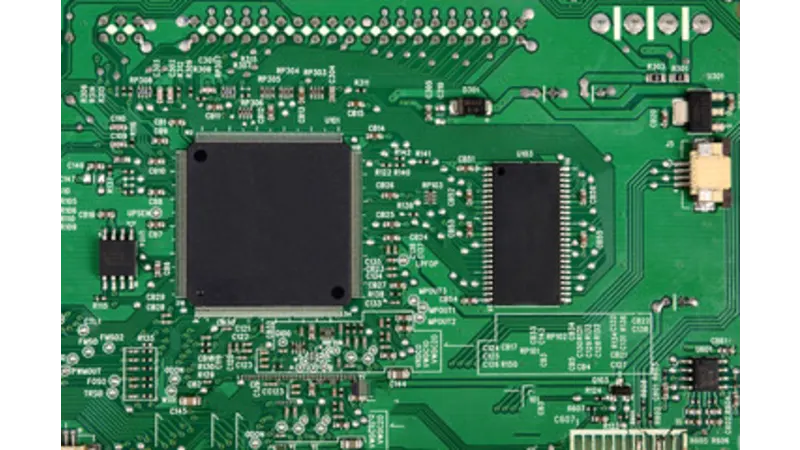
Line-scan cameras capture fast-moving objects one narrow line at a time, making them ideal for wafers, glass panels, printed circuit boards, and roll-to-roll materials. Unlike area-scan cameras, they deliver distortion-free images of unlimited length. At high speeds, exposure per line drops to microseconds, resulting in noisy images on low-reflectivity surfaces such as bare silicon, which reflects only about 4% of light.
Time Delay Integration, or TDI, solves this by repeatedly exposing each point as it moves past the sensor and summing the exposures. There are two main TDI approaches:
Analog TDI sensor: Uses CCD or hybrid CMOS technology with analog summation across thirty-two to more than two hundred stages.
Digital TDI (multiline CMOS + FPGA) : Uses a CMOS sensor with four rows and digital accumulation in the camera’s FPGA.
Both approaches aim to improve light sensitivity and image brightness in high-speed line-scan imaging, but they differ significantly in architecture, achievable sensitivity, and system cost. Understanding these differences helps engineers determine which TDI implementation best fits their inspection requirements.
TDI fundamentals: Two paths to sensitivity

Analog TDI Sensor
An analog TDI sensor accumulates signal directly in the sensor’s charge domain. The sensor consists of a column divided into multiple stages (typically 32–256). As the object moves, photo-generated charge is shifted from stage to stage in synchronization with the motion and accumulated before digitization.
Because signal integration occurs in the analog domain, read noise is introduced only once at the final A/D conversion. This enables substantial sensitivity improvement and very high signal-to-noise performance, allowing reliable imaging under extremely low illumination (often ≤0.1 lux) while maintaining low power consumption (typically 2–4 W).
As the number of stages increases, synchronization between object motion and charge transfer becomes more demanding. High-stage TDI sensors therefore require extremely precise motion control and encoder feedback. Any mismatch between object speed and line rate will result in image blur.

Digital TDI
Digital TDI uses a CMOS sensor with four parallel rows. As the object moves past the sensor, each row captures the same scene at slightly different moments. The camera’s FPGA aligns the rows through spatial correction and digitally combines the pixel data.
By accumulating multiple exposures of the same moving object, digital TDI improves light sensitivity and image brightness in high-speed line-scan imaging. Because each row is digitized before summation, read noise is introduced at every stage, limiting the achievable sensitivity gain when compared with analog TDI.
Each row undergoes independent A/D conversion prior to accumulation. High-quality A/D conversion and digital signal processing help minimize signal loss and preserve image quality during digital summation.
Like analog TDI, digital TDI requires accurate matching between object speed and line rate. Small speed variations (approximately ±5–10%) can be tolerated through FPGA-based spatial correction, but larger mismatches will still cause image blur.
Technical comparison and key performance drivers
As outlined in the previous section, analog and digital TDI differ primarily in where signal accumulation occurs. The table below expands on these distinctions with a deeper comparison of performance-related parameters.
Parameter | Digital TDI (Post-ADC) | Analog TDI (Charge-Domain) | Significance for Engineers |
Integration Domain | Digital (FPGA summation, Post-ADC) | Analog (Charge Transfer, Pre-ADC) | Determines fundamental noise floor and gain mechanism. |
|---|---|---|---|
Typical Stages/Rows (N) | Low (typically 4 rows) | High (32 to 256 stages) | Dictates maximum achievable light sensitivity. |
Read Noise Accumulation | Injected N times (at every line readout) | Injected once at the final output | Ultimate sensitivity differentiator: Analog yields≈ √N SNR gain at low light. |
Usable Light Level | Moderate Low Light ( ≥0.5 lux) | Ultra-Low Light (≤0.1 lux) | Critical for dark-field/electroluminescence applications. |
Motion Tolerance | More tolerant to small speed variations | Tight synchronization | Impacts complexity and cost of mechanical integration and encoder requirements. |
Spectral Capability | Built-in Color/Multispectral support | Typically Monochrome for maximum SNR. | Key advantage for applications requiring color information (e.g., PCB inspection). |
Relative System Cost | Lower (Standard CMOS sensor, forgiving mechanics) | Higher (Dedicated Hybrid sensor, high-precision mechanics) | Budget constraint is often the first selection filter. |
Footnote:
In TDI imaging, the signal ideally increases in proportion to the number of stages (N).
For TDI sensors, noise increases more slowly (only by √N) because read noise is added once at the end.
For digital TDI, read noise is added at every line readout, so noise grows faster and limits the effective SNR gain in low-light conditions
Need help selecting the right TDI architecture?
Discuss your inspection requirements with a Basler vision expert and find the optimal solution for your lighting, speed, and sensitivity constraints.
Talk to a Vision ExpertTDI, regardless of implementation, is fundamentally intended to increase light sensitivity and image brightness in high-speed line-scan imaging. Digital TDI provides an additional option for applications where a small number of stages, such as four rows, are sufficient. In these cases, customers can achieve a meaningful improvement in brightness and sensitivity with a much more cost-effective solution compared to dedicated TDI sensors.

Real-World Applications



Strategic decision matrix and checklist
Selecting the optimal TDI architecture, whether the flexible Multiline CMOS with digital TDI feature or the high-sensitivity TDI sensor, requires engineers to align camera performance directly with application constraints. This decision is typically governed by three primary factors: the available light budget, the system's tolerance for mechanical synchronization stability, and the overall cost ceiling. The matrix below serves as a practical checklist, mapping core application requirements to the most appropriate TDI technology.
Requirement | Digital TDI | Analog TDI |
Lower budget capability is critical | Preferred | Limited |
|---|---|---|
Lighting ≥ 0.5 lux | Preferred | Acceptable |
Some conveyor speed variation (e.g.,±5%) | Preferred | Limited |
Lighting ≤ 0.5 lux (often ≤ 0.1 lux) | Limited | Preferred |
Sub-micron cracks, faint residues, or electroluminescence | Limited | Preferred |
Dark-field of bare-silicon inspection | Limited | Preferred |
Minimal heat generation in a cleanroom | Acceptable | Preferred |
Monochrome is acceptable | Acceptable | Preferred |
Summary
For applications that do not require the extreme sensitivity of a dedicated TDI sensor, digital TDI provides a practical way to improve light sensitivity and image brightness in high-speed line-scan imaging.
Analog TDI sensors (especially the new back-illuminated hybrid CMOS generation) remain the only choice when ultimate sensitivity under minimal illumination is required, such as front-end wafer inspection or sub-100 nm defect detection.
Key takeaways for system engineers:
Digital TDI is often a practical starting point when moderate sensitivity improvement is sufficient and system cost must remain controlled.
Move to analog TDI when the system becomes truly light-limited: Transition only if proof-of-concept testing shows you are genuinely light-limited below ~0.3 lux.
Future-proofing: The newest hybrid TDI cameras are rapidly closing the speed gap and deserve consideration for future-proof designs requiring maximum sensitivity.
Validation is key: Choose based on your actual light budget, spectral needs, and motion stability, then validate with a short on-line trial. The right TDI technology will dramatically improve yield and throughput.
Not sure which TDI approach fits your system?
Send us your inspection requirements and we can help evaluate the optimal imaging architecture.
FAQs in TDI technlogy
No. TDI does not increase the camera’s line rate. Instead, it improves light sensitivity and image brightness while maintaining high inspection speeds.
TDI relies on precise synchronization between object motion and the sensor’s charge transfer or exposure timing. If the object speed does not match the line rate, the accumulated signal becomes misaligned, resulting in image blur.
Even with digital TDI, the object speed must closely match the camera’s line rate. Because multiple exposures are combined, each row must capture the same point on the moving object at the correct time. If the speeds do not match, the accumulated signal becomes misaligned and the image will appear blurred.
Key points:
Digital TDI ≠ normal line scan
Synchronization requirement is similar to TDI
The difference is where integration happens, not the motion requirement
Small speed variations can sometimes be compensated using FPGA-based spatial correction, but larger mismatches will still result in image blur.
A dedicated TDI sensor is typically preferred when inspection is strongly limited by available light or extremely faint defects must be detected, for example:
Dark-field wafer inspection
Electroluminescence inspection
Detection of very low-contrast or sub-micron defects
In these situations, analog TDI provides the highest signal-to-noise performance.
However, the optimal choice often depends on the full imaging system. Factors such as:
available illumination
optics and magnification
motion stability
defect contrast
can influence whether digital TDI is sufficient or a TDI sensor is required. In practice, evaluation and testing are often recommended.