High-Sensitivity Image Processing Cameras
High-sensitivity image processing cameras are essential for achieving a quality video image with low image noise even in poor lighting conditions. High-sensitivity machine vision cameras can work in a variety of fields, including high-speed applications and security tasks during nighttime hours where the lighting is poor. The cameras are either outfitted with CCD or CMOS sensors.
Reading time: approx. 5 Minutes
What are high-sensitivity cameras?
High-sensitivity cameras are designed to produce usable images in very low-light conditions. They can detect much less light than ordinary cameras, often while keeping noise relatively low.
A high signal-to-noise ratio matters in high-sensitivity cameras
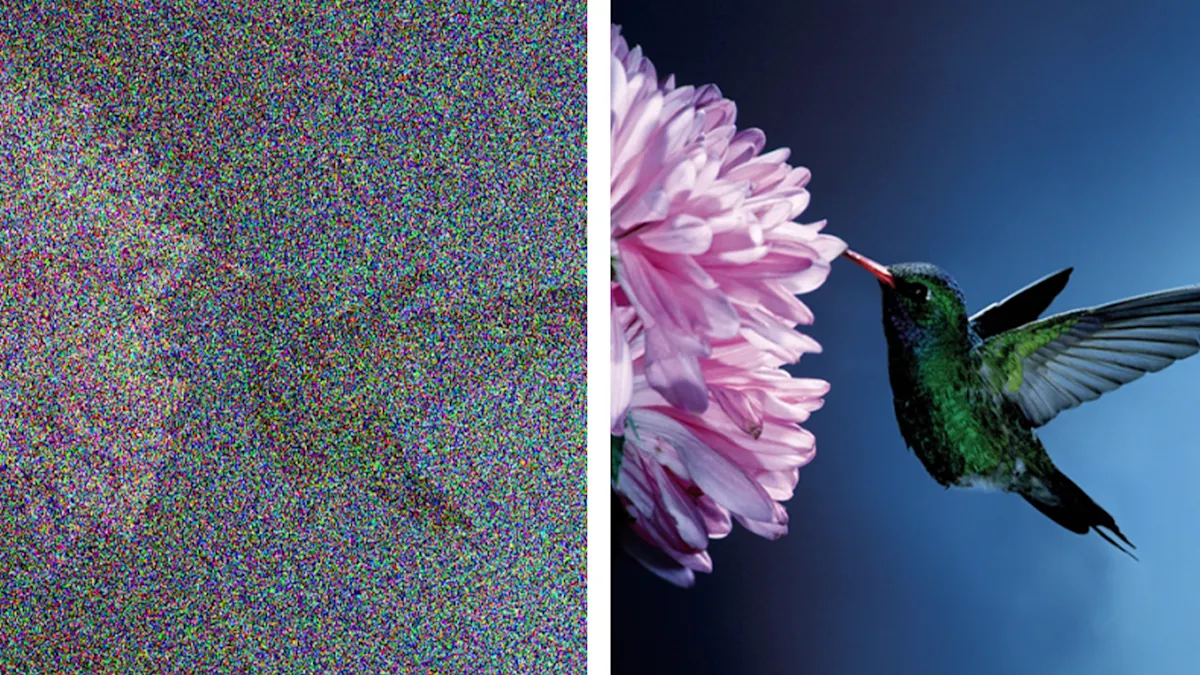
The signal generated by a sensor depends on the amount of light reaching its pixels. In low-light conditions, this signal is very weak, so the camera amplifies it to make it suitable for digitization and transmission. However, amplification also increases the camera's inherent noise. It therefore does not improve the signal-to-noise ratio (SNR).
To maintain image quality at high gain, the camera must keep its noise level as low as possible. Low base noise results in a higher SNR, making weak signals easier to distinguish and objects easier to detect—even under challenging lighting conditions.
What does quantum efficiency mean for camera sensitivity?
Quantum efficiency (QE) describes how effectively an image sensor converts incoming photons into electrical signals. A higher QE means that more of the available light contributes to the image signal.
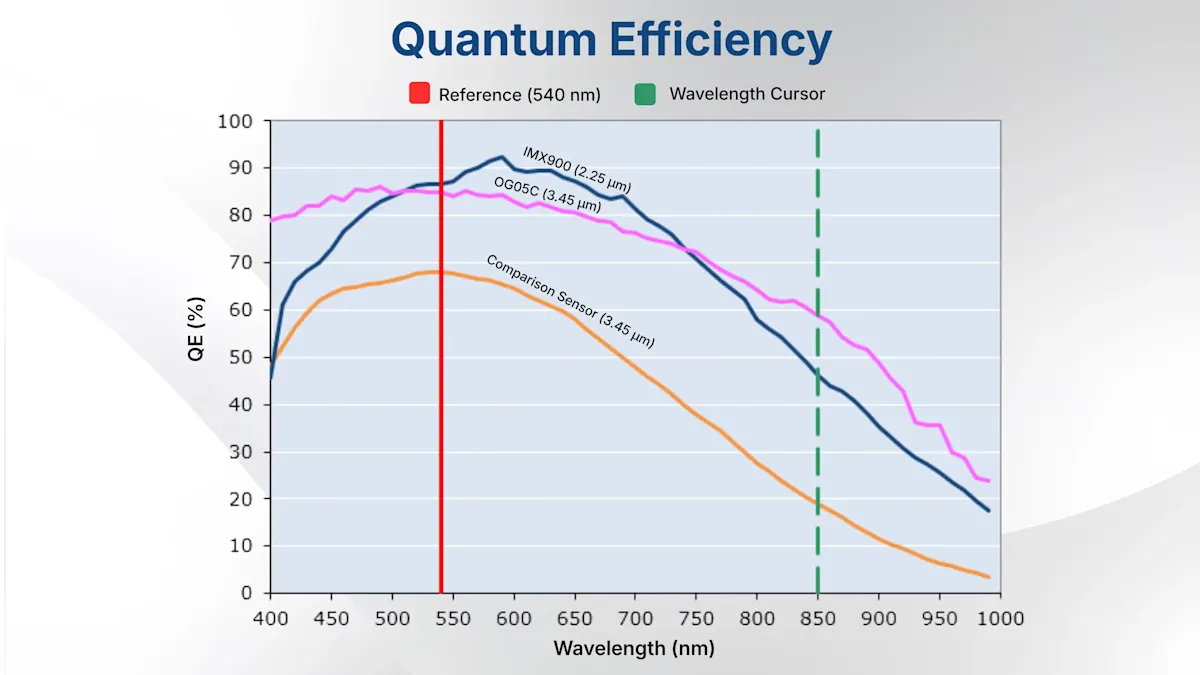
Since QE varies with wavelength, it is useful to consider both the QE level and spectral response when evaluating camera sensitivity. QE curves show how efficiently a sensor responds to light across different wavelengths, helping to compare sensor performance for different imaging conditions.
OG05C – Broad sensitivity with extended NIR response
The 5 MP OG05C Camera with 3.45 µm pixels achieves a peak quantum efficiency of around 87% and maintains sensitivity across the visible and near-infrared spectrum. Its response extends beyond 1000 nm, providing additional flexibility when longer NIR wavelengths are required.
IMX900 – High QE across visible and near-infrared
The 3.2 MP IMX900 camera with 2.25 µm pixels reaches a peak quantum efficiency of over 90% in the visible range and maintains a strong response into the near-infrared. Its broad spectral sensitivity supports efficient light capture across a wide range of illumination wavelengths.
When do you need a high-sensitivity camera?
High sensitivity becomes particularly important when the imaging system has limited opportunities to collect light. This can happen because the exposure time must be very short, illumination is restricted by the system or environment, or the object itself cannot tolerate intense or prolonged illumination.

Short-exposure, high-speed inspection
Fast-moving objects require short exposure times to minimize motion blur, leaving the sensor less time to collect light. High-sensitivity cameras help maintain sufficient image signal within these short exposure windows, supporting reliable inspection without compromising production speed.
Typical examples: High-speed PCB and electronics inspection, fast production lines in manufacturing, and intelligent transportation systems (ITS)

Imaging in low-light environments
Some imaging setups simply cannot provide enough light because of limited installation space, long working distances, high magnification, optical constraints, or difficult imaging environments. A high-sensitivity camera can make better use of the available light, providing greater flexibility in the overall imaging setup.
Typical examples: Microscopy, semiconductor inspection, fluorescence detection, traffic imaging, etc.

Light-sensitive objects and materials
Increasing illumination is not always the solution. Bright or prolonged exposure can heat, alter, or damage certain light-sensitive objects and materials. High-sensitivity cameras can acquire usable image information with less illumination or shorter illumination periods, helping minimize unnecessary light exposure.
Typical examples: Photosensitive biological tissues and organs, live cells and specimens, and light-sensitive materials used in research and manufacturing.
High-sensitivity ace 2 cameras
Find the right camera for your application or use our Vision System Configurator to configure your system.