High-Precision Inspection and Alignment of Transparent Adhesives for PCB/FPC Assembly
Transparent adhesives, double-sided tapes, and protective films are widely used in PCB and FPC assembly for consumer electronics manufacturing. However, their low contrast and poorly defined boundaries make reliable detection and positioning challenging. Basler helps machine builders improve inspection accuracy and production efficiency by enabling high-contrast imaging of transparent adhesive materials.
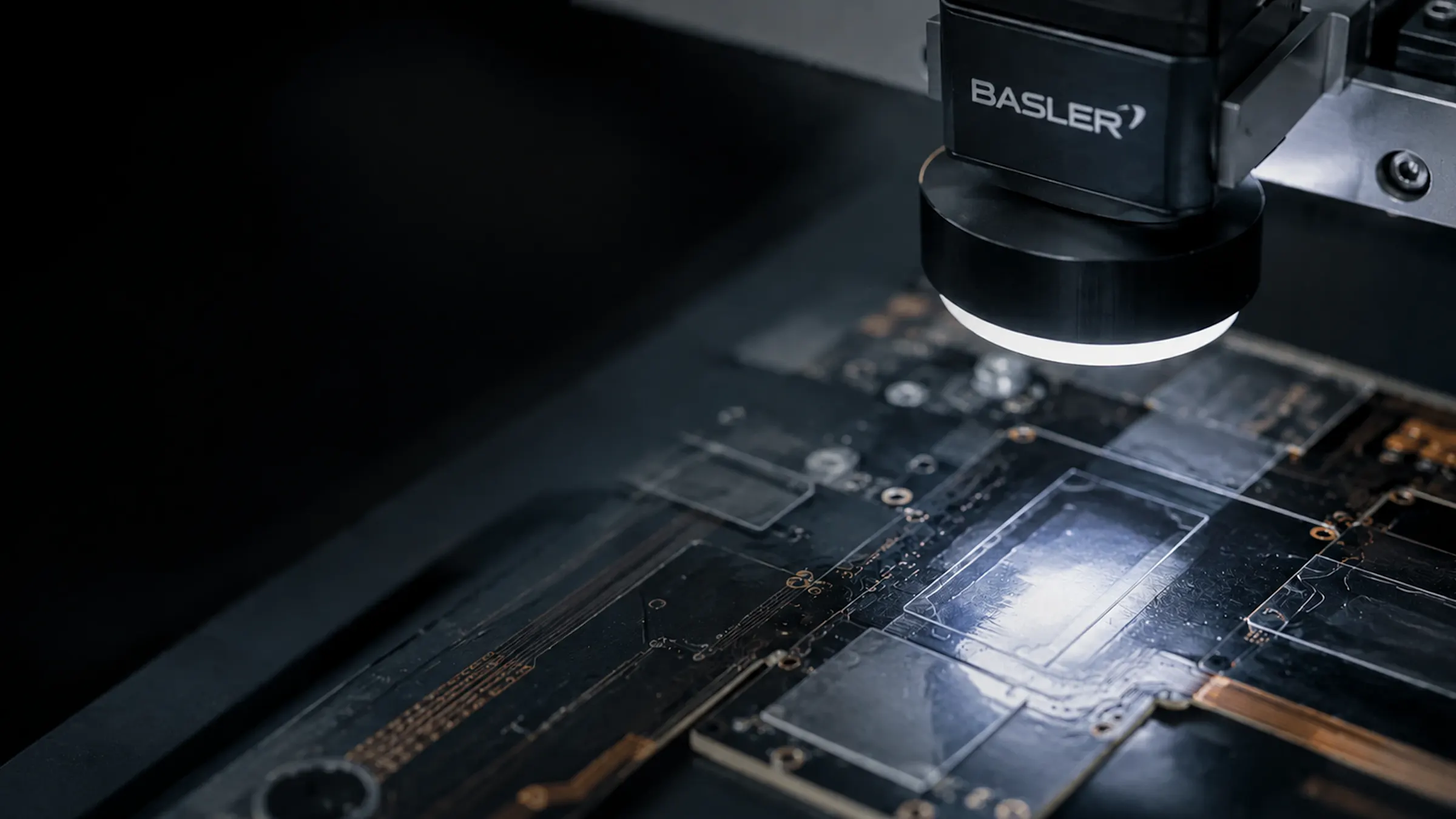
Vision inspection of adhesive material
Pre-cut auxiliary materials such as transparent adhesives, double-sided tapes, foam tapes, and protective films are widely used in PCB and FPC assembly processes. In pick-and-place lamination applications, vision systems must not only ensure accurate positioning but also verify material quality before placement.
Imaging challenges for transparent adhesive inspection
Low contrast between adhesive and background film
The optical response of transparent adhesives is often similar to that of the carrier film, resulting in insufficient image contrast for stable detection under conventional illumination.
Blurred boundaries affect contour extraction and measurement accuracy
Diffuse adhesive edges reduce contour definition, directly impacting measurement repeatability and positioning accuracy.
Diverse material properties require flexible imaging parameters
Differences in transmission, reflectivity, color, and thickness across adhesive materials make it difficult to maintain consistent inspection performance using a single imaging setup.
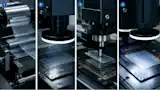
The Key Vision Tasks of Positioning and Adhesive Quality Verification
A typical process includes:
Material feeding and pick-up – Pre-cut adhesive materials are picked from reels or carriers
Flying inspection and adhesive verification – Materials pass through a vision station where position, contour, and adhesive conditions are inspected. Parts with offset, residue, or overflow defects are automatically rejected
Precision alignment and placement – Vision-guided XYθ compensation ensures accurate placement onto the target PCB or FPC location
Post-placement verification – Inspection confirms placement accuracy and process quality
Vision solution for transparent adhesive inspection
To address the imaging challenges of transparent adhesive inspection, Basler combines high-resolution color imaging and customized image optimization. When paired with suitable UV illumination, the solution enhances adhesive visibility and supports reliable contour extraction, measurement, and positioning.
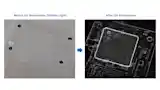
UV illumination for enhanced contrast
Transparent adhesives often exhibit low contrast against carrier films under conventional visible-light imaging. By using UV illumination at selected wavelengths, differences in the optical characteristics of the adhesive and substrate become more pronounced, making adhesive boundaries easier to distinguish. Combined with Basler's image optimization algorithms, this enables stable contour extraction, accurate area and edge distance measurements, and reliable inspection of transparent adhesive materials.
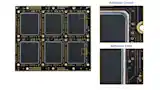
Imaging hardware and firmware optimization
Reliable inspection of transparent adhesives begins with quality image acquisition. Basler's 5 MP color camera, combined with optics, provides the resolution and image quality required for accurate positioning, contour extraction, and measurement in PCB/FPC lamination applications. RGB channel adjustment further enables imaging optimization for different adhesive and carrier material combinations.
To enhance adhesive visibility, Basler develops customized image quality and color optimization firmware like color binning, sharpening and denoising tailored to the application. By improving contrast and reducing background interference at the image source, transparent adhesive boundaries become easier to distinguish from the carrier film. This creates a stable foundation for contour extraction, area measurement, edge distance measurement, and reliable inspection performance.
Inspection functions enabled by the solution
The optimized imaging system enables reliable:
Contour extraction
Adhesive coverage area measurement
Edge distance measurement
Residual adhesive detection
Even under low-light and high-gain operating conditions, customized firmware-based background noise reduction maintains clean images and stable inspection performance.
Interested in this solution approach? Talk to our engineersBenefits of an integrated vision solution
By combining customized firmware, color imaging, and UV illumination, Basler helps machine builders overcome the key imaging challenges associated with transparent adhesive inspection while improving flexibility, inspection reliability, and equipment competitiveness.
Enhanced image quality: Customized firmware improves image quality at the source rather than relying on post-processing.
Improved contrast: Significantly increases the visibility of transparent adhesive materials against the background.
Customized solution: Application-specific firmware helps machine builders create differentiated solutions and strengthen their advantage.
Lower cost of ownership: One vision platform supports multiple material types, reducing setup effort, engineering time, and changeover costs.