Liquid Lenses
Precise focus adjustment without mechanical parts
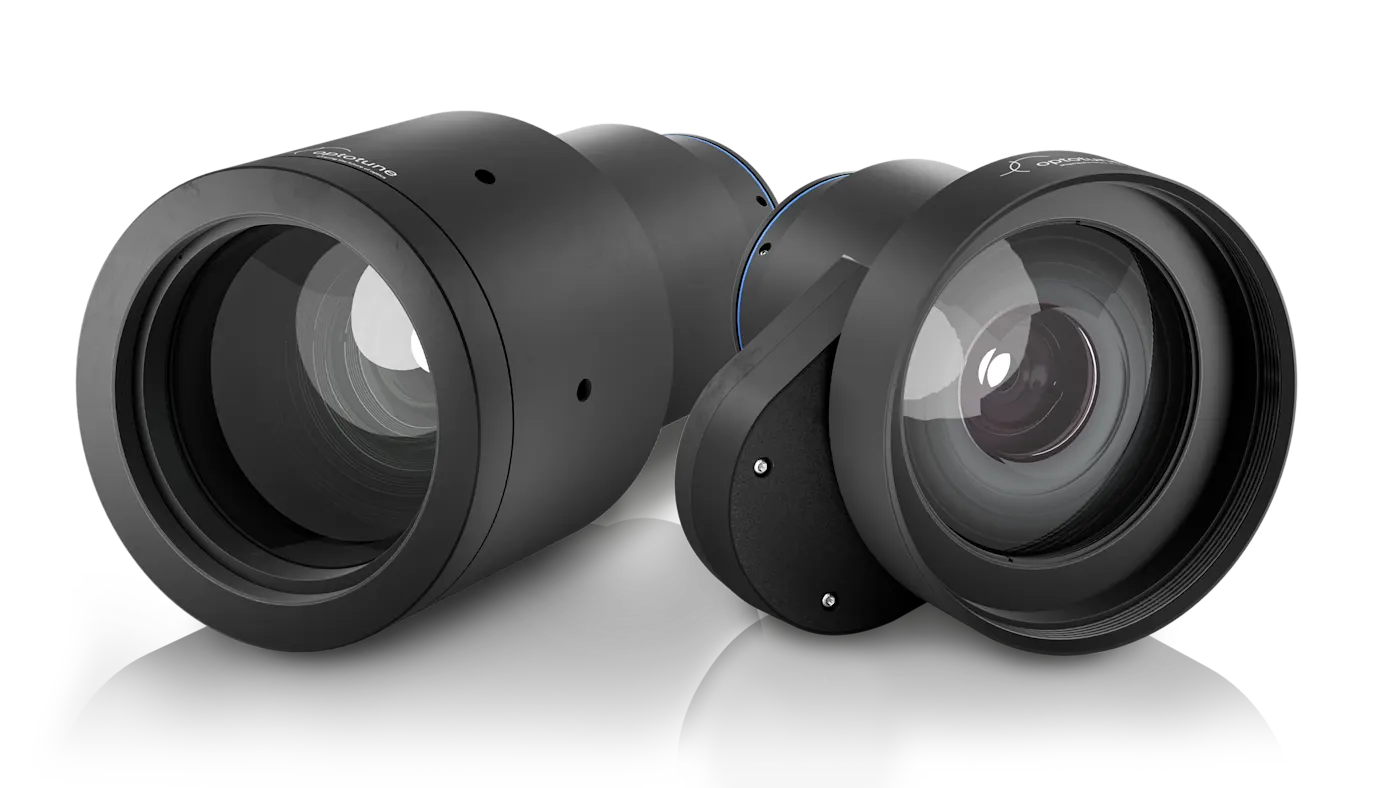
Liquid lenses offer fast and precise focusing without any moving mechanical parts. Optotune's liquid lenses can be controlled directly through compatible Basler cameras using the same SDK, enabling seamless integration and operation.
Focusing without mechanics
Electronic focus adjustment without mechanical componentsFor various sensors
Suitable for sensor sizes up to 4/3" and resolutions up to 3.5 µmWide range of focal lengths and aperture sizes
Lenses with focal lengths ranging from 12 mm to 80 mm and maximum apertures ranging from F3.1 to F5.4Easy control
Can be controlled directly through the Basler camera within the same SDK
An overview of liquid lenses
Find the right lens for your application or learn more about Optotune, a leading manufacturer of liquid lenses.
What are liquid lenses?
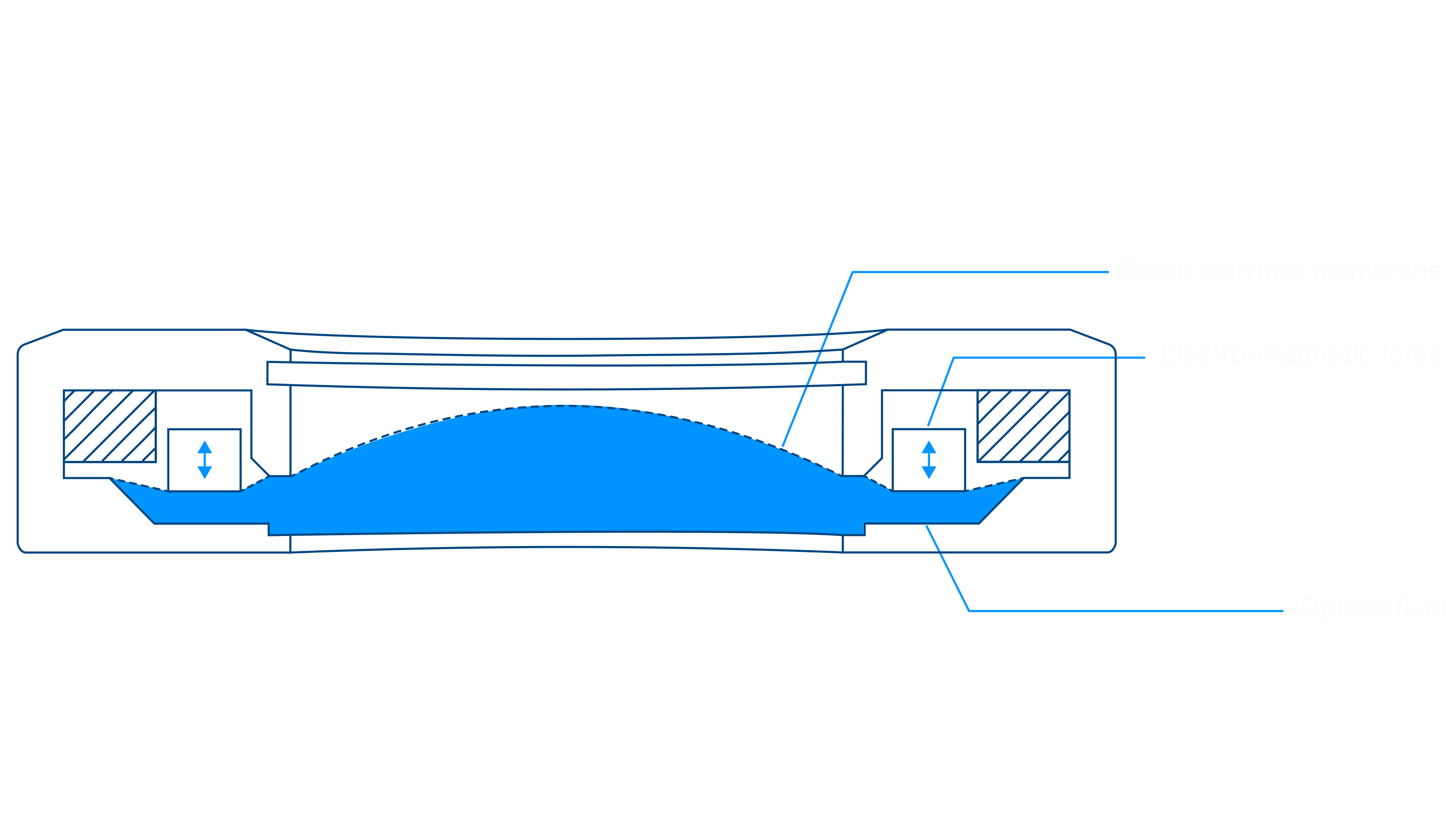
Liquid lenses electronically adjust their focal length or refractive power by deforming an optical fluid. Unlike conventional lenses, focusing occurs directly within the lens without any moving mechanical components. This enables extremely fast and precise focusing.
Liquid lenses are particularly well-suited for machine vision applications involving varying working distances, high cycle speeds, or limited installation space. Due to a compact design and wear-free focusing, they offer a reliable solution for demanding industrial machine vision systems.
Advantages of liquid lenses
High focusing speed
Liquid lenses allow for focus adjustments in milliseconds. This makes them ideal for dynamic processes, high-speed applications, and automated inspection systems.
Varying work intervals
A single system can accommodate different object distances without mechanical readjustment or lens changes, increasing flexibility and reducing setup times.
Wear-free focusing
Since focusing occurs without mechanical movement, liquid lenses operate with virtually no wear. This results in a long service life and minimal maintenance.
Compact design
Its compact size allows it to be integrated even into space-constrained machines, embedded vision systems, and compact automation solutions.
A comparison: liquid lenses and traditional lenses
Feature | Liquid Lenses | Classic Lenses |
|---|---|---|
Focus speed | Very high | Limited |
Dynamic focus shift | Ideal for varying working distances | Restricted |
Mechanical wear | Minimal | Available |
Camera size | Compact | Larger |
Maintenance costs | Low | Higher |
Capital expenditures | Higher | Low |
Conclusion: Liquid lenses excel in any application that requires rapid focus changes, varying object distances, and high process dynamics. Conventional lenses, on the other hand, remain a cost-effective solution for applications with fixed focus distances.
Applications of liquid lenses
Liquid lenses are well suited for industrial applications involving varying object sizes, changing working distances, and high cycle speeds. Their fast, wear-free focusing enables high process reliability and short cycle times.
Barcode and OCR reading with changing object positions
Pick-and-place systems in automation technology
Electronics inspection with different test heights
High-speed inspection in production processes
Quality control in automated production lines
Robot vision for flexible gripping and handling tasks
Packaging and logistics systems for products of varying sizes