Process Image Data Efficiently
Reduce costs through lean image processing
Modern vision applications generate enormous amounts of data. Our Data Reduction System uses image preprocessing to significantly reduce data loads — enabling less computing hardware, lower operating costs, and greater efficiency.
4 reasons for the Basler Data Reduction System
Up to 80% cheaper
FPGA image preprocessing massively reduces memory requirements and computing costsFlexible
Select the right CoaXPress camera and combine it with a programmable frame grabberScalable & future-proof
For CXP systems with 1 to 99 cameras, expandable to a CoaXPress-over-Fiber systemLean
Reduce maintenance by opting for a simple system setup with fewer critical parts
Vision systems with high detail accuracy and fast cycle times:
Extreme requirements for computing architectures
CoaXPress, as an established vision standard, forms the foundation for high-performance image processing systems; Cameras are connected to the computing architecture via CoaXPress frame grabbers.
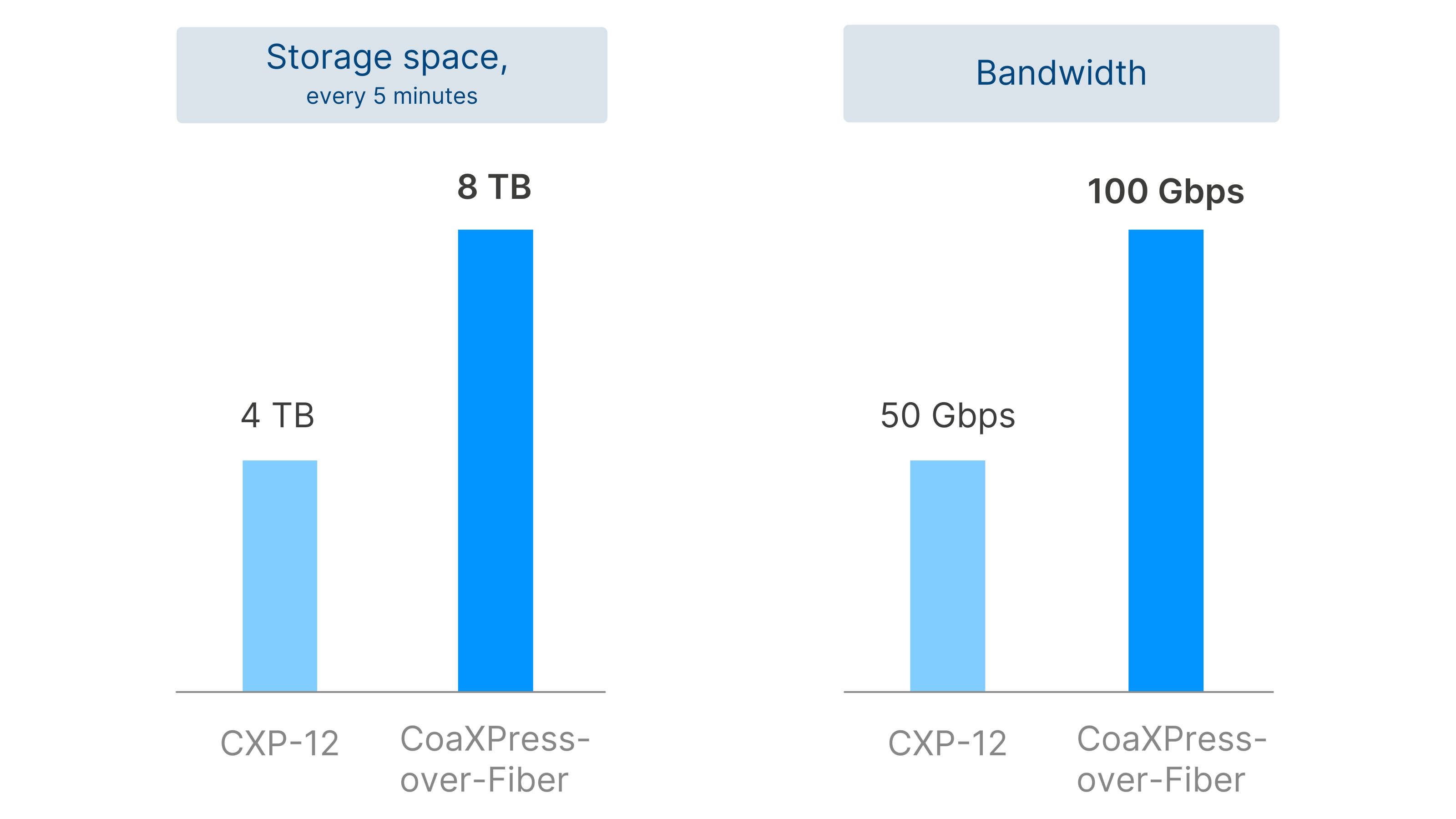
4 terabytes of image data every five minutes at 108 Gbps
The amount of image data generated by such vision systems is enormous. To process it, many computing architectures are designed to forward the images across multiple computing units—typically industrial PCs. The first image frame is sent to the first unit, a few microseconds later the next image follows to the second, and so on. This data forwarding method easily generates up to 4 terabytes of image data within just 5 minutes!
Data Reduction System
Cleansing and reducing image data make your system more efficient
What is the status quo in dealing with the constantly growing flood of image data? In practice, computing architectures based on data forwarding are frequently used; Image frame 1 is forwarded to computing unit 1, image frame 2 to computing unit 2, and so on. The data is divided and forwarded until the data rate reaches a processable level for the downstream computing units.
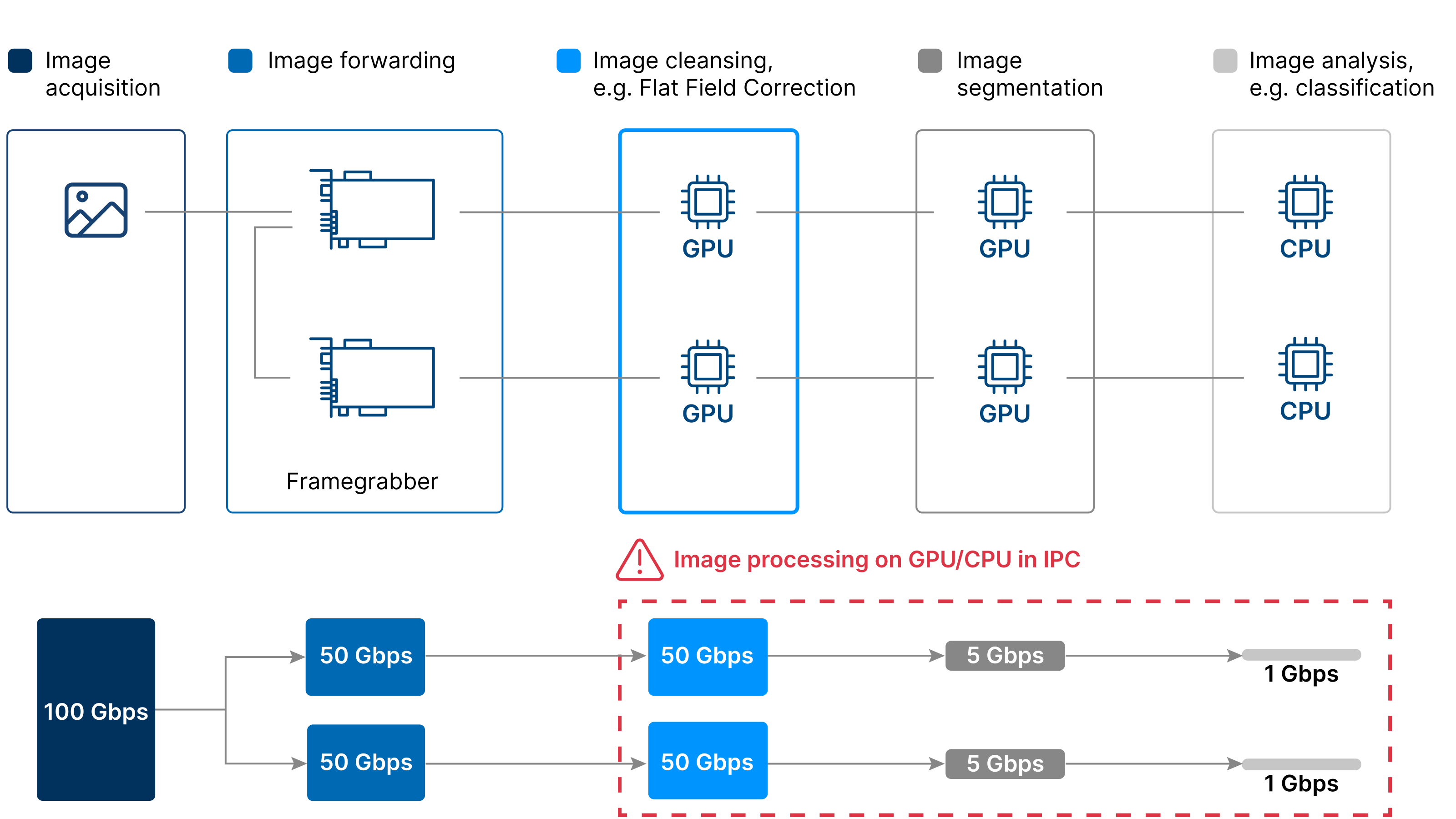
Conventional computing architecture
Frame grabbers have the sole function of forwarding image data. As a result, computing units must be equipped with multiple high-performance GPUs and CPUs.
The input bandwidth of the image data remains unthrottled.
High costs arise from multiple expensive GPUs and CPUs.
Data Reduction computing architecture
The programmed FPGA of the frame grabber becomes the catalyst for the vision system. It first performs image data cleansing, for example shading correction. Then follows image data reduction through segmentation, such as blob analysis.
The input bandwidth of 100 Gbps can be reduced to 2 Gbps.
A Data Reduction System significantly reduces the need for GPU and CPU performance.
Systems become up to 80% more cost-effective
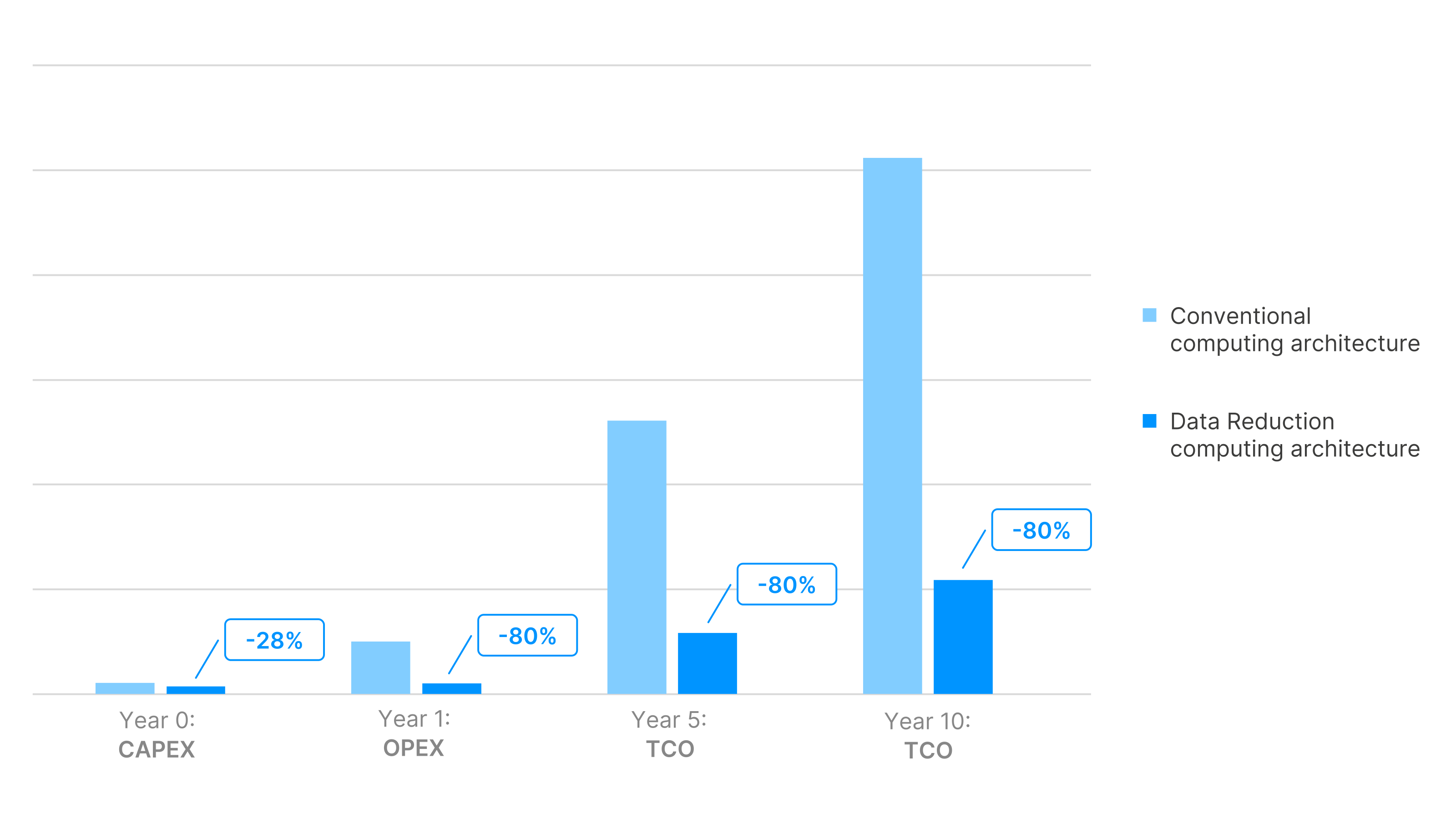
Even in terms of one-time investment costs, the Data Reduction Vision System is up to 28% more cost-effective than the conventional approach.
For every year the machine is in operation, operating costs are reduced by 80%.
This means that the savings over the typical lifecycle of approximately ten years also amount to around 80%.
The comparison included the acquisition costs for cameras, frame grabbers, host systems, and GPUs, as well as the ongoing operating costs for cloud storage and energy.
One system, all possibilities
The selection of camera models is as flexible as their combination in the system. At the same time, both the computing infrastructure and the algorithm used can be freely chosen. System components can be combined and expanded at any time.
CoaXPress cameras and lenses
CoaXPress cameras are used when your vision system needs to deliver particularly detailed images while maintaining a high frame rate. As this example shows, the inspection task is often handled by multi-camera systems.
Frame grabbers with FPGA image preprocessing
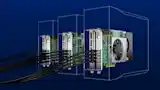
The core of every Data Reduction System is a CoaXPress frame grabber combined with the VisualApplets software. Together, they handle the preprocessing of the image data stream – before the data even reaches the industrial PC.
How are the efficiency gains achieved?
Identify relevant image regions with blob analysis and free your system from data clutter
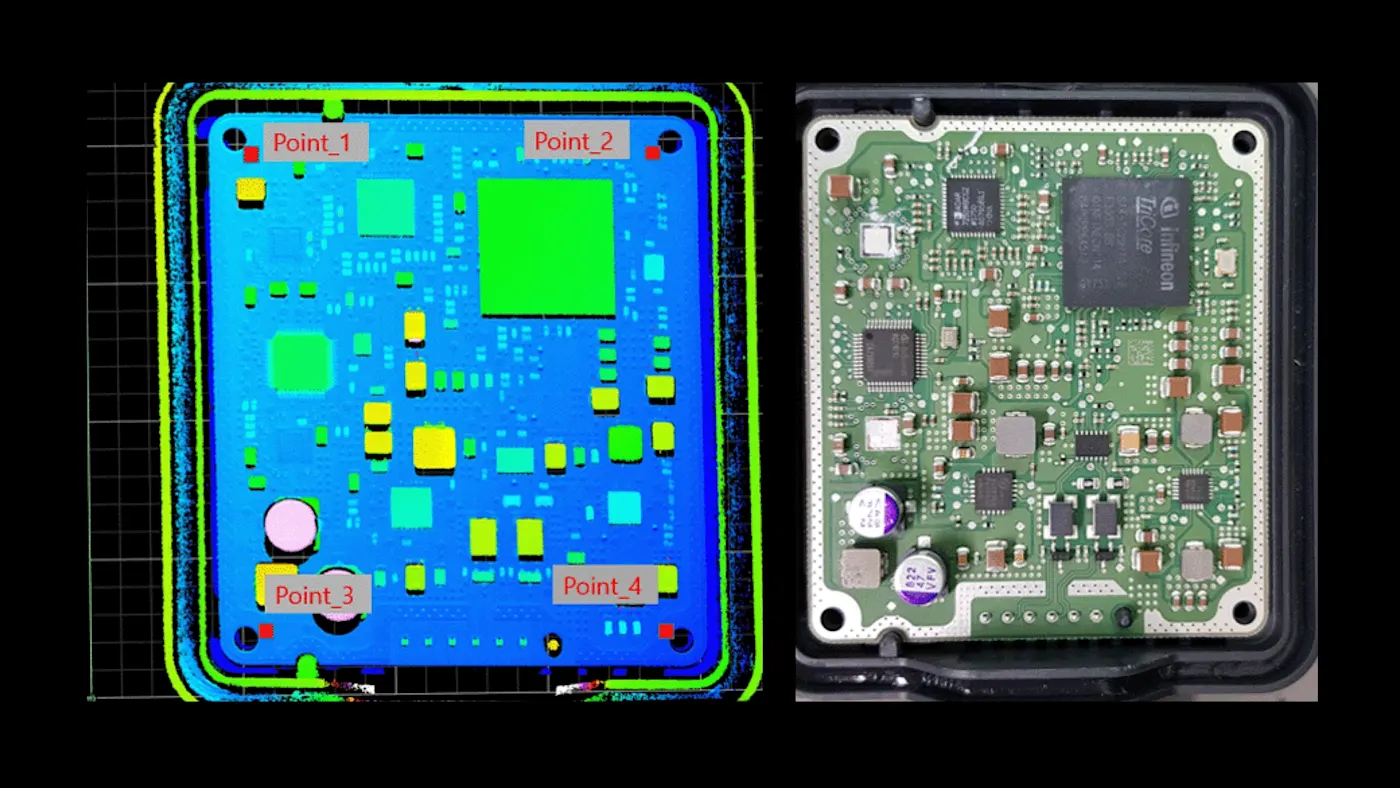
The FPGA programming environment VisualApplets enables efficient implementation of numerous image preprocessing tasks, including blob analysis. In this process, contiguous pixel regions are separated from the background as independent objects (segmentation) and characterized by features such as area size, contour length, and bounding box coordinates (classification).
When blob analysis is performed during preprocessing, segmentation takes place before the image data is stored for the first time. As a result, only the relevant regions of interest (ROI) are processed further, which significantly reduces the amount of data to be transmitted and stored.
Less data through image compression
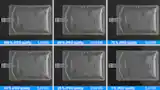
JPEG compression can significantly reduce the amount of data per image. Even with a moderate reduction in JPEG quality, from 100% to 75%, the data volume can be reduced by up to 86%, while maintaining very good image quality. In many applications, even stronger compression is possible, further increasing the savings potential.
The reduced data volume significantly lowers storage, transmission, and computing costs. While additional investment costs arise from programmable frame grabbers, these pay for themselves quickly. After around 14 days of continuous operation at 60 fps, the saved storage costs offset the investment.
Over a typical runtime of two years, despite the initial additional costs, there is a total cost savings of around 85%. From this point on, the system continuously operates more cost-efficiently and provides room for higher bandwidths and future expansions.
Learn more about JPEG compressionIt's worth it: When we look at the image processing chain from the sensor through the camera FPGA to the computing architecture, efficiency potentials often become apparent.

Our holistic approach to vision systems consistently convinces customers time and again.

Data Reduction significantly reduces computing hardware. The result:
High-performance vision systems with maximum cost efficiency.
In which applications is Data Reduction particularly worthwhile?
Conventional image processing systems quickly reach their limits when production lines become faster while simultaneously having to meet the highest quality requirements. Data reduction systems are ideal for high-speed applications that require maximum inspection accuracy.

How to get a Data Reduction Vision System for your application
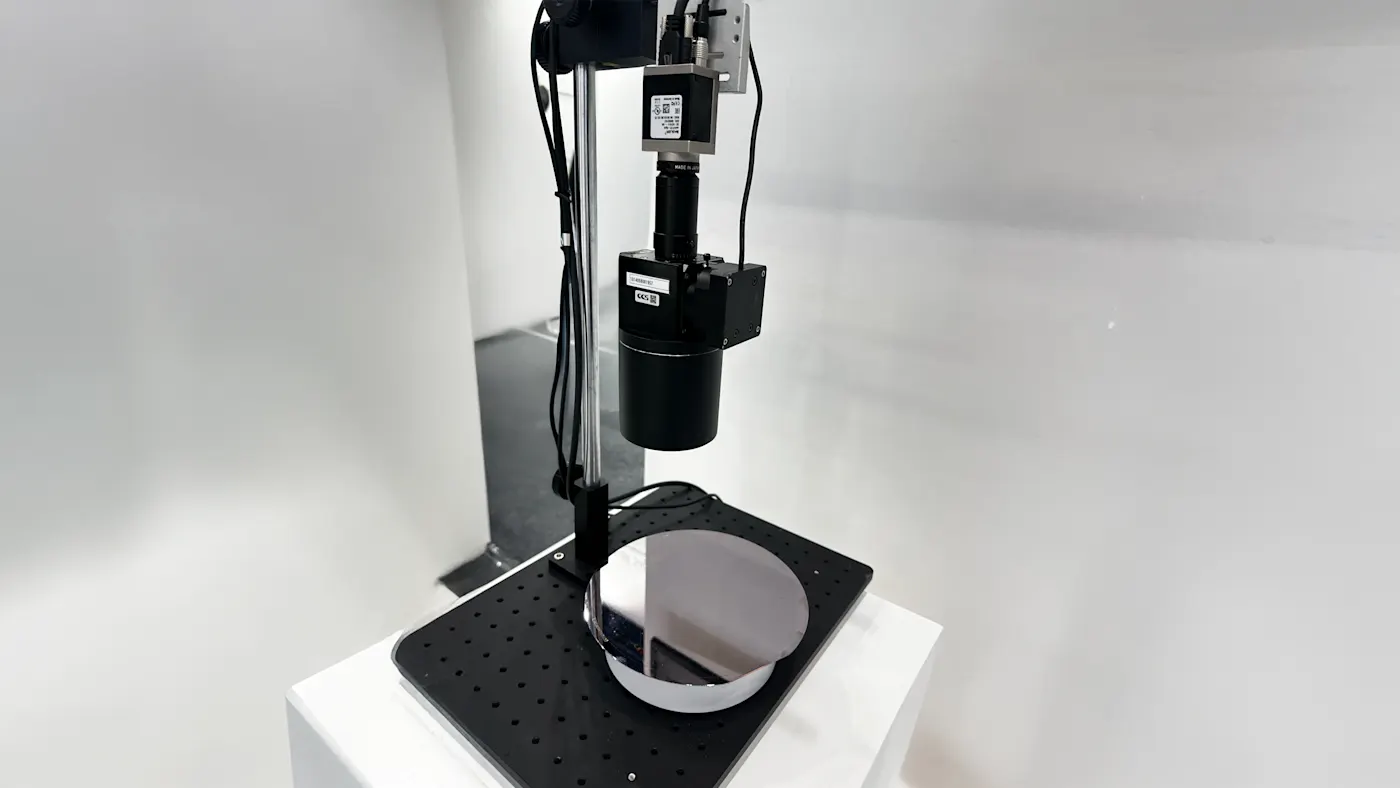
For your image processing, we offer the optimal combination of CoaXPress area and line scan cameras, precise optics, powerful frame grabbers, and software.

We create your Data Reduction Vision System in no time
Our project teams implement algorithms for image preprocessing such as sharpening, blob analysis, JPEG compression, or your specific solution on the frame grabber's FPGA – quickly and efficiently.
Do you want to ensure that our solution meets your requirements? As part of a proof of concept, we test your application for feasibility. We simulate your scenario and determine the optimal hardware setup for your project.
Receive a solid basis for your decision within 5 business days – even before you invest.
Request proof of concept