Reliable Vision for Semiconductor Test Handlers
Vision for reliable contact, fast handling, and in-process verification
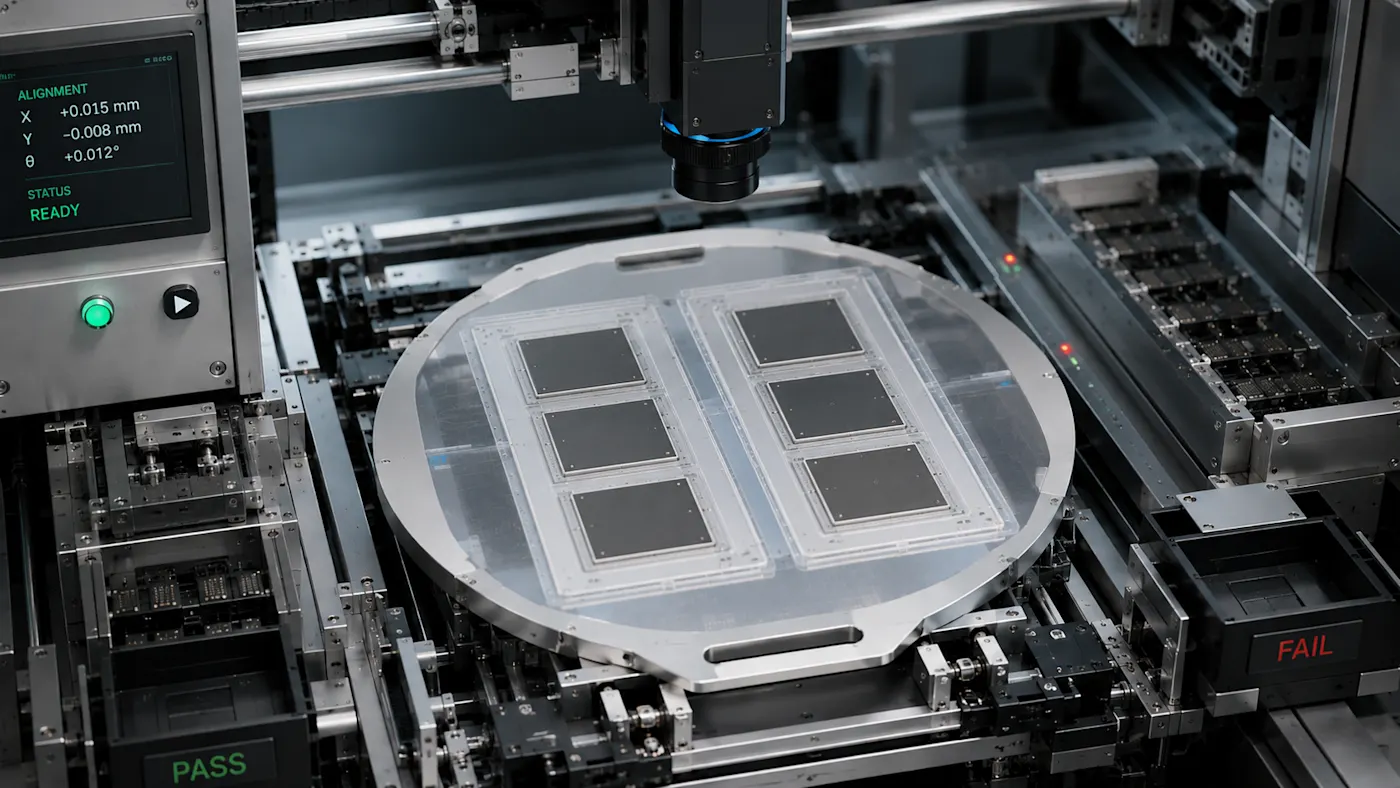
AI/HPC and advanced packaging are increasing semiconductor test complexity. Additional die-level and partially assembled-device testing puts greater pressure on contact reliability, throughput, and device verification. Test handlers need vision that keeps pace with these changing requirements.
Tackling vision challenges in next-generation test handlers
Precise positioning for reliable contact
As devices and test interfaces become more demanding, positioning requirements are tightening. Test handler vision must reliably locate the DUT (device under test) or reference features and provide accurate X/Y/θ position information before electrical contact. Low-contrast marks, reflective surfaces, and varying device formats add further complexity.
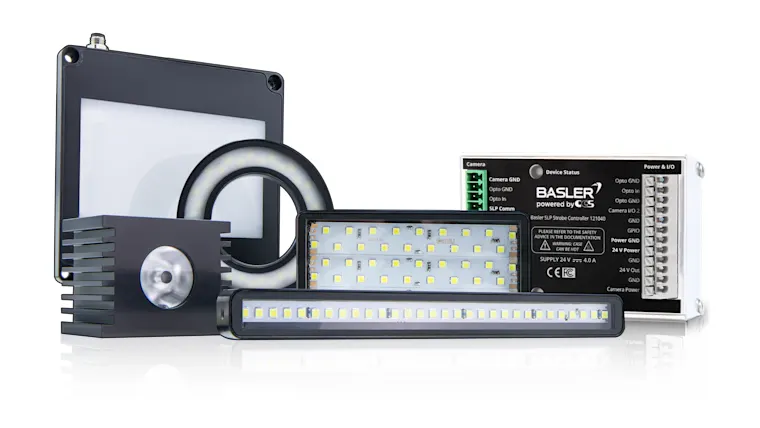
Basler combines area-scan cameras, suitable optics, lighting techniques, and image enhancement into a matched vision module. Camera resolution is selected according to the field of view, feature size, and required positioning accuracy rather than megapixels alone. Compact 1–5 MP cameras cover many established handler vision tasks, while higher-resolution imaging provides additional detail for larger fields of view or finer features.
Reliable positioning helps reduce alignment-related contact failures, false test results, and unnecessary contactor wear.
Discuss your test handler vision requirement with our expert
Reliable imaging at production speed
Higher test throughput leaves less time for positioning and verification. Fast device motion requires short exposure times to minimize motion blur, while sufficient illumination and precise synchronization are needed to maintain stable image quality.
Basler offers global-shutter dart cameras ranging from moderate to high frame rates (@523 fps), combined with suitable illumination and hardware triggering. High-volume handler applications often use moderate-resolution cameras operating at tens of frames per second, while specialized high-speed handling tasks can require frame rates extending into the hundreds.
The imaging configuration is matched to the actual motion sequence and required image detail, enabling reliable acquisition without unnecessarily extending the handler cycle.
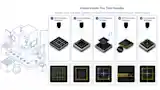
The right image detail for each vision task
A test handler may use several vision stations for positioning, presence and orientation, identification, or inspection. Each task requires a different combination of image detail, field of view, speed, and form factor.
Resolution requirements vary significantly across test handler vision tasks. Compact 1–2 MP cameras can provide sufficient image detail for many high-volume presense/absence check tasks, while more demanding alignment, identification, or inspection may require 5 MP or higher. For larger fields of view or finer features, 8–25 MP can provide the image detail needed to achieve the required object resolution.
The goal is not to maximize resolution, but to select the right camera, optics, and illumination for the required object resolution and machine cycle.
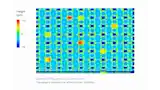
Specialized imaging beyond 2D
Some test handler requirements need information that conventional 2D area-scan imaging cannot provide.
In strip or carrier-based testing, for example, warpage can introduce Z-height variation that affects contact even when X/Y/θ positioning is correct. 3D imaging can provide height and profile information for warpage assessment or Z compensation. For continuous inspection over larger surfaces or edges, line-scan imaging provides another specialized approach.
3D and line-scan technologies complement area-scan vision when the application requires height information or continuous high-resolution inspection.
Across different test handler projects, we see vision requirements becoming much more diverse. High-volume handling still needs compact, fast and reliable imaging, while newer applications are pushing for higher positioning precision, more image detail and, in some cases, 3D information. The key is understanding the actual test and handling process first, then designing the vision module around it.

Building reliable vision into test handlers
Reliable testing: Precise positioning and stable imaging support consistent device contact and verification.
High throughput: Task-appropriate image acquisition, triggering, and illumination support demanding machine cycles.
Flexible integration: Compact to high-resolution imaging options support different vision stations, form factors, and machine architectures.
Faster vision development: There is no single vision configuration for every test handler task. Basler helps translate FOV, accuracy, cycle time, and integration requirements into the right combination of camera, optics, illumination, and software, without overengineering straightforward applications.
Products for this solution
Looking to implement a comparable solution? These products will help you.