Machine Vision for Wire Bond Inspection
Achieving reliable defect detection and lower false rejects in high-speed wire bond inspection
Although flip chip dominates many leading-edge logic and memory devices, wire bonding remains a widely adopted interconnection technology for power semiconductors, analog ICs, image sensors, RF devices, and many automotive applications. Wire bonding systems rely on precision vision for alignment, while post-bond inspection systems verify wire integrity and package quality. As package complexity increases, reliable machine vision has become essential for ensuring bond quality, minimizing false rejects, and maintaining high production throughput.
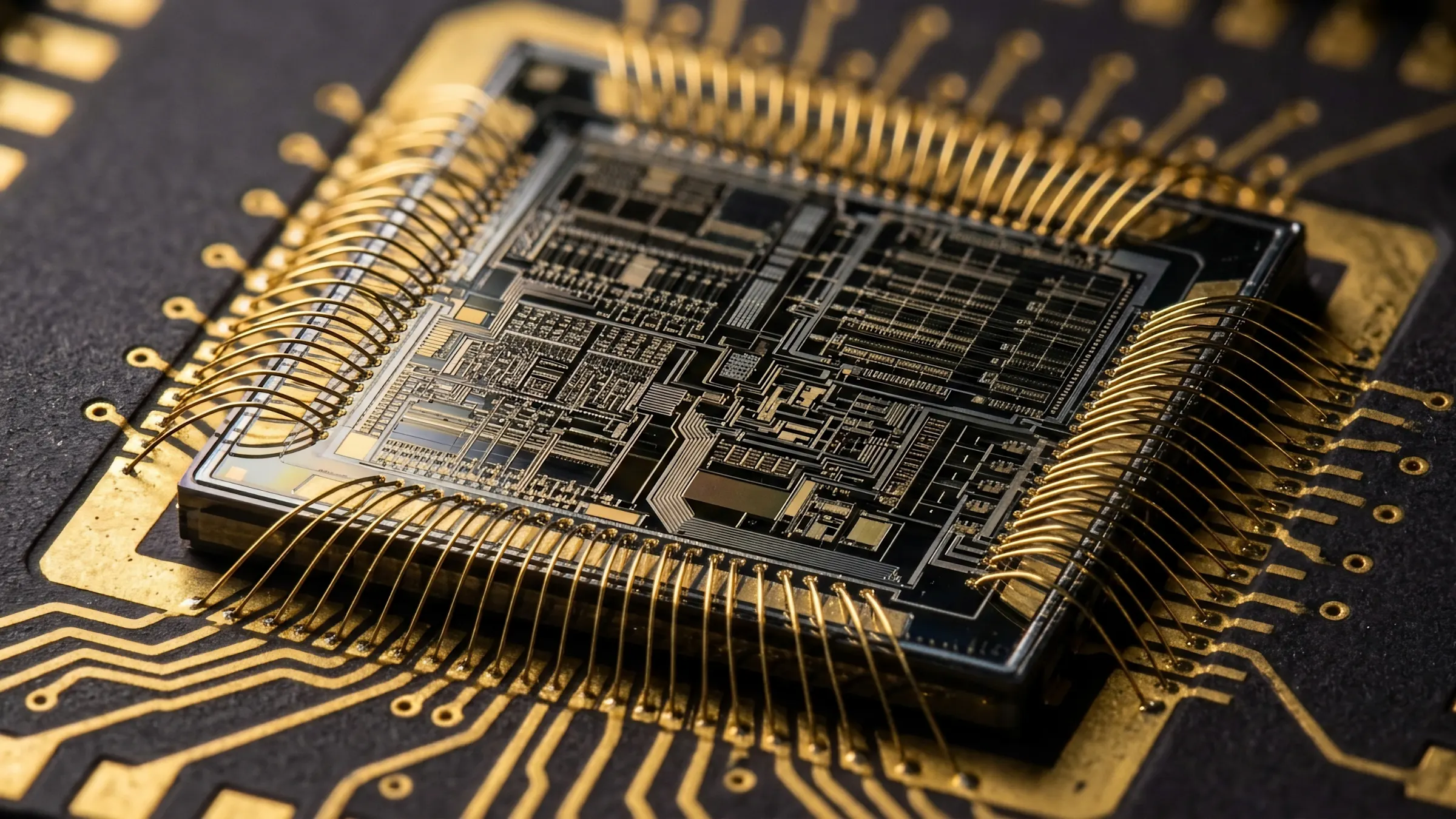
Machine vision in wire bonding and post-bond inspection
Wire bonding vision systems perform two core functions in back-end semiconductor assembly:
Precision alignment: during wire bonding for accurate die, pad, and leadframe positioning.
Post-bond inspection: to verify wire integrity, detect bond defects, and ensure consistent package quality.
These applications require different imaging capabilities, but both depend on reliable image acquisition, precise measurement, and stable vision performance.
Shrinking wire geometries and higher densities drive new inspection challenges
Modern wire bonding processes involve increasingly fine wire diameters, tighter bond pitches, and more complex wire loop configurations. These trends introduce new challenges for detecting subtle defects, verifying bond integrity, and maintaining inspection performance at production speed.
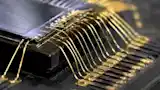
Specular reflectivity and low contrast: Glare and uneven contrast make stable defect detection difficult.
Sub-micron defect detection: Detecting NSOP defects, wire sweep, and heel cracks requires sensitivity down to a few microns or below.
Complex wire geometries: Low-loop bonding, higher wire densities, and overlapping wire structures make reliable inspection increasingly challenging, particularly where subtle wire deformation and clearance must be verified.
Speed versus resolution trade-off: Inspection must keep pace with wire bonders running at more than 20 bonds per second.
Thermal drift and mechanical constraints: Heat, vibration, and motion can affect alignment accuracy and long-term measurement repeatability.
Vision technologies enabling reliable wire bond inspection
Modern wire bonding applications place increasing demands on imaging and inspection systems. From reflective wire surfaces and microscopic defects to complex wire geometries, maintaining reliable inspection performance requires a combination of high-quality imaging, advanced measurement capability, and efficient data handling.
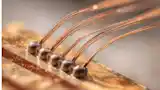
Optimizing image quality for reflective wire surfaces
Reliable wire bond inspection starts with stable imaging. Illumination design, dynamic range, and sensor characteristics must work together to preserve wire and bond details while minimizing the influence of reflections, material-dependent optical variations, and changing surface conditions. Some inspection systems also employ multi-angle imaging to improve the visibility of reflective wire surfaces and complex wire geometries.
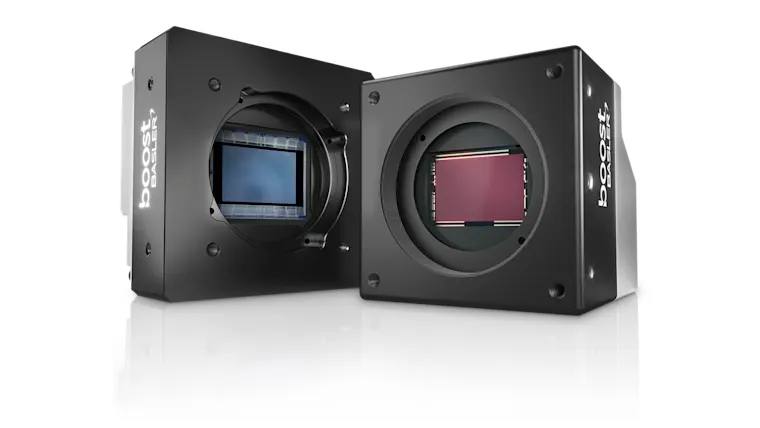
Basler supports this through flexible imaging architectures, including different HDR imaging methods and PGI image optimization technologies, which can be adapted to different inspection requirements. Image enhancement technologies that improve local contrast and edge definition can also support more stable pattern recognition when alignment marks or inspection features become increasingly small. The result is more consistent image quality and a reliable foundation for both rule-based and AI-assisted inspection workflows.
Need technical consultation? Talk to our engineer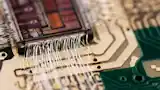
Capturing fine defect details with high-resolution imaging
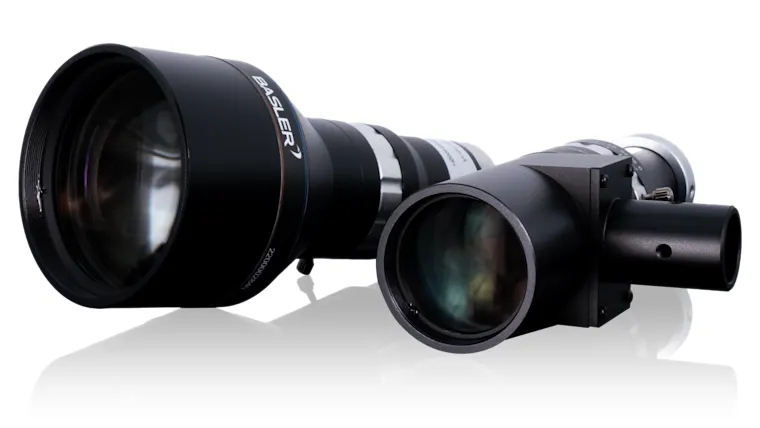
As wire diameters shrink and package densities increase, inspection systems must capture increasingly subtle defect features. Detecting defects such as NSOP, bond lift, wire sweep, and heel cracks requires sufficient pixel resolution, suitable optics, and consistent image contrast to distinguish critical defects from normal process variation.
Depending on package design and inspection coverage requirements, machine builders may deploy imaging solutions ranging from 5 MP to 65 MP. Because inspection criteria often vary across manufacturers and package types, flexible imaging platforms are essential for adapting to different inspection algorithms and quality requirements. Selecting the right balance of resolution, field of view, and throughput is critical to achieving reliable defect detection while maintaining inspection performance in high-volume production.
Upgrading your wire bond inspection machine? Consult our experts!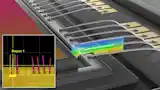
Improving visibility of complex wire structures
Advanced packaging trends such as low-loop bonding, higher wire densities, and overlapping wire structures make wire inspection increasingly challenging. In many applications, optimized illumination, multi-angle imaging, and high-resolution imaging remain the primary approaches for improving defect visibility and wire profile evaluation.
Although most wire bond inspection relies on high-resolution 2D imaging, certain specialized applications may benefit from additional height information. In these cases, Basler's vision portfolio can be combined with complementary 3D measurement technologies to support accurate inspection workflows.
Wire bonding is a mature technology, but inspection requirements continue to evolve. As wire structures become smaller and package complexity increases, manufacturers are demanding higher imaging quality and more flexible inspection capabilities while maintaining production efficiency.
Supporting reliable wire bond inspection from design to deployment
Reliable wire bond inspection requires more than high-resolution imaging alone. Basler combines imaging expertise, flexible vision technologies, and semiconductor application experience to support demanding inspection requirements.
Reliable defect detection: through high-quality imaging and image optimization technologies
Support for alignment, inspection, and measurement: across diverse wire bonding applications
Simplified integration: with a comprehensive vision portfolio and the pylon Software Suite
Semiconductor-proven reliability: for stable performance in production environments
Products for this solution
Looking to implement a comparable solution? These products will help you.