High-Speed Line Scan Inspection of Copper Foil and Copper-Clad Laminates (CCL)
Reliable surface inspection for continuous copper foil and finished CCL production
As demand for high-performance electronics drives tighter material and quality requirements, manufacturers must detect increasingly subtle defects without compromising production throughput. Basler's racer 2 line scan cameras, imaFlex frame grabbers, and FPGA-based image processing provide the image quality, speed, and processing performance required for reliable inspection, from continuous copper foil webs to finished CCL sheets.
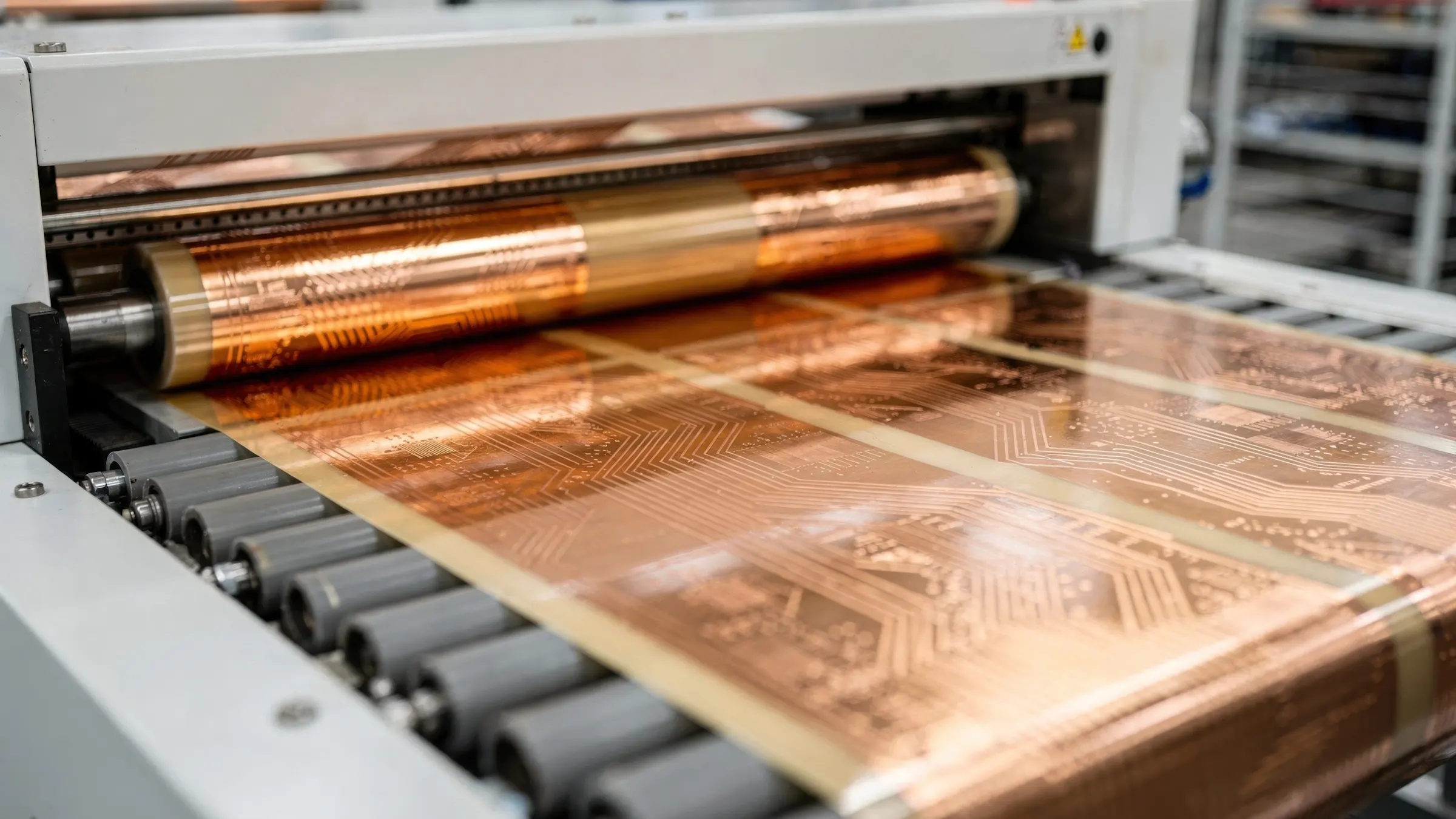
Line scan inspection across copper material production
Copper Clad Laminate (CCL) is the foundation of high-performance printed circuit boards used in AI servers, networking equipment, automotive electronics, and industrial systems.
Surface inspection typically takes place at two key stages: continuous copper foil can be inspected during roll-to-roll production, while finished CCL sheets are inspected after lamination and before downstream PCB fabrication. Typical defects include scratches, pinholes, particles, oxidation, resin residues, stains, and other surface imperfections that can affect downstream yield and reliability.
Depending on material width and the required object-side resolution, high-resolution line scan cameras, including 16k models, can be configured as single- or multi-camera systems for continuous web and rigid CCL sheet inspection.
Key imaging challenges in high-speed copper material inspection
Imaging low-contrast defects on reflective copper surfaces
Challenge
Reflective copper surfaces create demanding imaging conditions. Different lighting techniques reveal different defect characteristics, so one lighting condition is often insufficient to reliably detect the full range of scratches, particles, pits, contamination, and surface irregularities.
Solution
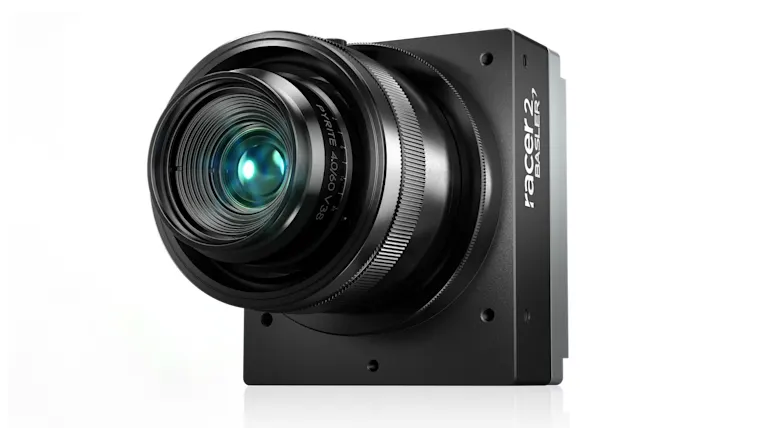
Basler combines high-resolution racer 2 16K line scan cameras with multiple illumination to maximize defect visibility.
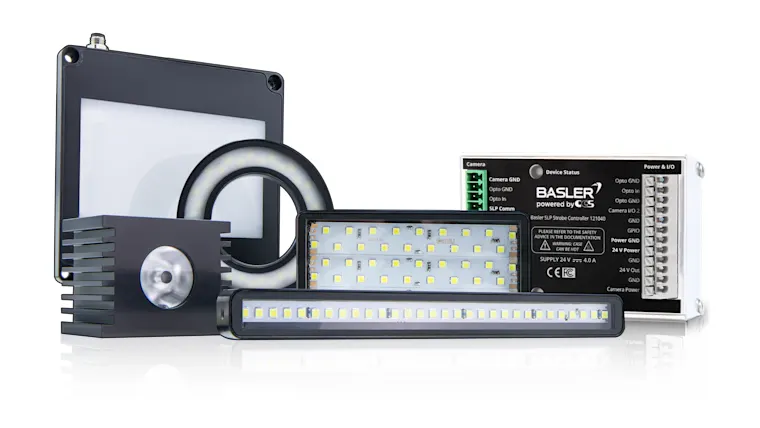
Polarized, bright-field, dark-field, or UV illumination can enhance different defect characteristics.
Multi-strobe line-scan imaging based on interleaved acquisition alternates illumination between consecutive scan lines to capture different defect contrasts in a single material pass.
Frame grabber FPGA processing separates the interleaved scan lines by illumination condition into independent image streams and preprocesses the data before the host CPU/GPU, reducing processing load.
Maintaining image accuracy at high production throughput
Challenge
Continuous copper foil and CCL production requires reliable inspection at high transport speeds without compromising image accuracy. Conveyor or web-speed fluctuations, vibration, and synchronization errors can introduce geometric distortion, increasing false rejects and reducing confidence in defect localization.
Solution
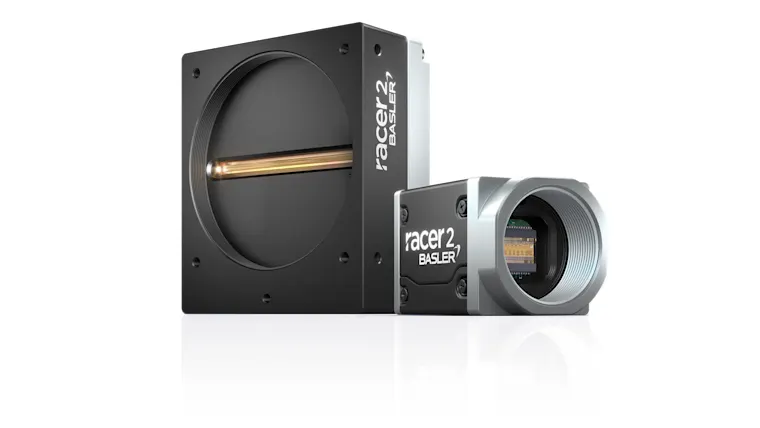
Basler combines encoder-synchronized racer 2 line scan camera with high-bandwidth image transfer. Encoder-based triggering synchronizes line acquisition with material movement, maintaining accurate image geometry at varying transport speeds. CoaXPress and GigE Vision interfaces provide reliable, high-bandwidth image transfer for continuous inline inspection.
Building a scalable vision architecture for copper material inspection
Challenge
Wide copper foil and CCL inspection may require multiple cameras, making image consistency, synchronization, and high data throughput critical. High-resolution and multi-lighting acquisition further increase the image data that must be processed reliably in real time.
Solution
Basler provides a scalable imaging platform for high-speed line scan inspection.
Single- or multi-camera synchronization can be configured to support different inspection widths, resolutions, and speeds.
Consistent camera response, lighting, and calibration help maintain uniform image quality across multiple cameras.
FPGA-based image pre-processing reduces host CPU/GPU load, supporting reliable real-time processing at high data rates.
The result is a consistent, synchronized, and efficient imaging architecture for high speed large FoV inspections.
Copper foil and finished CCL share the same core objective: reliably detecting critical defects without compromising throughput or yield. From years of supporting AOI equipment builders, we know success comes from the right balance of resolution, lighting, synchronization, data throughput, long-term system stability, and total system cost.

Multiple lighting modes are common in line scan inspection because different defects require different image contrasts. Our FPGA-based imaging architecture provides a real engineering advantage by separating and preprocessing interleaved image streams on the FPGA, reducing CPU/GPU load for reliable high-speed inspection.

Engineering advantages of our line scan imaging offering
Basler provides a complete imaging platform that helps AOI equipment builders develop reliable, high-performance copper foil and CCL surface inspection systems.
Enhanced defect visibility: multi-lighting and interleaved acquisition reveal defects under different illumination conditions.
Accurate high-speed acquisition: racer 2 line scan cameras, encoder synchronization, and high-bandwidth interfaces support continuous production.
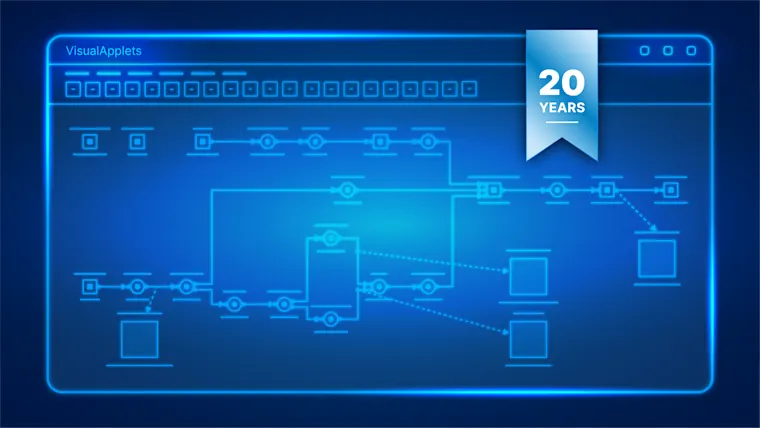
Efficient system architecture: imaFlex frame grabber programmable by VisualApplets support synchronized multi-camera acquisition and FPGA-based preprocessing to reduce host processing load.
Products for this solution
Looking to implement a comparable solution? These products will help you.