The GMSL Interface in Machine Vision Systems
Compatibility, configuration, and operation
GMSL™, the Gigabit Multimedia Serial Link interface, enables the fast and reliable transmission of large amounts of image and video data over long distances. Protocol tunneling significantly increases the range of MIPI CSI-2. As most SoCs (System-on-Chips) and SoMs (System-on-Modules) support MIPI CSI-2, they can be flexibly combined with GMSL cameras. Complex vision tasks, such as using multiple cameras in conjunction with artificial intelligence on an embedded system, benefit from this.
Last updated: 20/03/2026
Reading time: approx. 16 Minutes
Key facts about the GMSL interface
GMSL transmits large amounts of image and video data over long distances
Proprietary interface from Analog Devices, available in bandwidths of 3, 6, and 12 Gbps
Uses serializer and deserializer chips and usually coaxial cables up to 15 m long
No uniform vision standard: each camera and each sensor require individual integration and configuration, which makes integration and exchange more difficult
Host systems: mostly embedded solutions such as SoCs / SoMs, integrated in IPCs or custom design hardware; in-depth low-level protocol and hardware expertise required for configuration
Basler GMSL solution with onboard processing in the camera offers GenICam compatibility and integration via GenTL; Basler's Camera Enablement Packages enable plug-and-play
Typical application areas: mobile robots, logistics systems, AGVs, and AI-based factory automation
What is GMSL?
GMSL is a proprietary, high-speed serial interface from Analog Devices. It was developed for the transmission of image data over longer distances in the automotive sector.
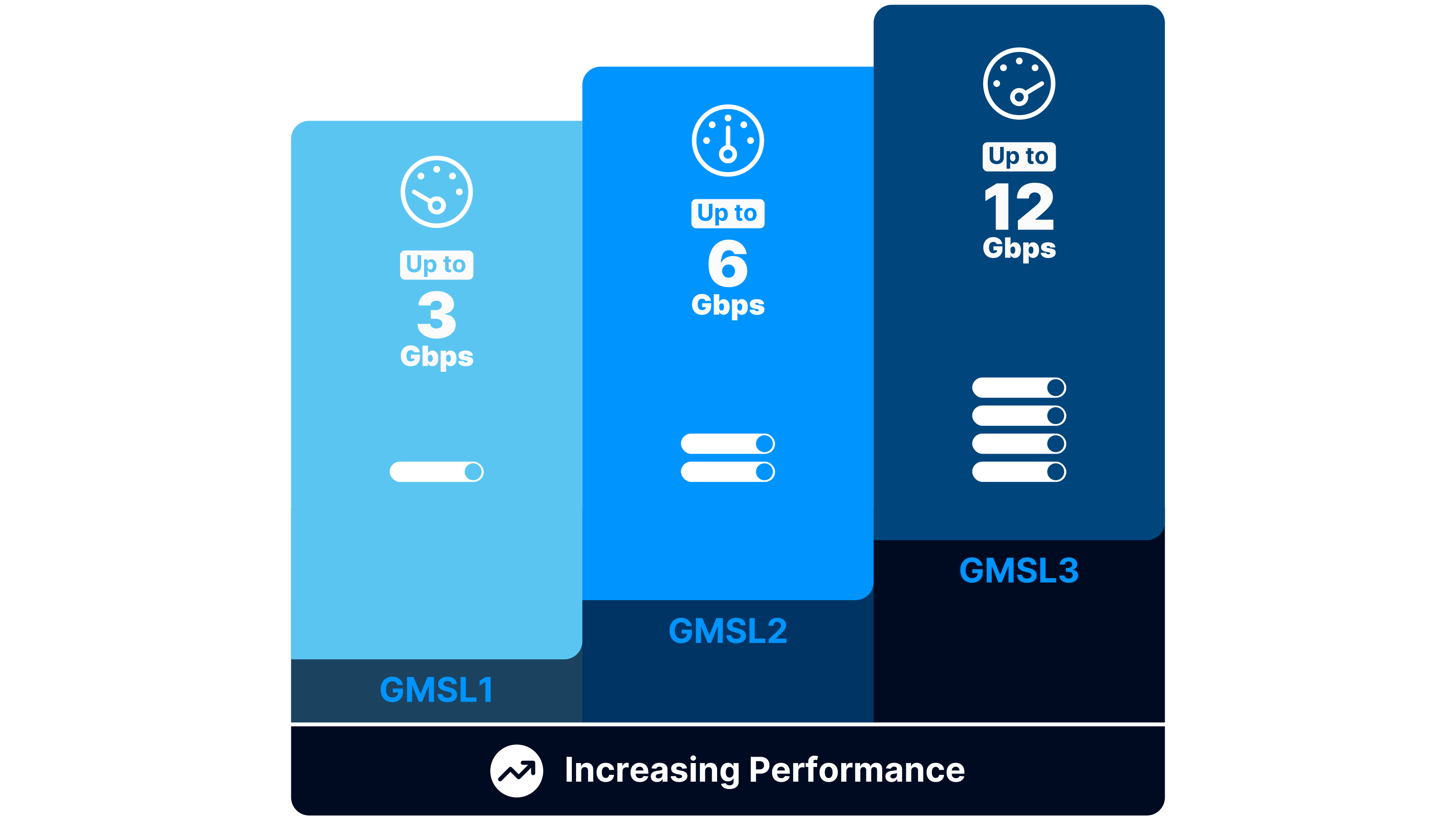
Three GMSL generations
The GMSL interface is currently available in three generations, each with double the bandwidth of the previous generation:
GMSL1: Transmission rate up to 3 Gbps
GMSL2: Transmission rate up to 6 Gbps
GMSL3: Transmission rate up to 12 Gbps
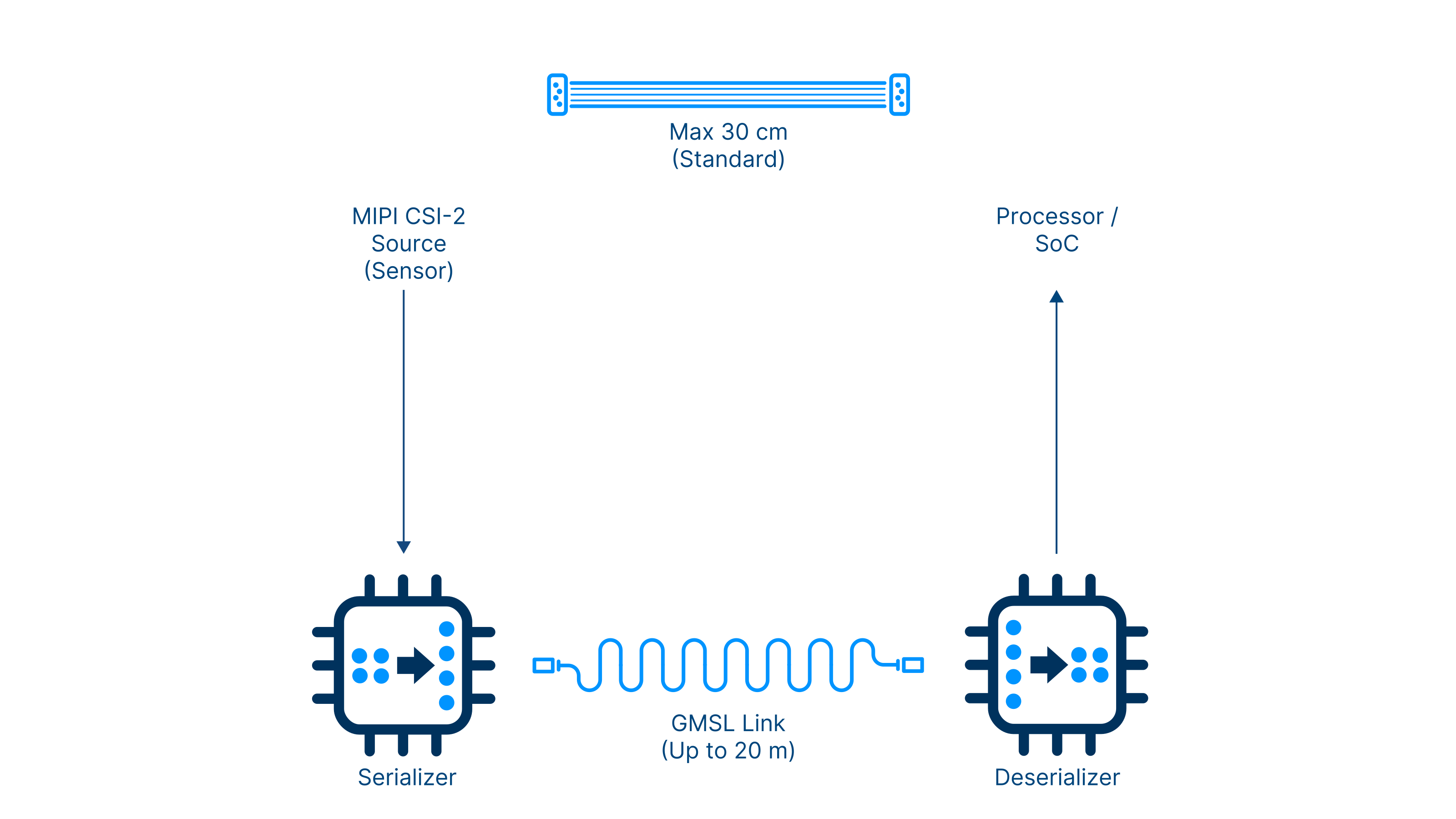
GMSL as an extension for MIPI CSI-2
At its core, GMSL enables the use of the MIPI CSI-2 interface at much greater distances than it is typically capable of supporting--up to 15 m compared with the 30 cm the MIPI CSI-2 usually supports. This is achieved by using serializer and deserializer chips.
SerDes signal conversion: serializer and deserealizer
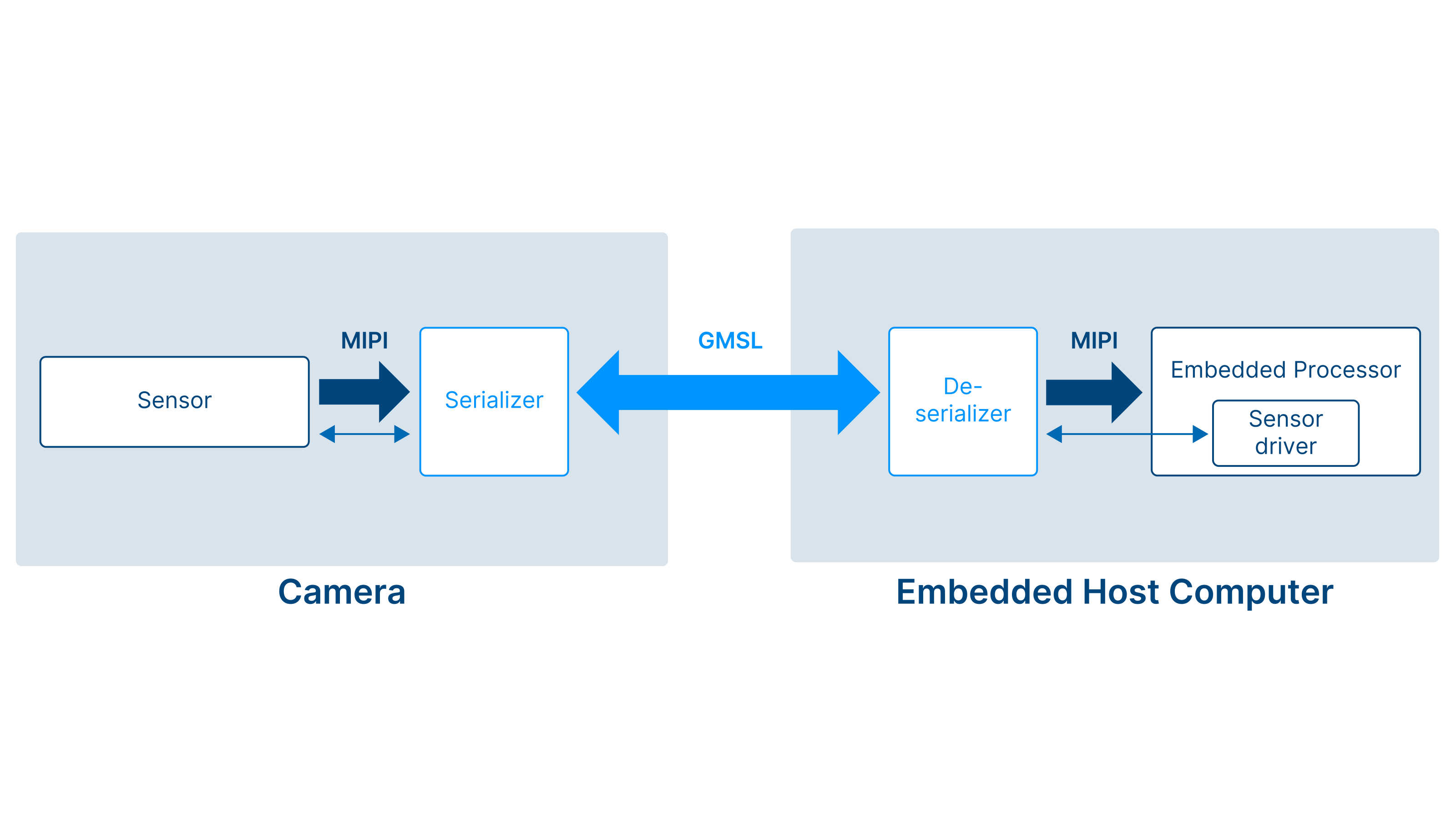
The serializer in the camera converts the MIPI CSI-2 data into a serial signal that is transmitted via a cable. The deserializer in the host system, e.g. an industrial PC (IPC) or a carrier board, converts the signal back into the original MIPI CSI-2 data. There are serializers and deserializers for each GMSL generation. Integrating these into the camera and host system requires individual configuration on both sides.
Data transmission up to 15 m via coaxial cable
Coaxial cables with so-called FAKRA connectors are usually used as the transmission medium, but shielded twisted pair (STP) cables with HSD connectors are also possible. Coaxial cables can not only implement the data and control signals, but also provide the power supply for the camera (Power over Coax / PoC) within a single cable. They also make it possible to cover longer distances with cable lengthes of up to 15 m. STP cables, on the other hand, are somewhat more flexible, although they are limited to a cable length of approx. 10 m.
Communication signals such as I²C or triggers can also be transmitted. As GMSL establishes a point-to-point connection, it is not possible to use hubs or switches to increase the number of connected cameras, unlike USB or GigE. A GMSL camera system cannot be expanded by connecting suitable hardware, but requires the hardware itself to be adapted.
Standard vs. proprietary interface
In contrast to open standards such as USB3 Vision or GigE Vision, GMSL is a proprietary interface. This poses a number of technical challenges, particularly in terms of system compatibility and initial configuration, as well as during operation when updating drivers, SDKs, or other software.
There is no generic GMSL driver that works for all cameras with a GMSL interface. In addition, most GMSL cameras have no onboard processing and therefore no Image Signal Processor (ISP). This means that the sensors must be controlled and read out entirely via the host system.
Attention to compatibility and configuration
Cameras with a GMSL interface cannot simply be connected to a host system: The serializer in the camera and the deserializer in the host system must be compatible and correctly configured. In addition, the host system must be able to recognize and control the installed sensor and receive the data. As there is no generic GMSL driver, an individual configuration is required for each camera – even if the manufacturer is the same, but the sensor is different. This complicates the flexibility, commissioning, and maintenance of vision systems.
Establish GenICam compatibility
This can be remedied by standardizing the cameras as far as possible. GenICam compatibility can be achieved using onboard processing in the camera. The GMSL interface can be integrated via standardized software interfaces such as GenTL or V4L2 (Video for Linux 2). This ensures compatibility with common software frameworks.
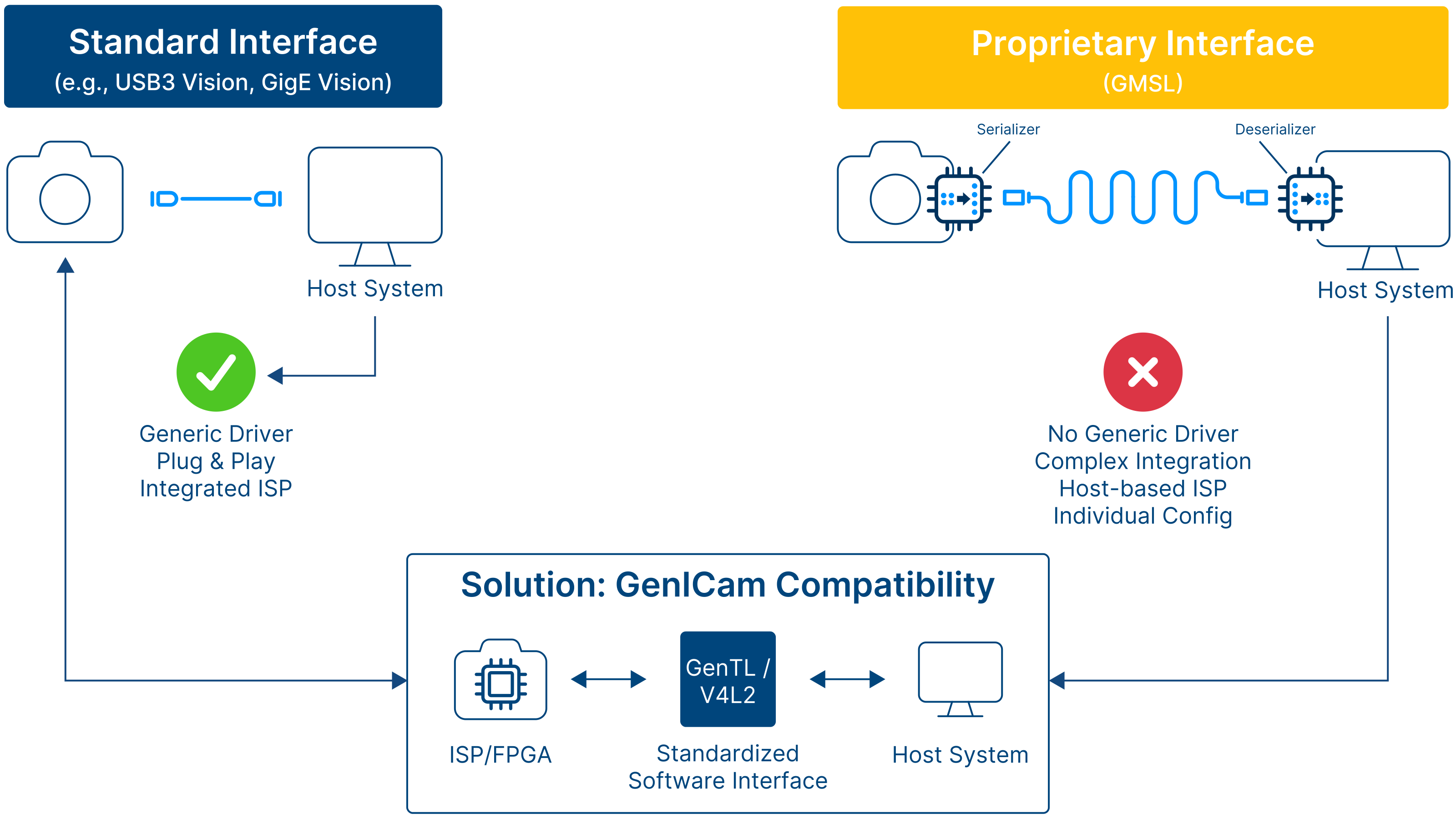
Advantages of onboard processing for GMSL integration
Many GMSL or MIPI cameras do not have onboard processing. This means that the ISP and sensor control must be provided by the host system.
As the sensor control is sensor-specific, a separate driver is required for each sensor. Cameras without onboard processing can therefore not support important features such as triggering, I/Os, auto functions, or debayering themselves. The functions must be provided by the host system.
Basler GMSL industrial cameras have powerful onboard processing. They therefore offer numerous advantages:
GenICam compatibility:
Regardless of the sensor, the camera is integrated as a generic camera on the host side. This means that a single driver can support different sensors. This enables the simultaneous use of different sensors, e.g. in multi-camera systems, and the exchange of cameras with different sensors.
Simple sensor control:
The sensor is controlled via the onboard processing in the camera and does not need to be programmed on the host system. This decoupling also reduces potential problems with updates / adjustments on the host system later on.
Consistent image quality:
As the ISP is integrated on the camera, the image quality remains constant and is independent of the ISP provided on the SoC / SoM. Thus, neither changing the SoC / SoM nor updating the ISP on the host system have an influence on the image quality. In AI applications, for example, changes in image quality can distort the aspects on which the AI is trained, making its results less reliable or requiring the AI to be retrained.
Flexible bandwidth:
In multi-camera systems, it can be useful to divide the available bandwidth of the interface not only via fixed lane count levels, but also on a finely granular basis. This allows the GMSL interface to be optimally utilized and flexibly adapted to the respective requirements of the individual cameras.
Support of common pixel formats:
Various formats such as Mono8/10/12, Bayer8/10/12, YUV, RGB8 etc. are available for image data transfer to the host system. This eliminates the restriction to the formats specified by MIPI CSI-2 or the host system and allows the pixel format to be flexibly adapted to different requirements.
What types of host systems are there?
GMSL is particularly relevant for embedded systems such as SoCs and SoMs that have integrated MIPI. The most common are ARM (Advanced RISC Machines) systems, which are usually designed for Linux as the operating system. SoCs and SoMs are integrated into various host systems depending on the application. They can be purchased as a standardized (i.e. preconfigured) system or configured individually.
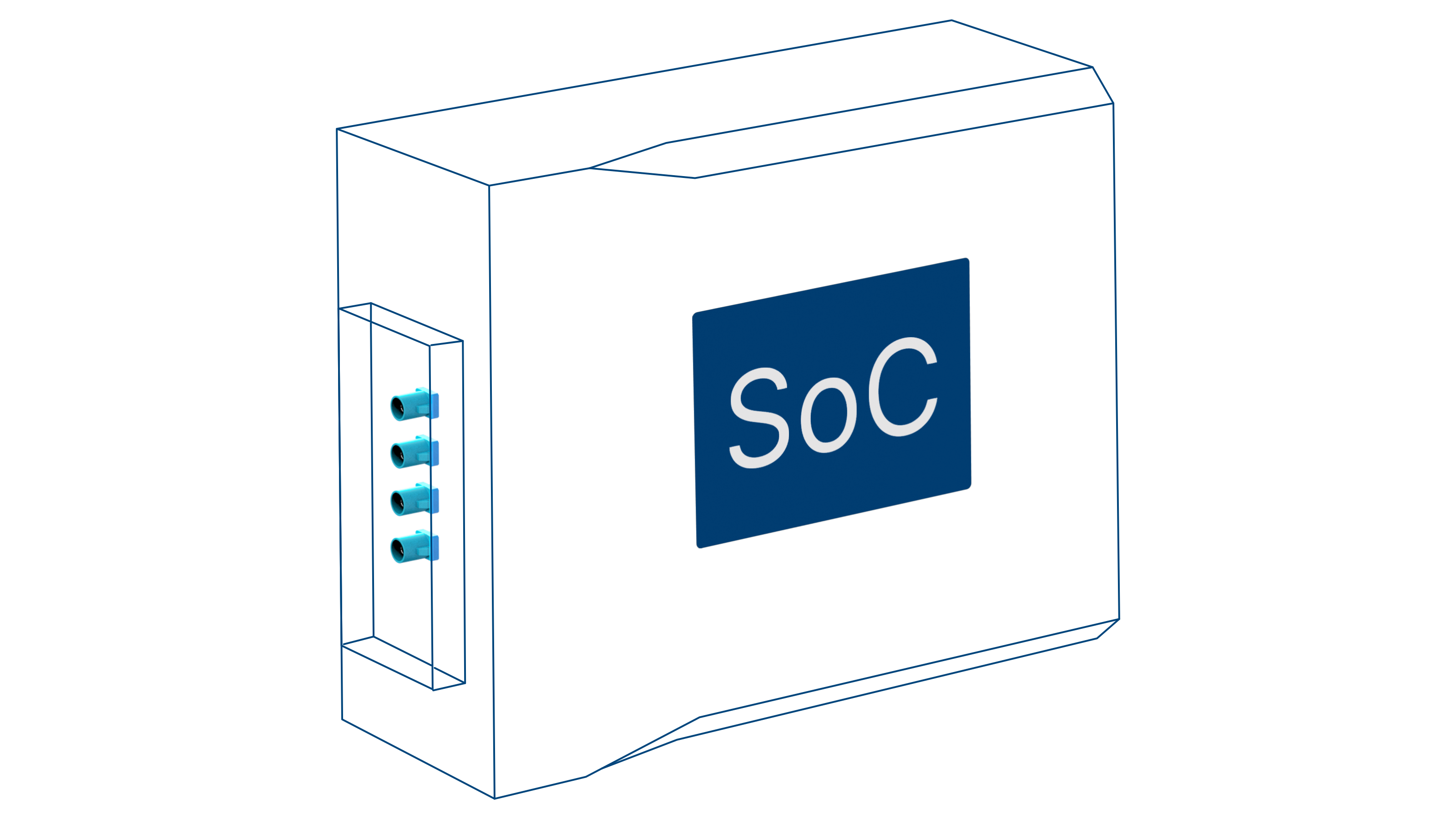
Preconfigured host systems: IPCs
There are IPCs that already support GMSL and are preconfigured for special applications. They differ in the supported SoMs as well as in the type and number of physical interfaces. Some offer the possibility of optional extensions to a limited extent. They always have a complete housing, sometimes even with IP protection, or conform to special robustness criteria.
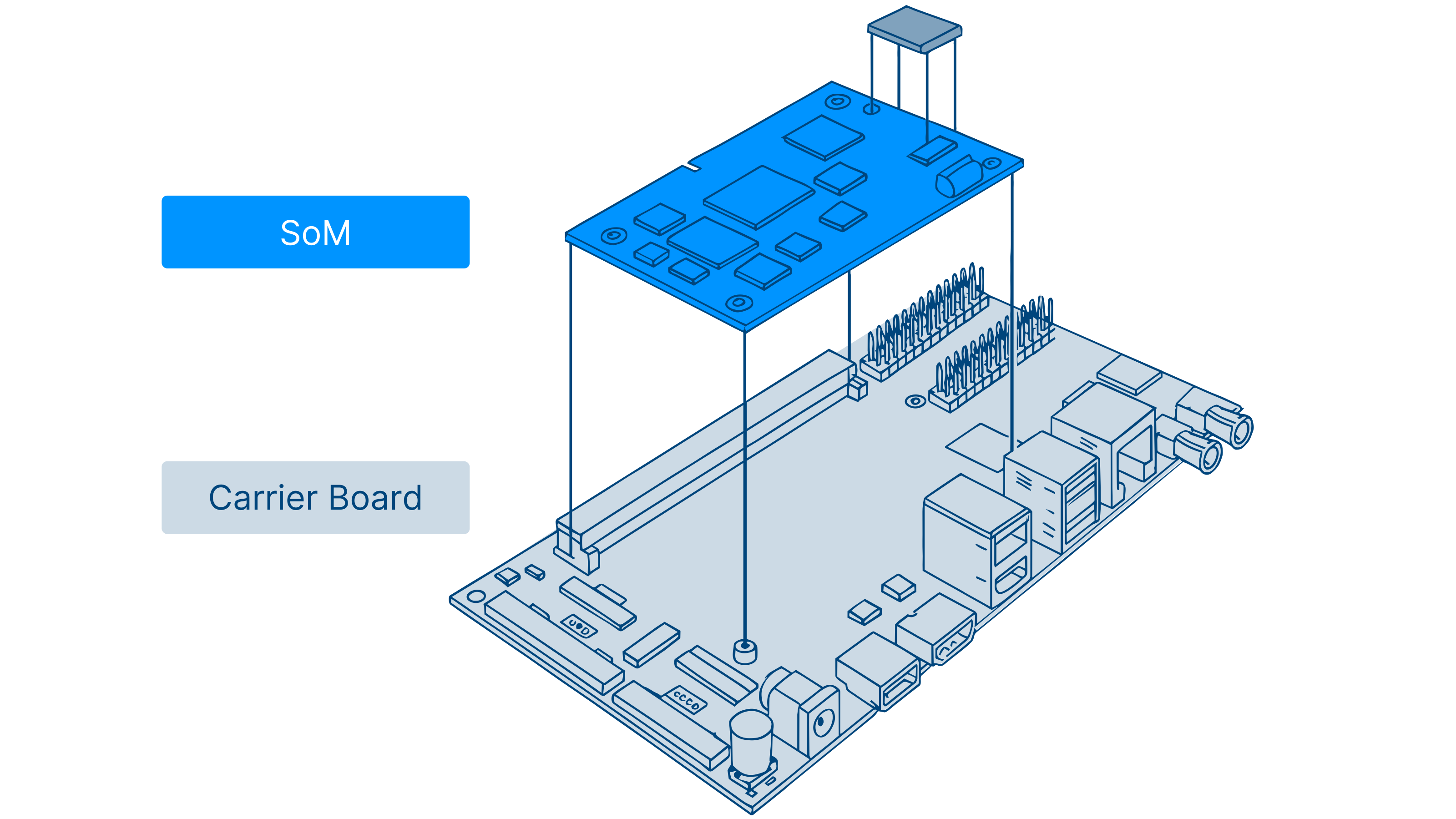
Individualized host systems
For applications that require specialized hardware, carrier boards can be used in combination with SoMs. Carrier boards are available as standard products, but they can also be developed specifically. This allows the space requirement and processing power to be optimally adapted to individual requirements.
Configuration of the host system
Connecting a GMSL camera to a host system requires in-depth knowledge of the MIPI CSI-2 protocol, the GMSL technology and, in particular, the hardware architecture of the host system. Basler provides Camera Enablement Packages for simple, automated configuration of selected IPCs. Unless a system already supported by Basler is used, the host system must be configured.
The system configuration, including the device tree, must be adapted at a very technical level. The following information is also important for the configuration:
Which deserializer chip is used?
How many data lanes are connected and at what data rate?
Via which I²C bus and which address can the deserializer be reached?
How exactly is the deserializer connected to the video unit of the SoC / SoM via MIPI CSI-2?
Camera Enablement Packages are available for IPCs supported by Basler as host systems. These are IPC-specific software add-on packages that carry out the correct configuration for the respective IPC during installation. This enables a plug-and-play connection of the GMSL camera – comparable to a USB camera – to the IPC.

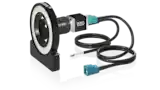
Basler's solution for simple GMSL integration
With hardware components ranging from GMSL industrial cameras and coaxial cables with FAKRA connectors to suitable lenses and lighting, pylon software for Linux, and camera enablement packages for partner IPCs, Basler offers everything you need to set up a GMSL vision system for your embedded applications on NVIDIA® platforms.
Discover the Basler GMSL Vision SystemWhich applications benefit from the GMSL interface?
GMSL-based vision systems are particularly suitable for demanding embedded vision applications, including highly specialized multi-camera systems. Especially when there are not enough connections for standard interfaces – for example when a SoM such as a NVIDIA® Jetson Orin™ only has a 1GigE port – GMSL offers a powerful alternative.
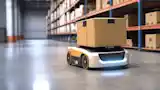
(Mobile) robots

AGVs

Logistics systems

Automated factory control based on AI-supported image processing
Conclusion: GMSL interface for powerful and flexible embedded vision solutions
GMSL is the ideal interface when it comes to the reliable transmission of high-resolution image data over long distances in embedded vision applications. With GMSL cameras, which have an integrated ISP and intelligent software packages, even complex multi-camera setups can be flexibly configured, easily integrated and efficiently maintained. OEMs and system integrators benefit from maximum performance with manageable integration costs.
Frequently asked questions about the GMSL interface
In contrast to USB or GigE, GMSL is not a classic camera interface, but a high-speed serial interface that tunnels various video protocols - including MIPI CSI-2 - via a single coaxial or STP cable. As common SoCs and SoMs support MIPI CSI-2 natively, GMSL cameras can be combined directly with them. This makes GMSL particularly attractive for multi-camera setups in industrial embedded vision applications, where standard interfaces often reach their limits.
As there is no vision protocol for GMSL, unlike USB and GigE, Basler offers Camera Enablement Packages for easy integration of selected host systems. The integration of GMSL cameras into non-supported systems is otherwise significantly more complex than with USB or GigE due to the lack of a standard.
The biggest hurdle is the lack of standardization: there is no generic GMSL driver, and each camera has to be configured individually - even if the manufacturer is the same but the sensors are different. In addition, the serializer and deserializer chips must be compatible and correctly integrated. Without onboard processing in the camera, the entire sensor control lies with the host system, which makes integration, maintenance, and updates much more complex.
A camera with onboard processing provides a remedy by taking over sensor control and establishing GenICam compatibility. Integration via standardized software interfaces such as GenTL or V4L2 ensures compatibility with common frameworks such as OpenCV, HALCON, NVIDIA DeepStream, MIL or the Basler pylon SDK.
In addition, manufacturer-side configuration packages – such as Basler's Camera Enablement Packages – can automate the setup on supported IPCs and enable a plug-and-play connection. Basler supports selected IPCs from manufacturers such as Advantech Co, Lanner Inc, Neousys Technology, and Syslogic AG.
Basler GMSL cameras have onboard processing, making them GenICam-compatible and allowing them to be integrated into the system as generic cameras regardless of the sensor used. This massively reduces the effort required for drivers and individual adaptations. The Camera Enablement Packages from Basler provide all the necessary software components and settings for supported IPCs so that the camera is ready for use immediately after installation and connection. This saves time during configuration, minimizes sources of error, and makes updates and maintenance much less complicated – just as convenient as a USB camera, but with all the advantages of the GMSL interface.
It is crucial that the camera not only fits into the system electrically, but also in terms of software. Ensure GenICam compatibility so that the camera works with your existing image processing software – regardless of the sensor used. Check whether the manufacturer offers configuration packages or driver support for your target platform and how much additional work may be required for firmware updates to the SoC / SoM. A camera with onboard processing reduces the dependency on the host system and simplifies maintenance and scaling in the long term.