Spoiled for Choice: 2D or 3D Camera?
Which camera technology is right for your application?
The demands placed on machine vision cameras are constantly growing. This article gives you an overview of the most important 2D and 3D camera systems, their application areas, and relevant decision criteria. This will make it easier for you to find the optimum solution for your application.
Last updated: 17/11/2025
Reading time: approx. 6 Minutes
2D and 3D camera technologies
2D and 3D camera technologies are at the heart of powerful machine vision systems. They enable precise quality control, efficient process automation, and reliable error detection in industrial image processing.

2D camera technology
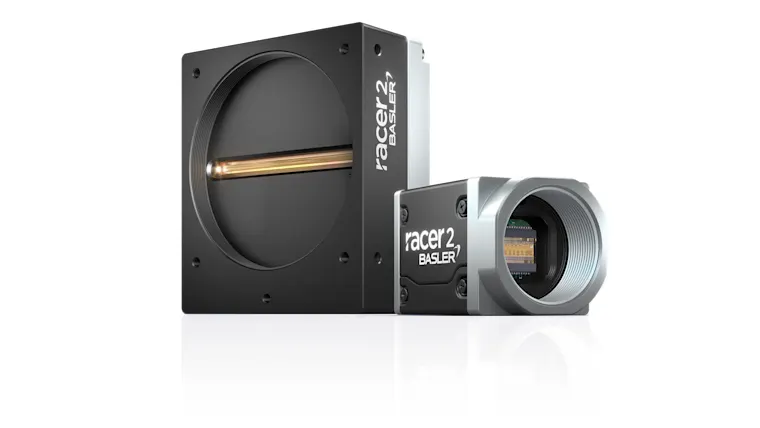
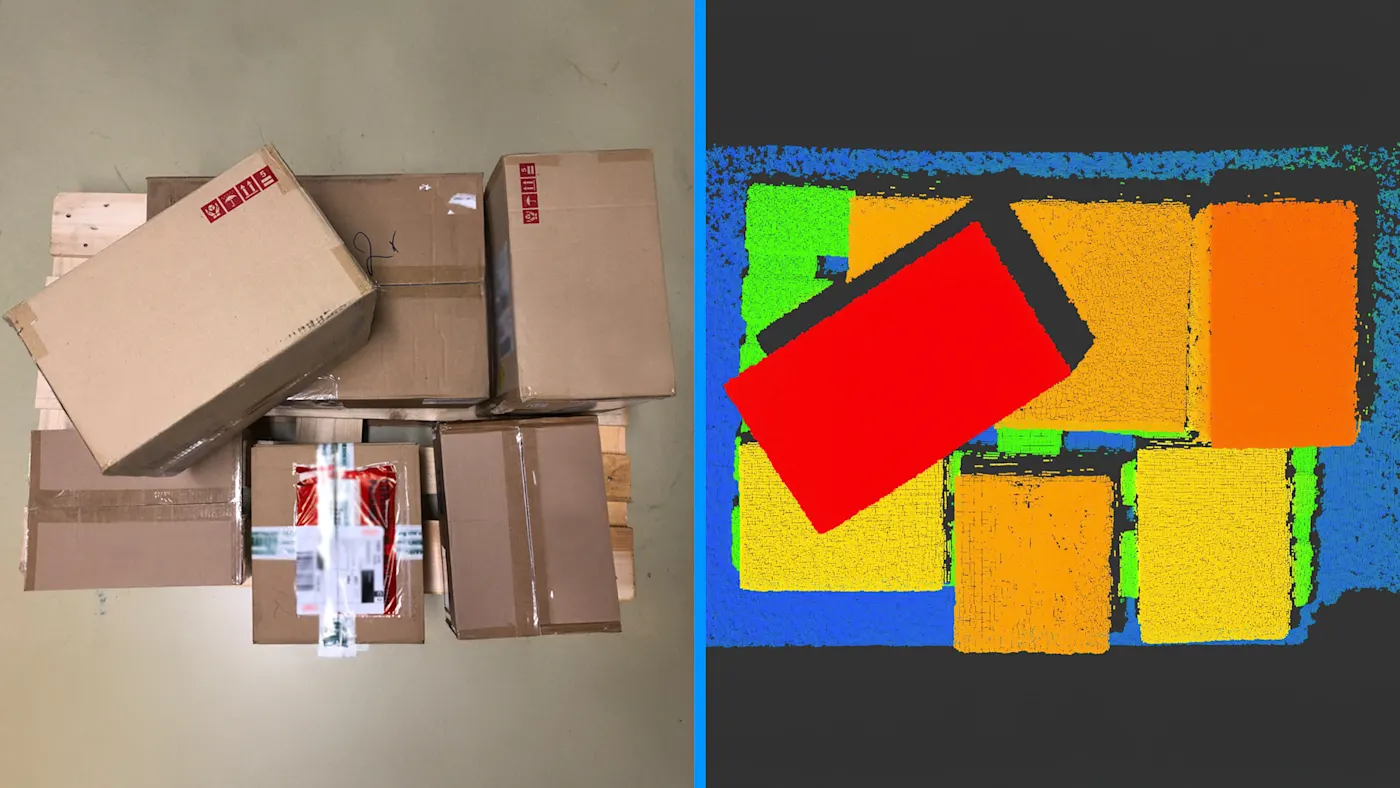
Area scan cameras capture the scene in a single shot. Line scan cameras scan the image line by line. The image is displayed as a monochrome or color image (RGB). 2D image processing is particularly effective when capturing scenes with high contrast and clear structures.
3D camera technology
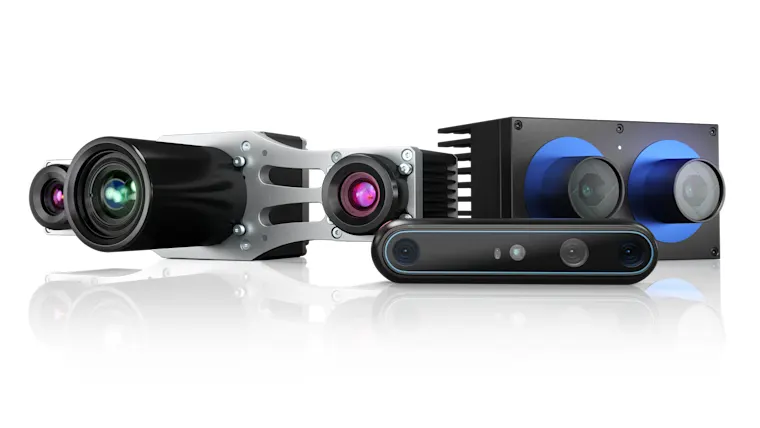
3D cameras also capture depth values and offer new possibilities in robotics, automation, and medicine. The third dimension is becoming increasingly important for complex tasks. 3D solutions are also established in entertainment and virtual reality.
Typical areas of application for 2D and 3D cameras
2D and 3D machine vision cameras are used for different tasks in industrial image processing. While 2D cameras are primarily used for checking flat, high-contrast objects and fast inspection tasks, 3D cameras enable the precise detection of shapes, volumes, and positions in the third dimension. They are therefore ideal for complex automation and robotics applications.
Typical application areas for 2D cameras | Typical application areas for 3D cameras |
|---|---|
Assembly testing of high-contrast components | Obstacle detection for autonomous vehicles |
Shape and dimension detection of flat objects | Robot-controlled gripping tasks |
Detecting contamination directly in the production line | Presence and counting check in containers |
Color and print quality inspection, e.g. barcodes | Position and presence check on printed circuit boards |
Sorting by color or imprint | Volume measurements of various objects |
Solder joint inspection of printed circuit boards | Portioning food |
Comparing 2D vs. 3D machine vision cameras
The following comparison shows the differences between 2D and 3D machine vision cameras based on specific criteria and provides support in selecting the right technology for specific applications.
2D Machine Vision camera | 3D Machine Vision camera | |
|---|---|---|
High speed | ✅ | ❌ |
Cost-efficient | ✅ | ❌ |
Simple integration | ✅ | ❌ |
Good for flat objects & Barcodes | ✅ | ❌ |
Capturing complex geometries | ❌ | ✅ |
Precise volume measurement | ❌ | ✅ |
Precise position detection | ❌ | ✅ |
The following use case from logistics shows how these differences are used in practice.
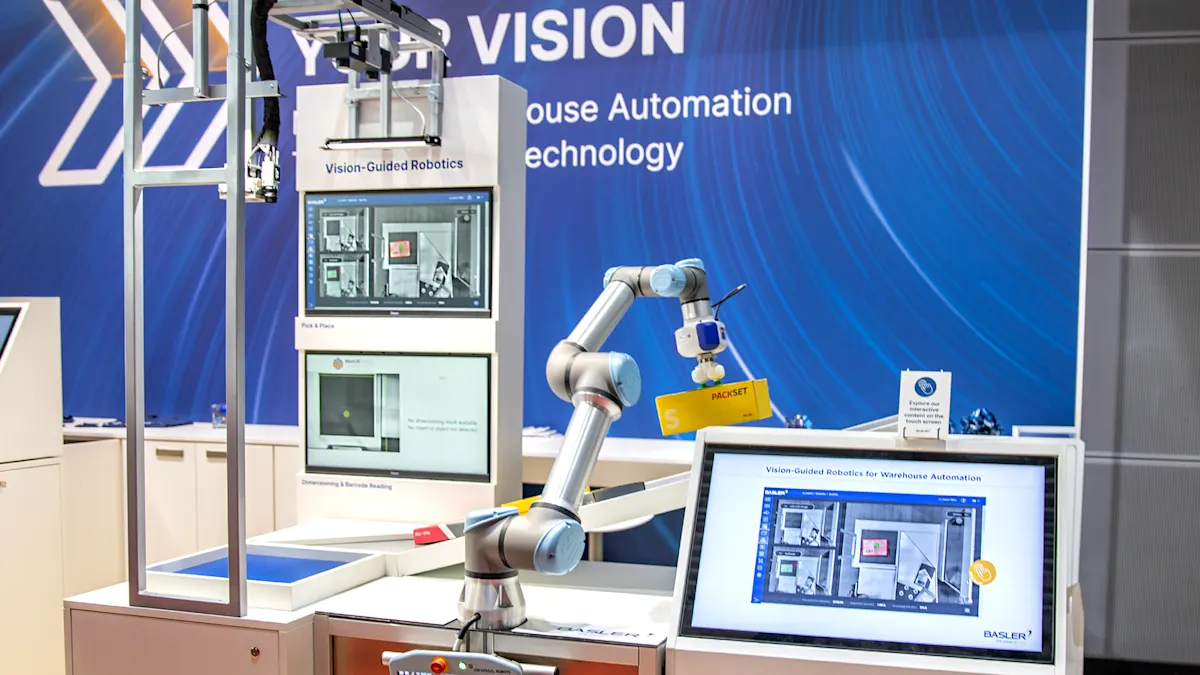
Parcel processing in logistics with 2D and 3D machine vision
In modern logistics centers, 2D and 3D machine vision cameras are specifically combined to process parcels efficiently and automatically.
The task:
A robot is to recognize, precisely grip, measure, and identify parcels of different sizes and shapes - all within a few seconds.
Why 3D technology? A 3D machine vision camera is used to capture the package on the conveyor belt, including its exact position and shape. Only through three-dimensional recognition can the robot reliably grip and place the object - regardless of size, stacking, or orientation. In addition, a 3D camera at the measuring station records the exact volume and shape data of the parcel for further processing, e.g. for freight space planning or shipping rates.
Why 2D technology? In parallel, a 2D machine vision camera reads the printed barcode quickly and reliably. This technology is ideal for clear, flat information such as labels or characters, as it works at high speed and is cost-efficient.
You can find more detailed use cases with 2D and 3D technology here:
If you would like to learn more about different 3D technologies and their application areas, we recommend the article 3D image processing.
2D or 3D? What suits my application?
The choice between 2D and 3D camera technology should be made early and carefully. Clear requirements make the decision easier. For complex applications, both technologies offer different advantages and disadvantages. A list of criteria will help help you make the right solution.
Requirements for the Task | 2D | 3D |
|---|---|---|
Analysis of volumes and/or forms | ❌ | ✅ |
Structure and color must be recognized | ✅ | ❌ |
Good contrast information available | ✅ | ❌ |
Contrast information is poor or non-existent | ❌ | ✅ |
Height differences must be recognized | ❌ | ✅ |
Positioning task / detection in the third dimension | ❌ | ✅ |
"The choice between 2D and 3D camera technology is decisive for the efficiency and future viability of your image processing solution. At Basler, we support you in finding the right technology for your specific application - practical, reliable, and with the best price-performance ratio."
Conclusion
Selecting the right image processing technology depends on the individual requirements of your application. There is no one-size-fits-all recommendation - a well-founded analysis of the operating conditions is important. The first step is to decide whether using 2D or 3D inspection, or both technologies, will lead to the best solution. This is followed by selecting the right camera. Bear in mind that installation and software costs also represent a significant cost factor in the life cycle of your image processing solution. The increasing demand for 3D solutions is being driven by trends such as Industry 4.0 and automation - but existing 2D systems can also be optimized by integrating 3D technology.
Our products for 2D and 3D applications
Our products enable optimal solutions for 2D or 3D applications.