Color Calibration of Industrial Cameras
Optimized color calibration for precise image processing
Color calibration ensures that camera-captured colors accurately represent real-world values by standardizing color output across different lighting conditions, devices, and environments. This process minimizes color deviations, improves repeatability, and enables reliable comparison of images over time. Consequently, it is essential for many industrial applications, especially in the medical field. This includes microscopy, ophthalmology, and dermatology imaging, where precise color reproduction supports accurate diagnosis and analysis.
Last updated: 07/14/2023
Reading time: approx. 5 Minutes
How color calibration works in Basler cameras
In our white paper, we explain why the calibration of Basler color cameras is necessary for sharp, detailed imaging in life science research and medical diagnostics.
Key considerations for color calibration:
What is meant by color, and what color systems are there?
What are the advantages of the RGB color space?
What benefits does a calibrated camera offer?
What are the four steps of color calibration at Basler?
Why color calibration is crucial for image processing
Color information plays a central role in many image processing applications, from diagnostic support in microscopy systems to disease detection in ophthalmology. Traditional imaging displays are not enhanced enough for modern life science and medical techniques. Today’s technologies require precise, measurable, and repeatable color reproduction capabilities.
Color calibration enables standardized processes for high accuracy
In practice, images are often taken in different rooms, with different lighting conditions, camera models, and at different times. To ensure that such images can be reliably compared with each other, color rendering must be standardized.
Color calibration creates standardization. It’s the only way to ensure that the colors of the camera images on the monitor match the colors of the real object. In many applications, this high color fidelity is the prerequisite for meaningful diagnoses or precise automated decisions in industrial production.

Medical application: Color in ophthalmology
An illustrative example is provided by ophthalmology:
When examining the retina with fundus cameras, the interpretation of the image data depends directly on the correct color representation. The doctor can see from the camera image whether the vessels in the retina are intact or show abnormalities, such as changes in the color of the tissue due to a lack of oxygen.
Only a color-calibrated camera can reliably image such changes and thus contribute to the early detection of diseases such as macular degeneration.
How does color calibration work?
Color calibration optimizes the camera's entire color calculation pipeline, i.e., all internal calculation processes that lead from the sensor signal to the finished image.
Key steps in the calibration process:
Reference image with a color chart
A standardized colour chart (e.g., ColorChecker) is recorded under real lighting conditions.Comparison with reference values
The target values are known for each color field (usually in the sRGB color space). The color value of the camera is compared with the target color value.Calculation of the color error (ΔE)
The difference is specified as color error ΔE - the lower the value, the better the camera reproduction matches reality.Adjusting the camera parameters
White balance, color matrix, gamma curve, and other parameters are adjusted so that the ΔE is minimized across all colors.
After calibration, additional color adjustments can be made, for example, to comply with special color profiles.
Useful functions for color-accurate image processing
Modern industrial cameras offer a range of integrated functions that are essential for accurate color processing:
Color presets (e.g. daylight, LED, artificial light)
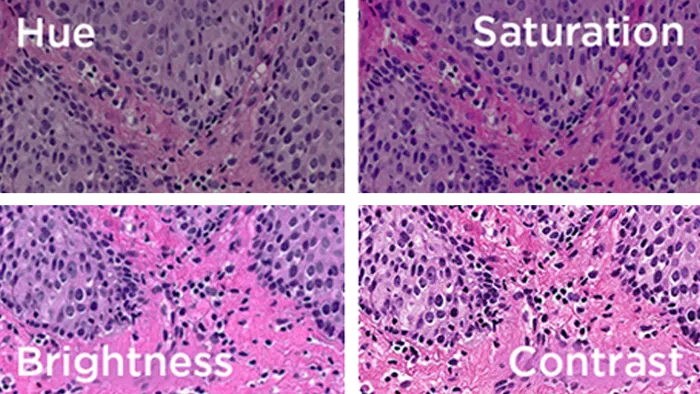
Adjustable parameters for hue, saturation, brightness and contrast
Six-axis color control for targeted adjustment of individual colors
Automatic or manual white balance
Especially for medical applications or high-precision industrial processes, the use of presets is not sufficient. Calibration is always carried out under real lighting conditions - to ensure reliable color reproduction in the subsequent application.
Application example: calibrating the Basler ace 2 camera
With the Basler ace 2 camera, color calibration is performed with our software. If no suitable light source preset is available, your camera can be calibrated in just a few seconds using the Basler Color Calibrator software.
How color calibration works:
The first step is to align the camera with the color card so that the card is fully visible in the image.
The software then adjusts the brightness to the optimum values.
In the next step, the software performs complex calculations such as white balance and color matrix optimization.
Finally, the six-axis operator is set to the best possible color values.
The result is a customized light source preset for the current lighting conditions. If you are satisfied with the recalibration results, the color settings can be saved in your camera or exported to other cameras.
Calibration is vital to color accuracy for precise medical imaging
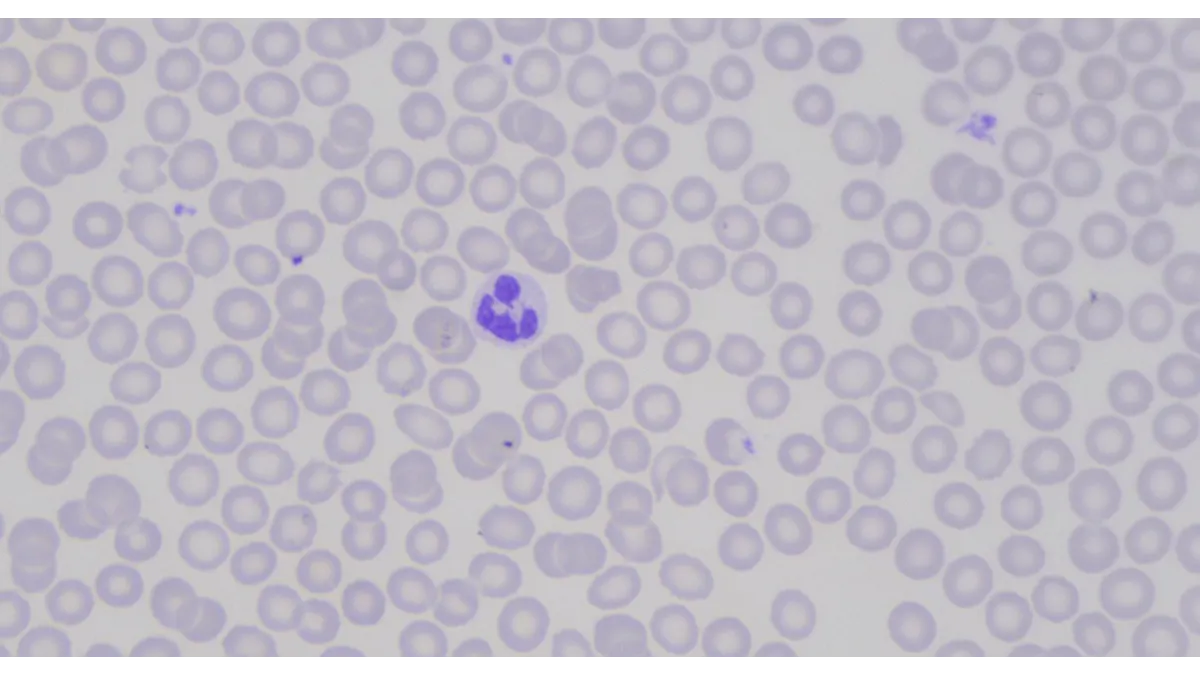
Trust and accuracy are crucial in medical and life science imaging. Doctors, healthcare professionals, and researchers all rely on high-quality, color-accurate images for examinations, analysis, diagnostics, and aftercare.
Calibrated imaging devices help ensure consistent color reproduction and standardized colors across different systems and lighting conditions, delivering reliable results over time.
Basler’s user-friendly cameras enable fast and accurate color calibration in seconds. These advanced solutions will further improve the reliability and efficiency of Medical & Life Sciences.
Partner with Basler to color calibrate your camera todayOur products for image processing in medicine
Benefit from the specially designed Basler MED ace camera series along with our experience in developing individual machine vision solutions for your requirements.

