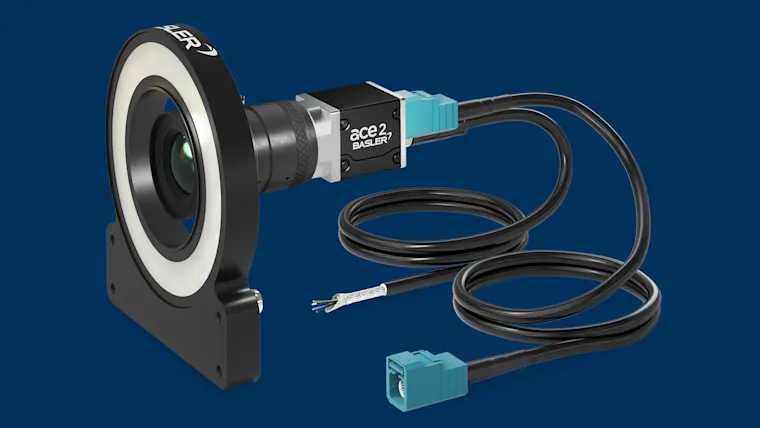
Maximum Performance in Smallest Spaces
A compact industrial camera in the sugar cube format is ideal when space-saving integration and low weight are required while maintaining good image quality and high data rates. Due to its small form factor, it can be easily integrated into machines, robotic systems, and automated facilities. The rugged industrial housings are designed for continuous use in production environments.
Last updated: 05/05/2023
Reading time: approx. 4 Minutes
The sugar cube in machine vision
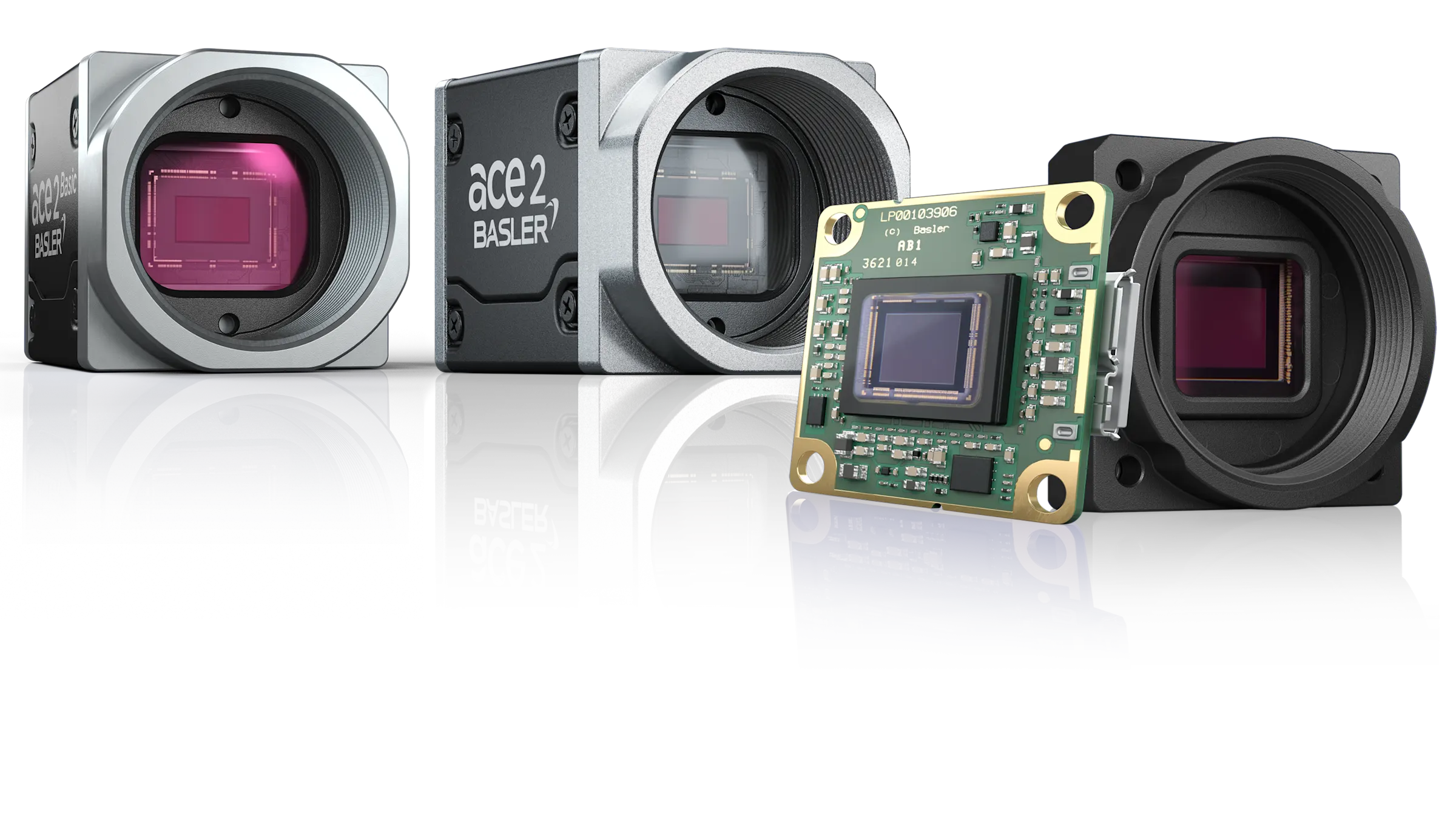
This refers to small cameras with a 29 mm x 29 mm format, which has become a de facto standard. This so-called “sugar cube” design is used in industrial cameras across a wide range of traditional applications in various markets—such as robotics and logistics, healthcare, transportation, retail, and quality control and automatic optical inspection for the factory automation market.
Small sizes in a wide variety
Many of our cameras feature a compact 29 mm x 29 mm form factor, including cameras from the ace 2, ace, MED ace, and dart series. Depending on system requirements, our sugar cube industrial cameras are available with various interfaces. GigE Vision is particularly suited for machines and production facilities where long cable runs and reliable data transmission are required. USB3 Vision offers high data rates and plug-and-play functionality, enabling fast and cost-effective integration into existing systems. CoaXPress is the interface for very high bandwidths—ideal for high-end applications with high resolutions and frame rates. Selected models also support GMSL2 and BCON for MIPI (MIPI CSI-2). These interfaces enable connection to embedded systems and ARM platforms.
To ensure maximum flexibility, our cameras support various lens mounts. Depending on the application, models with C-mount, CS-mount, and S-mount (M12) are available.
Important considerations
When planning a new machine vision system or redesigning an existing one, designers should take the time from the start to build around small sizes to avoid space issues later.
For redesigns in particular, small footprints should be maintained. Switching over to large formats can bring major mechanical challenges.
Small sensors = small cameras
A camera’s size depends, among other things, on the size of its built-in sensor. Modern sensor technologies, such as CMOS sensors, offer high resolutions, excellent light sensitivity, HDR capabilities, and low noise levels even in small sensor formats. Small, extremely high-performance sensors with small pixel sizes are becoming increasingly prevalent in the market. When combined with suitable lenses, they result in compact camera systems. Larger sensors, often CCD sensors, do not fit into this small standard format.
Customers benefit from the compact housing sizes
A small camera footprint within facilities cuts weight, increasing the speed of applications. For example, the lighter the robot arm, the faster and more flexibly it can move.
Small camera formats also free up more space. This can be used for multi-camera systems, shrinking the system in general, and making physical access to the cameras easier as needed.
Small-format cameras rely on the cost benefits inherent to smaller sensors. Because they require more silicon, sensors with large surfaces are significantly more expensive than smaller ones.
Remarkable technological progress in machine vision is mainly taking place in small, compact sensor formats, and, in particular, modern CMOS sensors.
Larger, often CCD-based, camera systems will continue to perform their tasks in specialized, highly complex applications. However, small-format sensors and cameras account for the vast majority of industrial image processing applications.