Cameras for AMRs and AGVs in Warehouse Logistics
Increase efficiency and optimize material flow in dynamic warehouse environments with reliable vision solutions for warehouse automation.
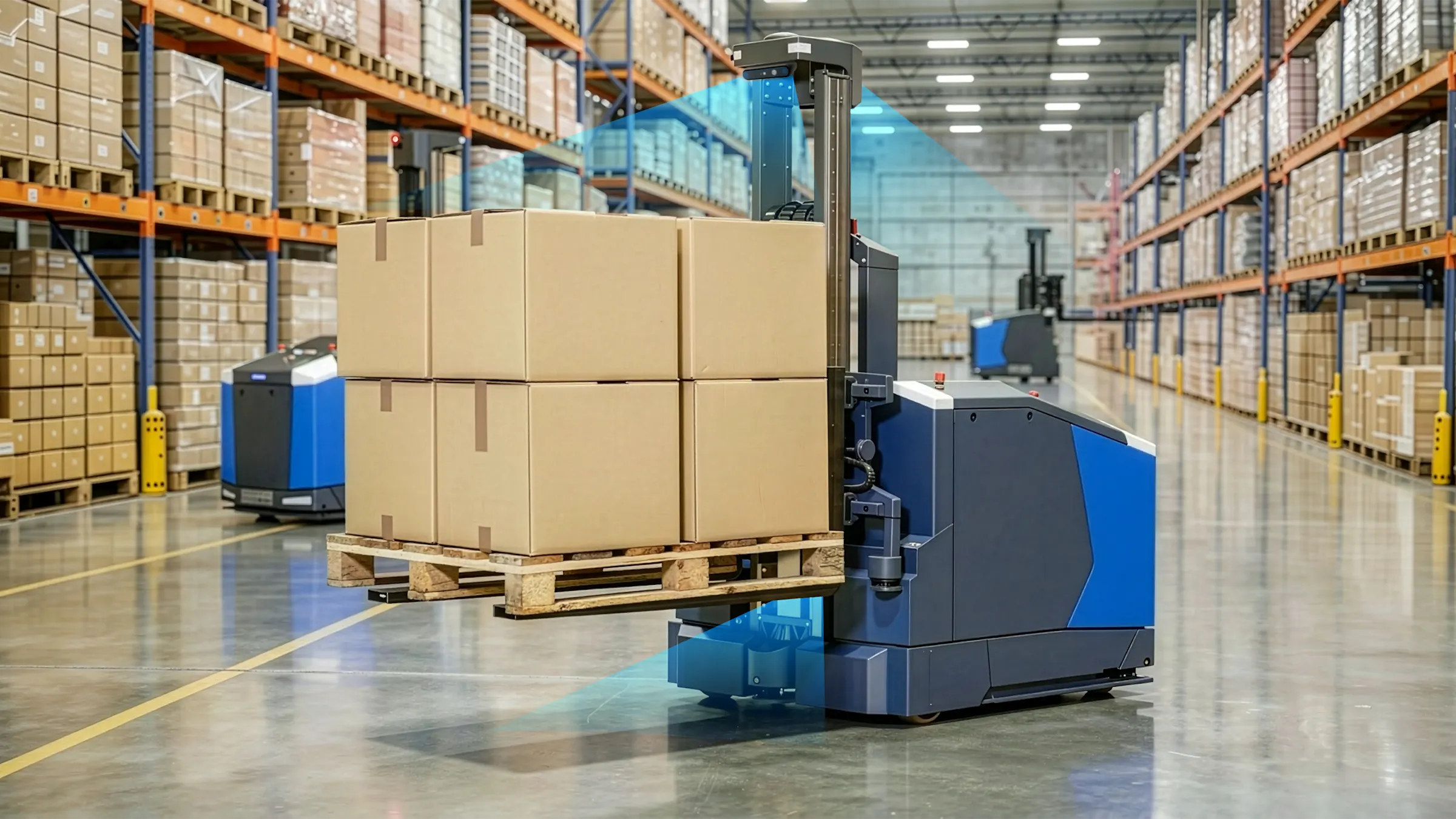
Our cameras make mobile robots (AMRs) and automated guided vehicles (AGVs) more reliable in warehouse logistics. They deliver 2D or 3D data to support navigation, environmental perception, obstacle detection, docking, identification, and process control.
Industrial suitability
Use of standard interfaces, IP protection classes (up to IP67, depending on the model), reliable, and durableSuitable for mobile platforms
Depending on the product series, lightweight and compact designs are possible. For flexible mounting positions and limited installation spacesSimple integration
Established interfaces and the Basler software environment support integration into existing systems, including in combination with other Basler productsSupport and long-term availability
Long product lifecycles, timely product discontinuations, and recommendations for successor products
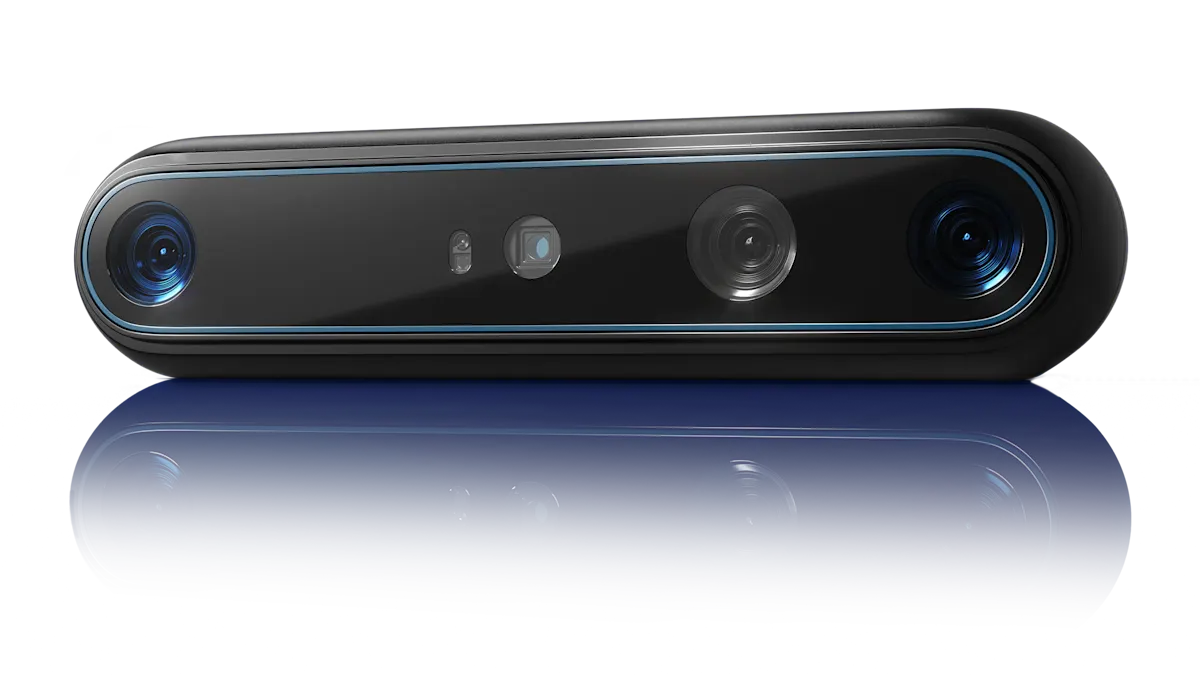
Our 3D stereo mini camera: Ideal for use in AMRs and AGVs
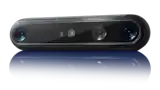
The Stereo mini provides 3D data for working ranges starting at approximately 0.25 m and extending to 3 m, 6 m, or 10 m, depending on the model. Thanks to its compact design (starting at 90 mm x 25 mm x 30 mm) and light weight (starting at 97 g), it integrates well into mobile platforms and tight installation spaces. Depending on the model, different interfaces and working ranges are available.
Typical applications of cameras for AMRs and AGVs
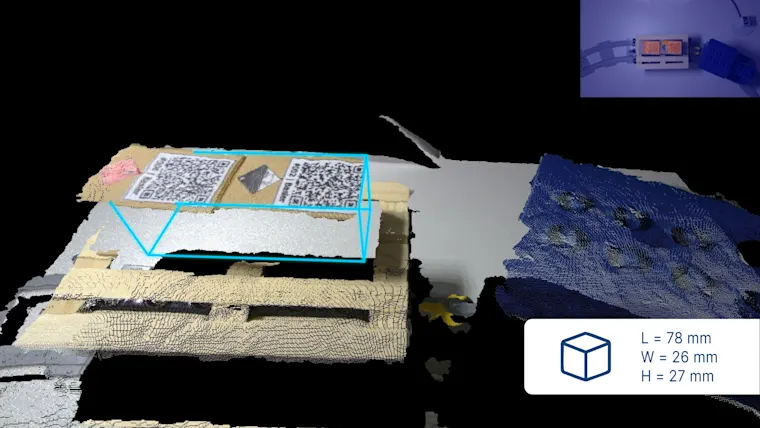
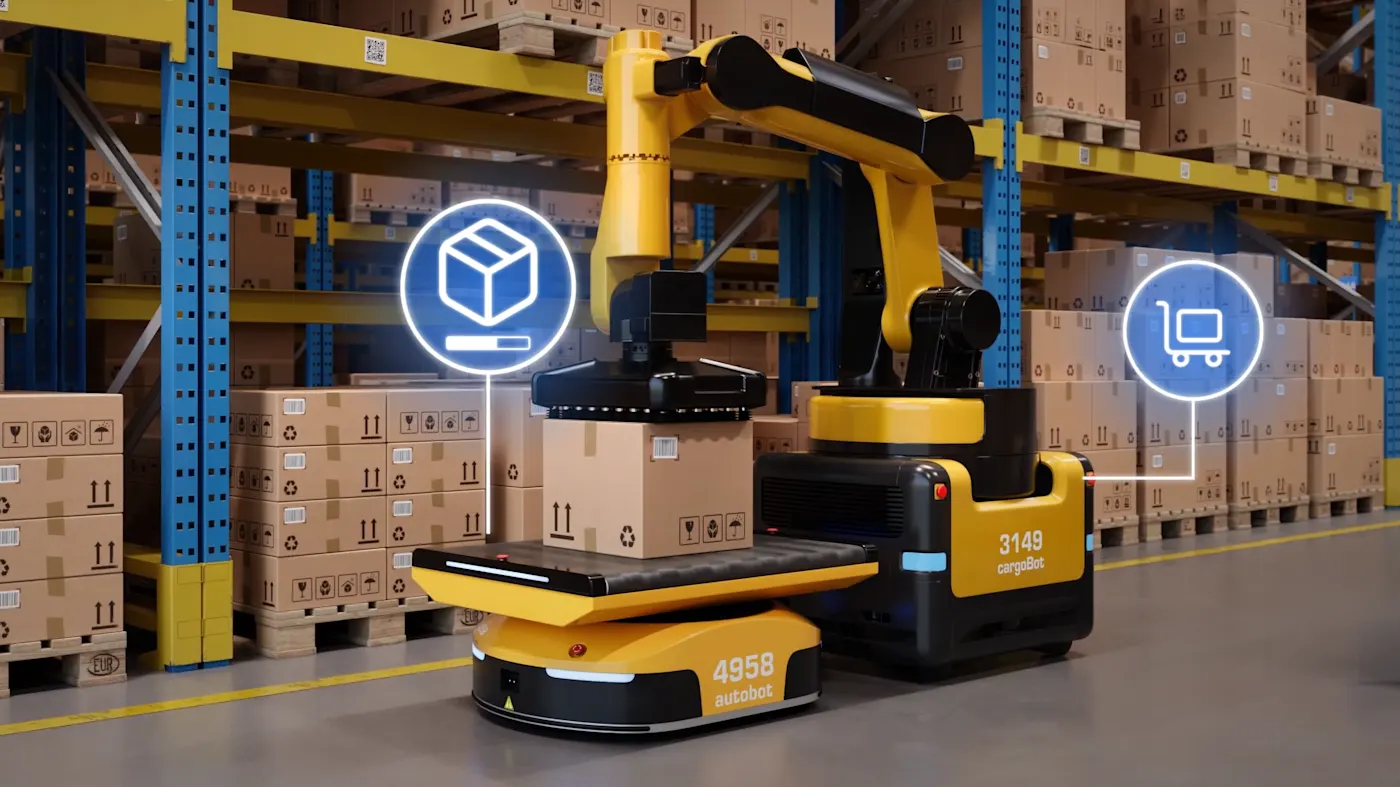
Navigation is the primary function of cameras in AMRs and AGVs: they capture the environment, detect objects and obstacles, and thus enable autonomous movement in dynamic warehouse environments. Based on this, additional functions such as measurement, load-carrier handling, counting, or pick-and-place can be combined—depending on the specific application—without the need for additional sensors.
1. Basic application: Navigation& obstacle detection
AMRs use sensors, maps, and software to navigate dynamic environments. AGVs typically follow more predetermined paths and often use vision systems as a supplement, for example, for obstacle detection, docking, or pallet positioning.
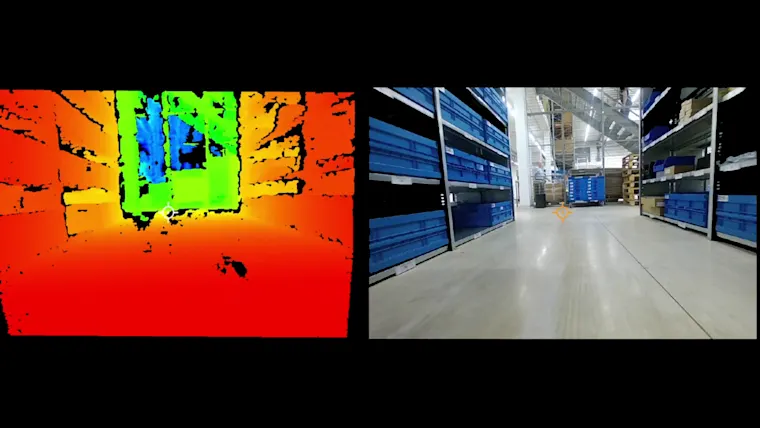
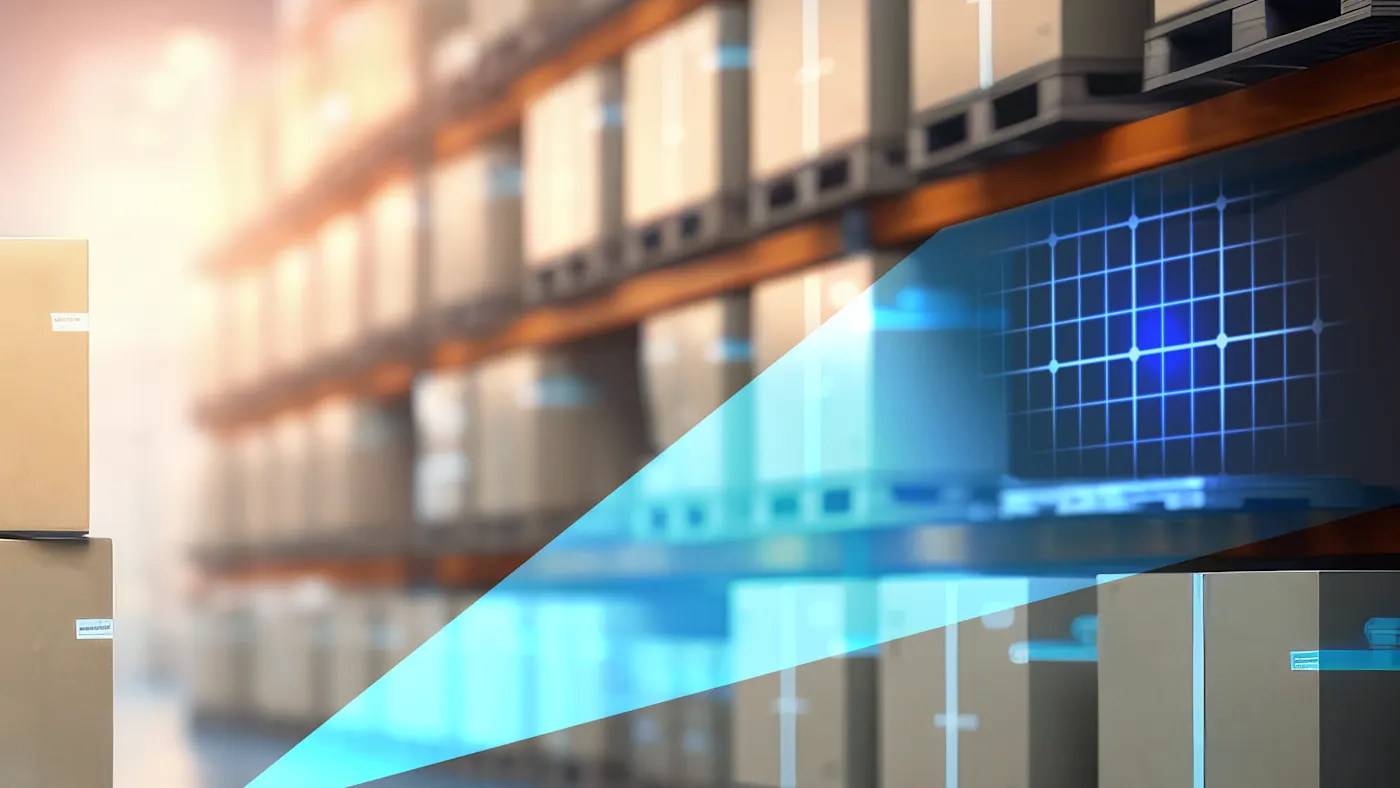
3D cameras acquire depth information, which SLAM algorithms (SLAM—Simultaneous Localization and Mapping) use to create precise maps of the environment. Obstacles such as other vehicles are detected and localized in real time—a prerequisite for collision-free navigation. This enables autonomous guided vehicles to operate safely and efficiently even in dynamic environments.
For more information on obstacle detection, see our use case, “Obstacle Detection by AMRs in Warehouse Logistics Using the Stereo mini.”
2. Additional applications that can be combined
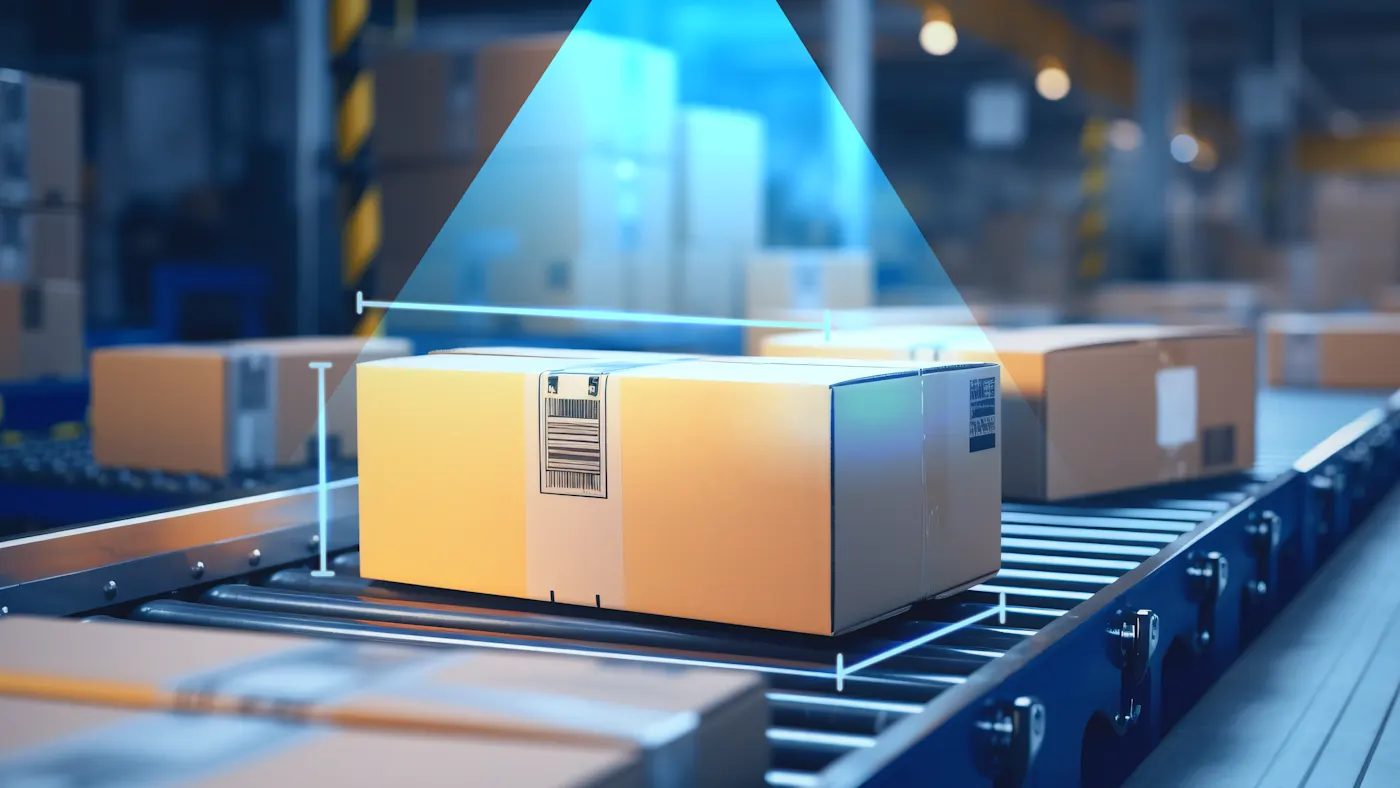
In addition to the main tasks of navigation and obstacle detection, combine other applications that your AMR or AGV can handle. These applications are flexibly expandable and can be combined with one another, since the same camera already provides environmental and object data—without the need for additional hardware.
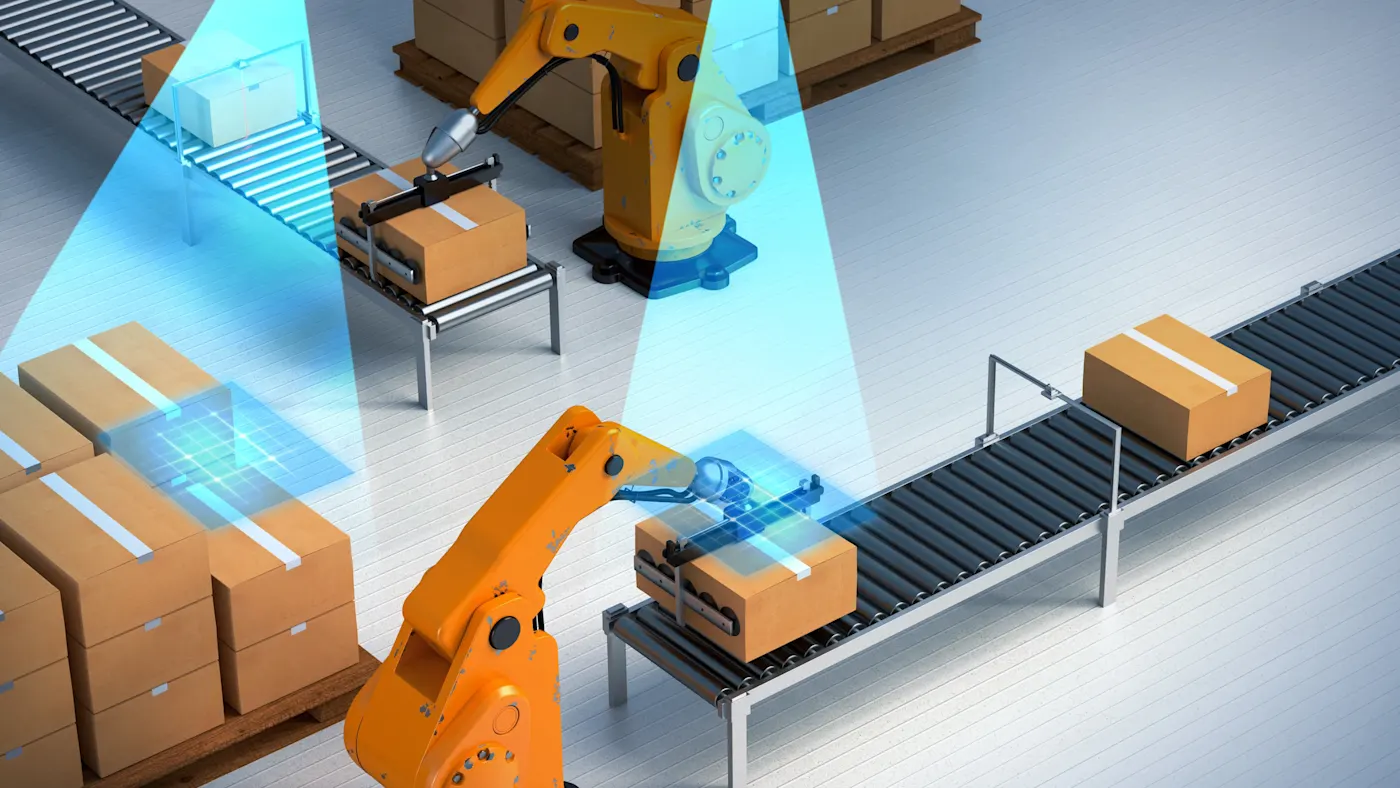
What sets cameras in AMRs and AGVs apart in warehouse logistics
When using vision systems with AMRs and AGVs in warehouse logistics, precise image processing, reliable integration, and flexible adaptation to dynamic environments are essential.
Precise real-time localization and navigation (SLAM)
AMRs and AGVs require precise location data to reliably navigate their environment. Detailed three-dimensional information about the environment is necessary for localization, mapping, and environmental perception.
Our 3D cameras provide the following capabilities:
3D depth data, ideal as input for SLAM and navigation algorithms
Recognizing dynamic environments: People, obstacles, or new warehouse layouts
In the warehouse, robots and transport systems encounter an environment that can change rapidly. Complex warehouse areas therefore require intelligent and flexible process control.
Our 3D cameras provide data in real time and can readjust even under changing conditions. They
support the navigation of mobile robots,
provide reliable depth data for collision avoidance, thereby ensuring smooth operations and
also capture semantic and contextual information such as colors, signs, and object shapes.
Reliable image processing under varying lighting conditions (indoor and outdoor)
Variable lighting conditions pose a particular challenge in logistics applications—both indoors and outdoors. To help overcome these challenges, our 3D cameras offer:
High dynamic range and flexible exposure settings
Global shutter, HDR, and robust sensor architecture for continuous operation in warehouses
A variety of camera technologies are available, depending on lighting, working distance, surfaces, reflections, and installation conditions
Easy integration into existing AMR and AGV systems
In practice, integration into the system is also a significant cost factor. To minimize effort and costs, Basler cameras provide the following support:
Standardized industrial interfaces such as USB 3.0, GigE, or GMSL
Flexible and well-established software integration—this reduces the integration effort and complexity
Up to IP67 protection class
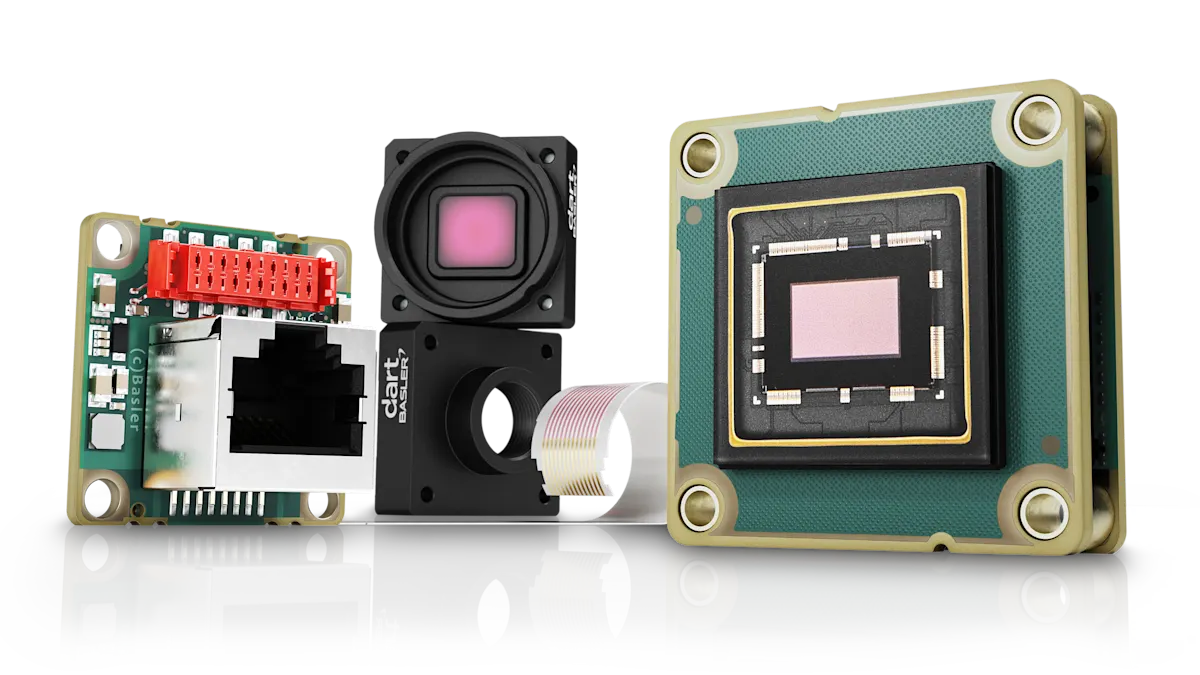
Compact form factor of the 3D Stereo mini and dart M 2D area scan camera for embedded solutions, as well as a modular design concept for the dart M
When is 3D appropriate, and when is 2D sufficient?
3D technology is relevant for AMRs and AGVs when distance, height, volume, position, free space, or spatial relationships need to be detected—for example, to support obstacle detection and collision avoidance.
2D technology is ideal for reading barcodes, labels, textures, or simple image information.
Basic principle
Basic principle
Depth information from two camera perspectives
Basic principle
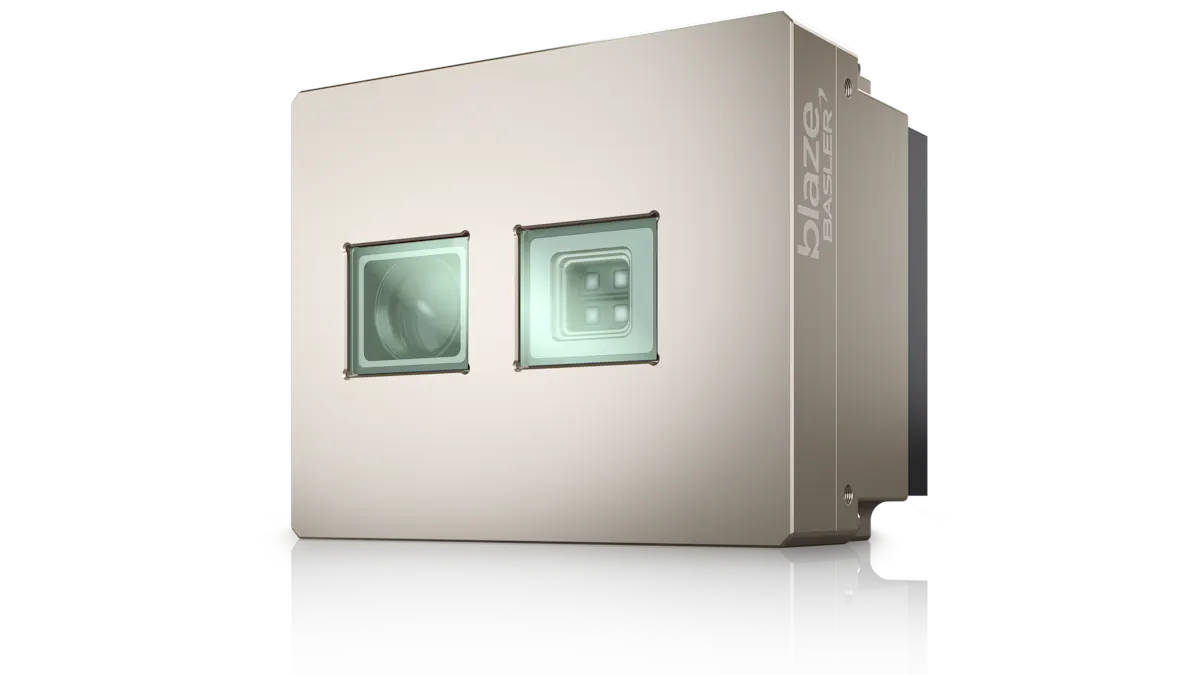
Distance measurement using time-of-flight
Basic principle
2D image data, no depth measurement
Detailed information
Detailed information
Detailed information
Detailed information
Typical strengths
Typical strengths
Spatial scene detection: obstacles, pallets, docking, free space check
Typical strengths
Fast depth detection even on homogeneous surfaces; volume& and fill levels
Typical strengths
High resolution; detection of codes, labels, text, color, and contours
Embedded ability
Embedded ability
Compact design and lightweight
Embedded ability
Assembly on the robot
Embedded ability
Modular board-level camera
AMR/AGV applications
AMR/AGV applications
Navigation, SLAM, obstacle detection, docking, pallet detection
AMR/AGV applications
Dimensioning, fill level detection, presence detection, large objects/areas
AMR/AGV applications
Barcode/DMC, OCR, label verification, presence tracking
Navigation
Navigation
Highly relevant—primary source of 3D data for perception
Navigation
Depending on the application& and system architecture
Navigation
Only using markers, codes, and visual features
Dimensioning
Dimensioning
Possible, depending on the working distance& accuracy
Dimensioning
Strong field of application (volume, fill level, position)
Dimensioning
No, only with additional sensors
Code recognition
Code recognition
RGB/2D can be used as a supplement
Code recognition
No
Code recognition
Strong field of application
Please note
Please note
Texture, lighting, reflections, field of view, computational complexity
Please note
Reflections, ambient light, active sensor interference, working distance
Please note
Lighting, sharpness, focus, reading distance, lack of depth information
Our cameras for AMRs& and AGVs
Find the right camera for your application or use ourVision System Configuratorto configure your system.
FAQ: Answers to questions about cameras for AMRs and AGVs
AMRs navigate more flexibly and adjust their routes more dynamically. AGVs typically follow more predetermined paths. Cameras can support both systems, for example, in environmental perception, obstacle detection, docking, identification, and load monitoring.
It depends on the situation. 3D cameras provide additional image and depth data for perception and automation functions. Whether they replace or supplement other sensors depends on the application, system architecture, and safety requirements.
2D is suitable for codes, labels, OCR, color, contours, and visual identification. 3D becomes relevant when distance, height, position, volume, free space, or spatial relationships need to be measured.
⇒ For more information, read our knowledge article "Spoiled for Choice: 2D or 3D Camera?"
Stereovision is particularly well-suited for:
Spatial scene capture
Obstacle detection
Docking
Pallet and load carrier detection
Data source for SLAM/navigation algorithms
ToF is particularly well-suited for:
Fast depth images
Volume measurement
Fill level detection
Position detection
Especially in larger scenes or on uniform surfaces
The specific choice depends on the working distance, surface, lighting, reflections, accuracy requirements, and installation conditions.
Relevant criteria include:
Working distance
Field of view
Resolution
Depth accuracy
Lighting
Surfaces
Movement
Installation position
Interface
Protection class
Computing platform
Software integration and safety concept for the overall system
Examples of camera applications for AMRs& and AGVs in warehouse logistics
In numerous applications, cameras support AMRs and AGVs to make logistics processes more efficient and safer. Find out more about our solutions.