Real-time Capability in Image Processing
In industrial robotics, quality control, or high-speed processes, the real-time capability of a vision system is crucial for efficiency and process stability. To achieve stable response times in the microsecond range, a deterministic overall system consisting of coordinated, real-time-capable vision hardware and software helps.
Last updated: 12/16/2025
Reading time: approx. 11 Minutes
Key facts about real-time capability
Real-time capability is crucial for precise, stable, and efficient image processing in industry.
Low latency ensures exact synchronization and fast response in high-speed processes.
GigE is suitable for flexible applications with moderate latency requirements and simple integration.
CoaXPress (CXP) offers extremely low latency and high bandwidth - ideal for high-speed and multi-camera applications.
Choosing the right interface and vision hardware is crucial for process reliability and quality.
Real-time camera transmission: the key to quick decisions
In modern automation solutions, microseconds are often decisive. If a vision system does not react quickly enough or does not work in precise synchronization, incorrect sorting, downtimes, or production errors occur. A stable, low-latency camera with real-time transmission and optimized data transfer is therefore the prerequisite for the shortest throughput times with maximum process stability.
Real-time capability: crucial for precise synchronization and minimal latency

Whether in robotics, optical quality control, or high-speed systems - real-time capability is essential for precise image processing.
It enables the
precise synchronization of all system components
from image acquisition and processing of the image data to the reaction in the process.
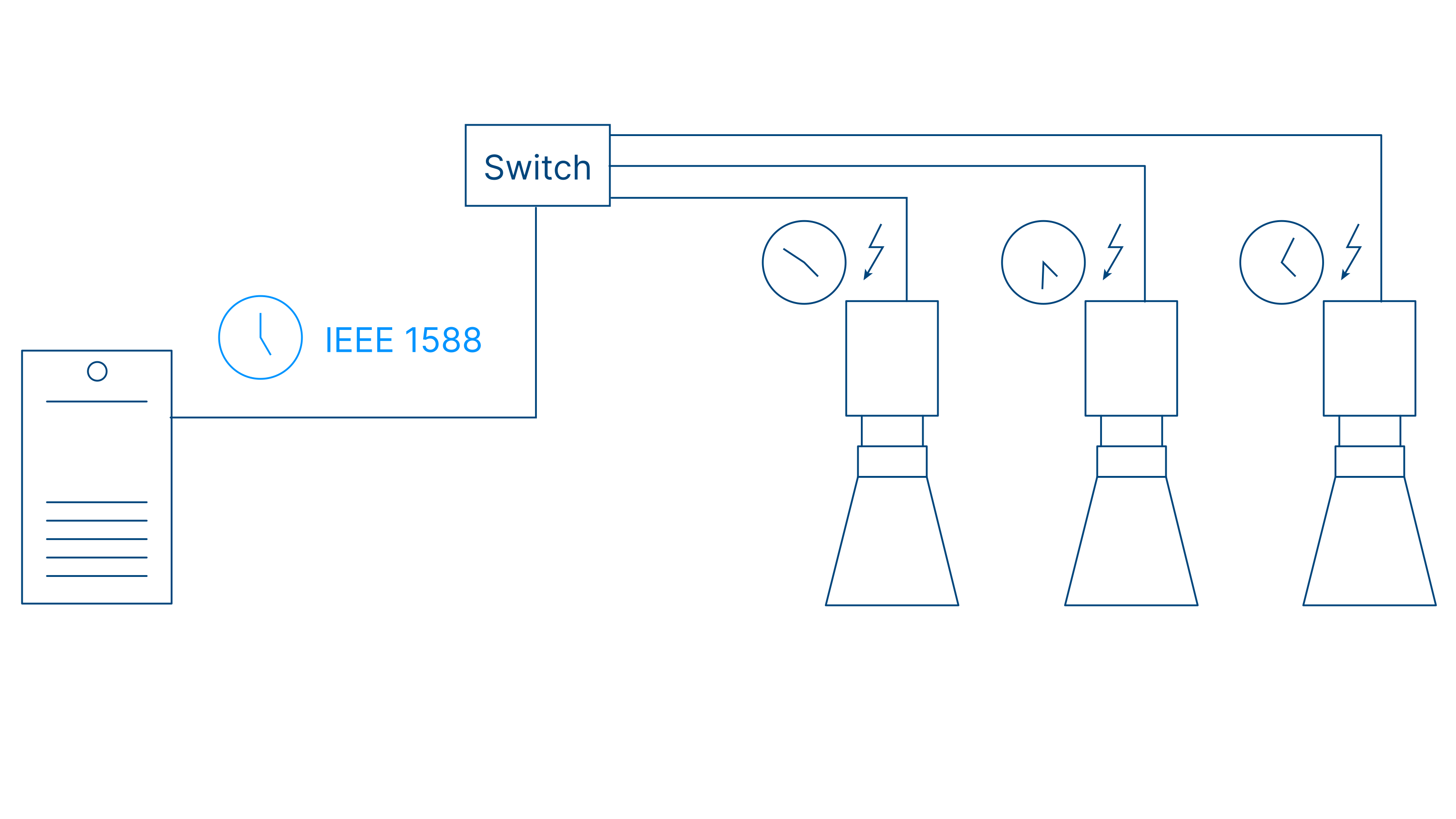
This ensures stable, predictable processes and is crucial in high speed applications or in situations where the camera has to be triggered externally along with other system components. The requirements for the maximum permissible response time between trigger signal and image acquisition vary depending on the application and can range from a few microseconds to seconds.
Requirements for latency in vision applications
In industrial image processing, latency is a decisive factor for process reliability and the quality of the results. Latency describes the time between a request and the receipt of a response, for example between the triggering of the camera and the arrival of the image data for processing. Depending on the application, excessive latency can lead to faulty inspections, missed cycle times, or inaccurate synchronization. It is therefore important to know the exact latency requirements of the respective vision task and to select the system accordingly.
Applications with tolerable, moderate latency requirements
For some applications, a slightly higher latency in the millisecond range is perfectly acceptable without compromising functionality or process reliability. In these cases, the focus is not on the immediate response, but on the reliable acquisition and evaluation of the image data.
Examples are
Document capture and archiving
Long-term analysis of production processes
Remote monitoring and remote maintenance
Security and surveillance cameras
In such scenarios, latency times in the millisecond range are usually sufficient and do not represent a limitation.
Applications with extremely low latency requirements
In certain industrial image processing applications, the latency must be in the microsecond range in order to ensure error-free and precise process control. Especially in high-speed and synchronized processes, even a slight delay can lead to quality losses or production errors. Typical examples are
High-speed inspection on conveyor belts
Pick-and-place robots with image processing
Real-time quality control in production
Synchronized multi-camera systems for 3D measurements
Fast and deterministic image transmission and processing is essential here.
Suitable interfaces for real-time applications: GigE and CoaXPress (CXP)
GigE cameras offer a solid solution for applications with moderate latency requirements and lower bandwidths. They can be used flexibly and support longer cable lengths, but are less suitable for real-time processes with very low latency requirements.
CoaXPress (CXP), on the other hand, enables extremely low latencies and high data rates, making it ideal for demanding high-speed and multi-camera applications. The interface should therefore always be selected based on the specific latency requirements and the desired throughput.

Criterion | GigE (Gigabit Ethernet) | CoaXPress (CXP) |
Typical latency | Millisecond range | Microsecond range |
|---|---|---|
Bandwidth | Up to 1 Gbit/s (GigE), 10 Gbit/s (10GigE) | Up to 12.5 Gbit/s per cable |
Cable length | Up to 100 m (standard CAT cable) | Up to 40 m (at maximum bandwidth) |
Synchronization | Limited, depending on the network | Very precise, hardware-based |
Multi-camera support * | Large numbers possible, but with network limitations | Limited number, high scalability |
System costs | Inexpensive, standard hardware | Higher, CXP frame grabber required |
Typical applications | Monitoring, document capture, remote monitoring | Robotics, ophthalmology, surgery, high-speed inspection, 3D measurement, real-time quality control |
Integration | Simple, widely used | More complex, specific components required |
Suitable for | Applications with tolerable latency | Applications with extremely low latency |
* Cascadable switches allow a large number of cameras to be installed in one system with GigE, but the network limitations mean that real-time capability and latencies have to be compromised.
With CXP, cameras can be controlled very well and precisely. The 1:1 connection relationship, the limited channels on the frame grabber, and the limited PCIe slots in the PC make a multi-camera application very time-consuming and complex.
Multi-camera applications with GigE Vision 2.0
Achieve perfect image synchronization for your real-time multi-camera systems. With GigE Vision 2.0, you can do this without additional cables. Read more about this in our white paper.
To the multi-camera white paperThe challenges of real-time processing in machine vision
The decisive factor for image quality is a low latency, i.e. the smallest possible time delay between receiving the trigger signal and image acquisition. In addition, this time delay (jitter) must not vary, i.e. there must be no jitter with regard to the times of the image acquisition. In an application with high frame rates (e.g. with 300 frames per second), the required latency times are in the range of microseconds.
Latency and jitter
The biggest challenge is to keep latency times as low as possible. At the same time, the time delay (jitter) must not vary. High latency and jitter can significantly affect decision accuracy and process speed.
Data volumes and bandwidth
The large volumes of data that need to be processed in real time require high bandwidth and powerful hardware. Inefficient data transmission and processing can lead to system bottlenecks and delays.
Synchronization
In multi-camera systems, any asynchrony of the cameras can lead to inaccurate data and errors in the image analysis. Precise control and synchronization of the camera signals is essential.
Processing
Real-time processing requires high computing power. Systems must execute complex image processing algorithms in fractions of a second. This places high demands on the processors and the entire system architecture.
Example: Warehouse automation - navigation in real time
Autonomous vehicles and mobile robots in warehouse automation require a consistently high real-time capability of the vision components used. Only when sensor data and image information are evaluated in real time can vehicles reliably detect their surroundings, detect obstacles at an early stage, and adapt routes dynamically. This fast and precise processing is essential to ensure a smooth flow of goods, short cycle times, and maximum productivity in 24/7 operation. Real-time capable vision systems are hence the key to safe, efficient, and flexible automation processes in modern logistics solutions.
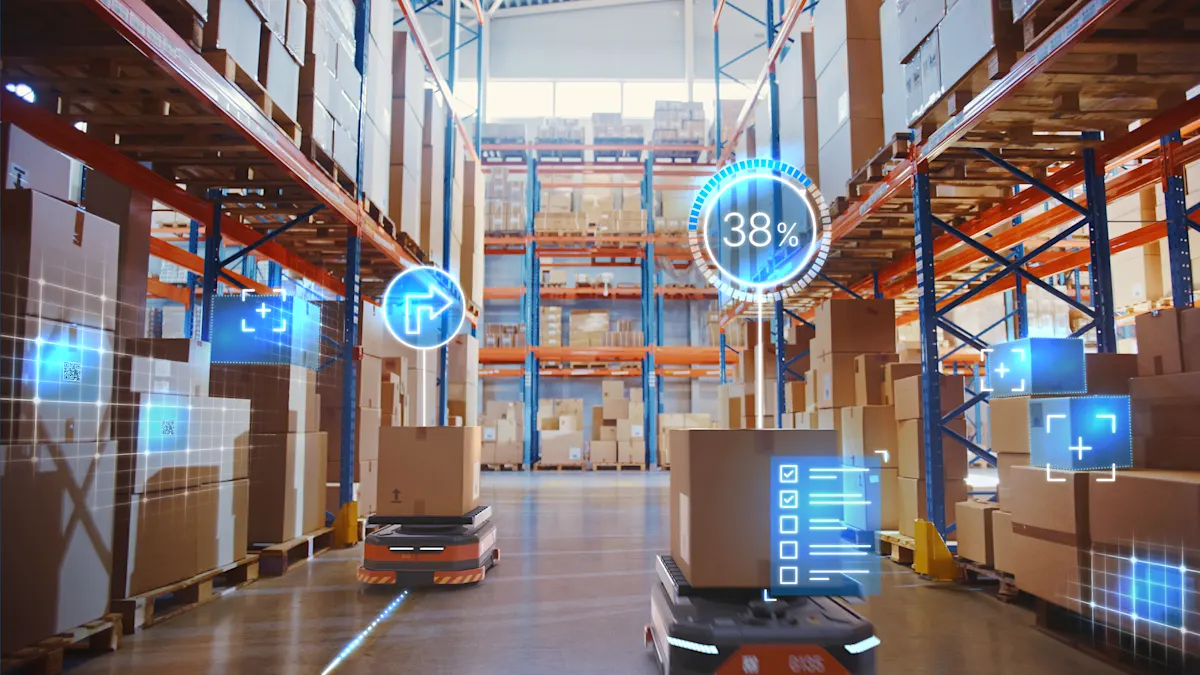
Real-time capability enables the exact timing of all system components - from camera image acquisition to processing and reaction. This ensures stable, predictable processes and is indispensable in applications where every millisecond counts. Real-time capability is crucial because it enables precise and repeatable synchronization between the camera, data processing, and actuators. This is the only way to reliably and stably control time-critical processes such as sorting, positioning, or ejection.
Light for precise synchronization
Extremely low latencies are essential in line-based vision applications, robotics, and medical technology. Pulsed light must be activated exactly in the microsecond range for image acquisition to ensure maximum exposure and efficiency. In dynamic processes, such as on conveyor belts or in ophthalmology, any delay has a direct impact: The object is not in the desired position or a laser cannot be switched off in time. Only precise synchronization and minimal latency can ensure process reliability in these demanding applications.
Vision hardware and software for real-time-capable image processing systems
Coordinated Basler hardware and software products provide a reliable solution for real-time image processing. The choice between GigE and CXP depends on the individual latency, bandwidth, and synchronization requirements of your application.
Real-time capable GigE vision system with Basler components
A real-time capable GigE Vision system from Basler is typically based on the following hardware and software components:
Basler GigE camera:
Suitable for industrial use GigE cameras from Basler offer high image quality and support frame rates of up to several dozen images per second. They have trigger inputs for precise triggering and are designed for continuous operation.Standard network infrastructure:
The connection is made via commercially available CAT cable and Gigabit Ethernet switches. This enables flexible cable lengths and easy integration into existing IT structures.Basler GigE interface cards (optional):
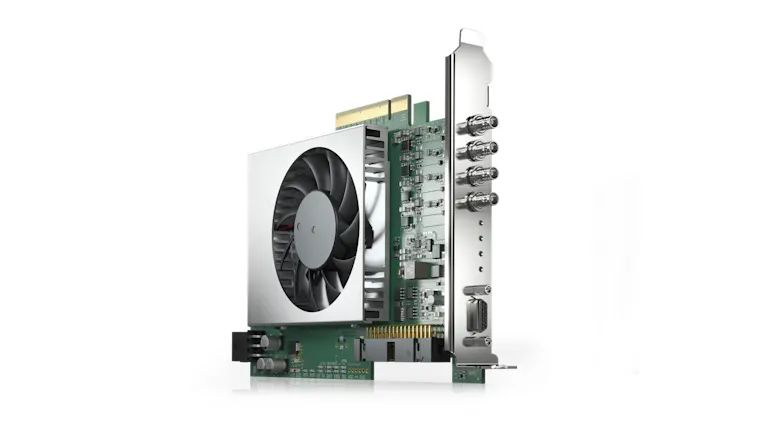
For more demanding real-time requirements, a Basler PC cards which forwards the image data directly to the host system with minimal latency (from Q1/2026).Basler pylon Software Suite:
The pylon software enables the configuration, control, and evaluation of the cameras. It offers a standardized API for image acquisition, trigger control, and real-time data transmission.VisualApplets (optional):
VisualApplets can be used for FPGA-based pre-processing. This allows image processing functions to be executed directly on the Basler GigE ace 2 cameras and reduces the load on the CPU.
Sample calculation GigE system
If a camera operates at a frame rate of 20 frames per second (fps), an image is captured every 50 ms. Real-time processing is therefore in the millisecond range.
Such a GigE vision system is suitable for applications with moderate latency requirements, flexible infrastructure, and simple scalability. Typical application areas include production monitoring, quality control, and document capture.
Frame rate:
Exposure time per frame:
=>
GigE processing in the millisecond range.
Real-time capable CoaXPress vision system with Basler components
A real-time capable CoaXPress system from Basler usually consists of the following hardware and software components:
Basler CXP camera:
High performance CXP-12 cameras CXP cameras from Basler deliver image data with extremely high bandwidth and minimal latency. They are designed for demanding, real-time applications and high frame rates.Basler CXP frame grabber:
The frame grabber receives the CXP signals directly, processes them on a hardware basis, and forwards the image data to the host system with microsecond latency. It supports the synchronization of multiple cameras and external signals.CXP cable and Power-over-CXP:
The connection is made via high-quality Coaxial cablethat combine data and power supply (Power over CoaXPress). This reduces cabling costs and increases reliability.Basler pylon Software Suite:
The pylon software is also used here. It enables precise control, synchronization, and real-time evaluation of the CXP cameras and frame grabbers.VisualApplets: VisualApplets is ideal for real-time pre-processing directly on the frame grabber. This allows complex image processing algorithms to be executed without additional CPU load.
Sample calculation CXP system
In the CXP range, cameras work with higher frame rates of 400 fps on average, meaning they deliver an image every 2.5 ms. Real-time processing is therefore in the microsecond range. There is often processing on a line basis, not on an image or frame basis.
Based on an average 9 MP sensor and a square image resolution of 3000 px * 3000 px, the CXP system processes the lines in 0.8 microseconds or 833 nanoseconds.
This CXP system is ideal for synchronized multi-camera setups, high-speed inspections, and applications that require extremely low latency and maximum data rates.
Frame rate:
Exposure time per frame:
Sensor resolution:
Number of lines:
Processing time per line:
CXP processing in the microsecond range. The formula shows the relationship between frame rate, exposure time, and the resulting line processing time of a 9 MP sensor.
Matching Basler products
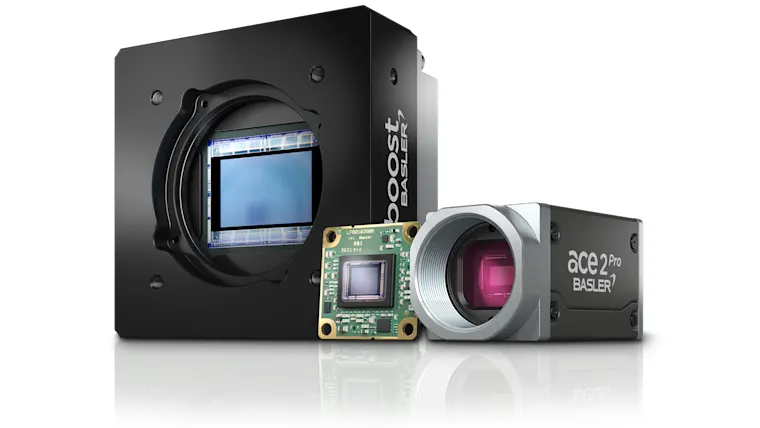
A selection of products for your real-time vision system

Frequently asked questions about real-time capability
A camera that transmits image data with minimal latency and can be triggered deterministically via FPGA-based hardware timing.
Currently the fastest Basler line scan camera racer 2 L works with a line frequency of 200 kHZ, i.e. a transmission per line of 5 microseconds.
CoaXPress and GigE with optimized parameters (e.g. packet delay control) are powerful interfaces for real-time capable industrial cameras and vision systems.
By using FPGA processing (e.g. with VisualApplets), fast interfaces, pylon software, and precise synchronization of all components.