Choosing the Right Industrial Camera Interface: A Comprehensive Comparison
Choosing the right interface ensures smooth data transfer and optimal vision system performance. Key factors like bandwidth, cable length, and camera count matter when choosing the best option. This guide compares GigE/5GigE, USB 3.0, and CXP-12 to help you understand their benefits and make informed decisions for upgrades and optimize your system.
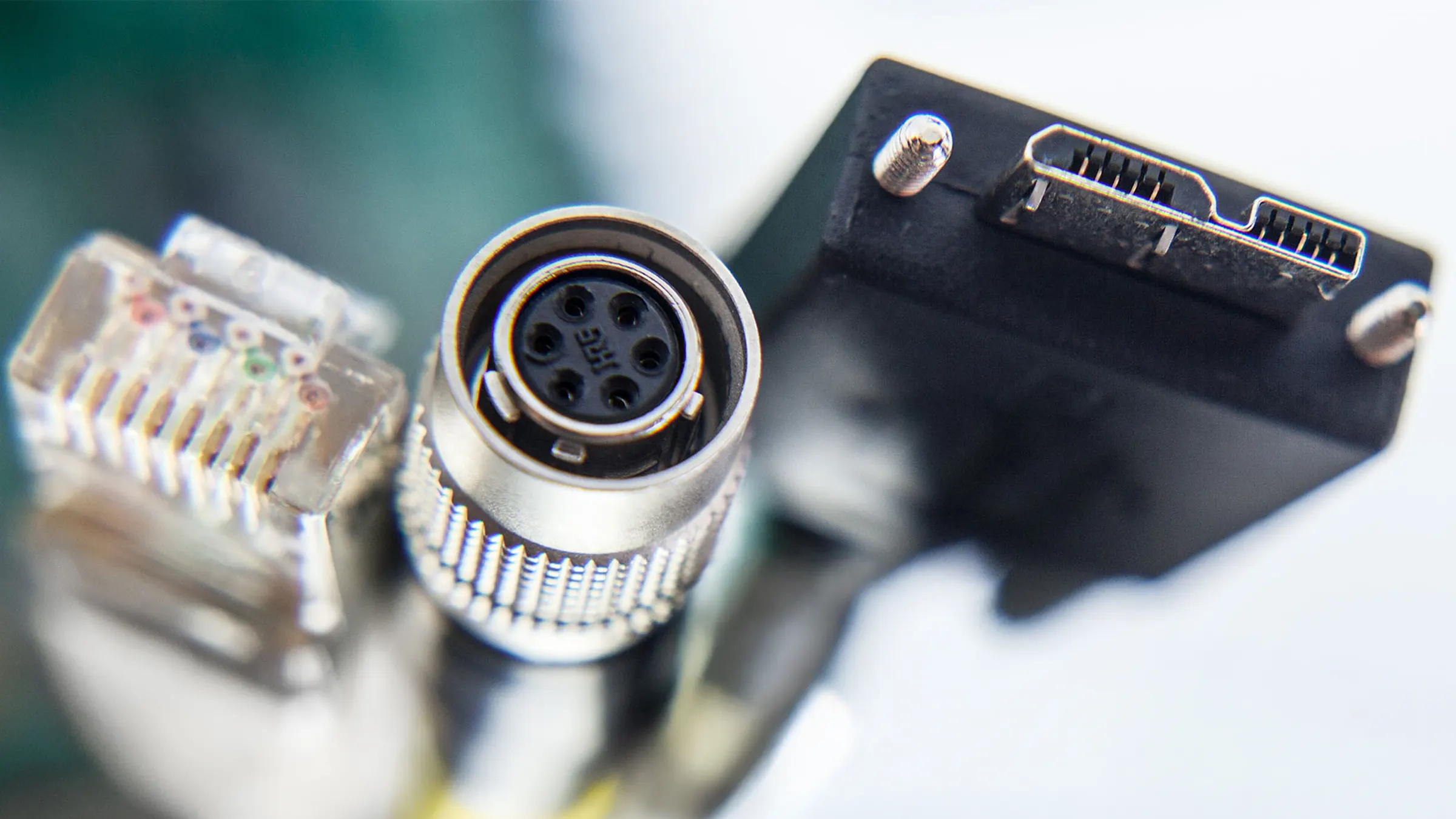
CoaXPress 2.0 as an alternative to Camera Link
Camera Link and CoaXPress are used in applications that require high data rates or resolutions. However, upgrading to CoaXPress 2.0 brings higher performance and lower system costs. In our white paper, we cover the following topics, among others:
Camera Link and CoaXPress: two interfaces for high data rates
Detailed comparison of Camera Link and CoaXPress 2.0
What should be considered when upgrading?
What are camera interfaces in machine vision?
Camera interfaces bridge cameras and PCs, transferring image data from the sensor to the software for processing. Selecting the right interface balances performance, cost, and reliability based on factors like bandwidth, cable length, and multi-camera requirements. Modern standards like GigE Vision, USB3 Vision, Camera Link and CoaXPress ensure compatibility with standard-conformant components, while older technologies like FireWire and USB 2.0 are less suitable for today’s advanced systems.
Popular industrial camera interfaces
At Basler, we actively shape camera interface standards and routinely observes and assesses technological changes in the machine vision market. GigE Vision, USB 3.0 and CoaXPress serve well - today and in the future, in diverse industrial environments.

How to choose a camera interface: key criteria


Key features & benefits of major camera interfaces

GigE / 5GigE: long-distance flexibility
Bandwidths up to 5Gbps
Cable lengths up to 100m
Ideal for multi-camera setups
Benefits
GigE supports flexible layouts with its long cables and robust performance. For higher resolutions and frame rates, 5GigE offers 5x faster data speeds while maintaining compatibility with existing GigE setups.

CXP-12: maximum bandwidth for real-time applications
High data rates of up to 12.5 Gbps per channel
Maximum cable lengths of 40 m
Ideal for real-time, low-latency applications
Benefits:
CXP-12 accelerates data transfer, supports high-resolution CMOS sensors, and reduces CPU load with image pre-processing. Upgrade seamlessly from older Camera Link or CXP standards for cutting-edge performance.
Discover our CoaXPress portfolio

USB 3.0: well-rounded for various applications
Bandwidths of up to 380 MB/s
Low latency and jitter times
Highest reliability and stability, and plug-and-play
Benefits:
USB 3.0 balances speed and convenience, making it suitable for diverse applications. Its industrial-grade stability and simplicity make it a robust choice for many systems.
Choose the right camera interface with Interface Advisor
Upgrade to next-gen camera interfaces
Transitioning to a newer camera interface generation offers significant benefits in performance, speed, and integration simplicity. Whether you’re moving from USB 3.0/GigE to 5GigE or from Camera Link/CXP-6 to CXP-12, each upgrade path is designed to enhance system capabilities while ensuring a smooth transition. The following guide explores the key reasons to upgrade, practical tips for implementation, and the advantages these interfaces bring to your next-generation vision systems.
Upgrade to 5GigE: faster, seamless, and future-ready
Moving from 1GigE or USB 3.0 to 5GigE unlocks 5x faster data speeds, boosting application performance and productivity. With 1:1 compatibility for GigE setups and easy integration from USB 3.0, upgrading is simple and efficient.
Why upgrade?
5x Faster Speeds: Improve efficiency and throughput.
Seamless Transition: Direct replacement for GigE setups.
Easy USB 3.0 Upgrade: Minimal changes required.
Upgrade tips
Cabling: Use Cat 5e or better for full performance.
Hardware Compatibility: Check switches, NICs, and system compatibility.
Software Updates: Ensure your stack supports 5GigE.

Highest speed, simplified integration
Switching from Camera Link or CXP-6 to CXP-12 is straightforward, offering up to 12.5 Gbps per cable, longer cable lengths, and future-proof performance for high-speed vision systems.
Why upgrade?
From Camera Link: higher bandwidth and frame rates with compact, efficient cabling.
From CXP-6: Effortless transition for legacy systems.
Upgrade tips
Check cabling and hardware compatibility.
Plan for scalability to meet future needs.

Basler’s camera interface portfolio
Basler delivers reliable, high-performance industrial cameras paired with expertly tested vision components for versatile applications. Whether you’re optimizing current setups or planning for future advancements, our portfolio ensures seamless upgrades, scalability, and top-tier efficiency for your vision systems.


