Camera Interfaces and PC Cards for Multi-Camera Systems
We offer various interfaces for maximum performance in your multi-camera system: CXP-12, USB 3.0, or GigE. The right PC card ensures stable image transmission for every application.
Last updated: 09/03/2026
Reading time: approx. 9 Minutes
Key facts about camera interfaces and PC cards for multi-camera systems
Choosing the right camera interface (CXP-12, USB 3.0, or GigE) and PC card is crucial for the performance, scalability, and reliability of multi-camera systems.
GigE is considered a particularly suitable interface for multi-camera setups, as it enables long cable lengths, high scalability, and flexible integration
PC cards (interface cards) are the central link between cameras and PCs. They play a key role in determining the data rate, system stability, and ease of integration - especially in more complex or larger multi-camera systems.
Comparing interfaces for multi-camera systems
The CXP-12, USB 3.0, or GigE interfaces each have their own advantages and disadvantages for multi-camera systems, which can justify their respective selection depending on the application area and usage scenario.
CoaXPress (CXP) is an established standard in industrial image processing that impresses with high speed, low latency, and maximum performance. Depending on the requirements, either a low-cost interface card or a technically advanced frame grabber is used.
Gigabit Ethernet (GigE) has been a leading standard in industrial image processing since 2006. Thanks to cable lengths of up to 100 m, easy multi-camera integration, and broad IT support, it is particularly preferred for expandable, versatile applications.
USB 3.0 can be used for industrial image processing thanks to the USB3 Vision standard established in 2013 withdefined interfaces and communication rules. USB 3.0 is a common standard in the consumer market, so it is supported by common hardware.
Interface Properties
Features | CXP-12 | GigE | • 2x USB 3.0 |
|---|---|---|---|
Bandwidth | Very high (12.5 Gbps per channel) | High (1-10 Gbps) | Standard (>350 MBps) |
Cable length | Up to 40 m (over 100 m with low bandwidth) | Up to 100 m (expandable via switches) | up to 8 m |
Plug-and-play | Yes | Yes | Yes |
Single-cable solutions | Data & Power via coaxial cable | Yes (PoE possible) | possibly with additional HW |
System flexibility | Precise synchronization (up to 4 cameras) | High scalability | Very flexible for single and small systems |
Hardware availability | Good availability | High scalability | Widely used |
CPU load | Low | 3-15 % (can be optimized) | Low |
Frame grabber required | Generally required | No | No |
Costs | High (due to frame grabber) | Low | Low |
Camera Size | Tends to be larger (due to sensor/heat) | Compact | Compact |
Multi-camera complexity | Limited (up to 4) | High scalability, but pay attention to CPU load | Difficult from >4 cameras (bandwidth limitation) |
Additional equipment | Frame grabber or interface card required | Interface card generally required for maximum performance | No additional cards required |
CPU performance | - | Standard approx. 10-15 % (can be optimized to 3-8 %) | - |
Role and selection of suitable PC cards for multi-camera setups
The correct selection and configuration of suitable PC cards (interface cards) is crucial for the reliable and scalable operation of multi-camera systems. They form the central link between machine vision cameras and industrial PCs, are installed in the PC, and digitize the analogue camera signals. They ensure smooth image capture and transmission, and have a significant influence on system stability and the image transmission rate.
Importance of PC cards in multi-camera systems
PC cards are the central component for multi-camera setups, unless they are simple USB 3.0 systems. They are absolutely essential for GigE and CXP setups and determine data rates, cable lengths, scalability, and ease of integration for the developer.
Tips for selecting suitable PC cards
If the on-board host controller of the PC is already allocated with peripherals, the use of dedicated PC cards is recommended to avoid disturbances.
Ideally, only tested and manufacturer-approved drivers should be used to ensure compatibility and system stability.
Dedicated chipsets on PC cards help to save computing powerand optimize performance.
Some PC cards supply the camera directly with power (PoE), making additional cabling and power supply units superfluous.
GigE as an example interface for multi-camera setups
GigE is ideal for multi-camera systems due to its technical and economic advantages. Selecting and configuring powerful interface cards is crucial for functional reliability, scalability, and simple integration in industrial environments.
Need for special PC cards: The standard PC usually only has one GigE port, which is often already used for control tasks. Additional PC cards are therefore required for multi-camera applications, which provide several ports and the required bandwidth.
Bandwidth and number of ports: Machine vision cameras require the full bandwidth of the respective port. Connecting multiple cameras to a single PC port via a switch is usually not practical due to bandwidth limitations. PC cards with multiple ports provide a remedy here and simplify the system.
Types of interface cards: In practice, GigE interface cards with 1, 2, or 4 ports and 1 Gbit/s bandwidth are usually used. Models with even more ports are rare, but can replace additional network components, remove potential sources of error, and reduce system complexity.
PoE function: Many interface cards support Power over Ethernet (PoE). This allows a one-cable solution to be implemented, which simplifies the power supply and reduces cabling costs.
Advanced solutions for large numbers of cameras: 10 Gbit/s interface cards are also available for setups with many cameras. This allows, for example, ten 1 Gbit cameras to be operated at full power or even more cameras via the use of a switch. Cameras with more than 1 Gbit require corresponding 10 Gbit/s interface cards, as 5 Gbit/s solutions do not currently meet the requirements. 10 Gbit/s cards are generally backwards compatible.
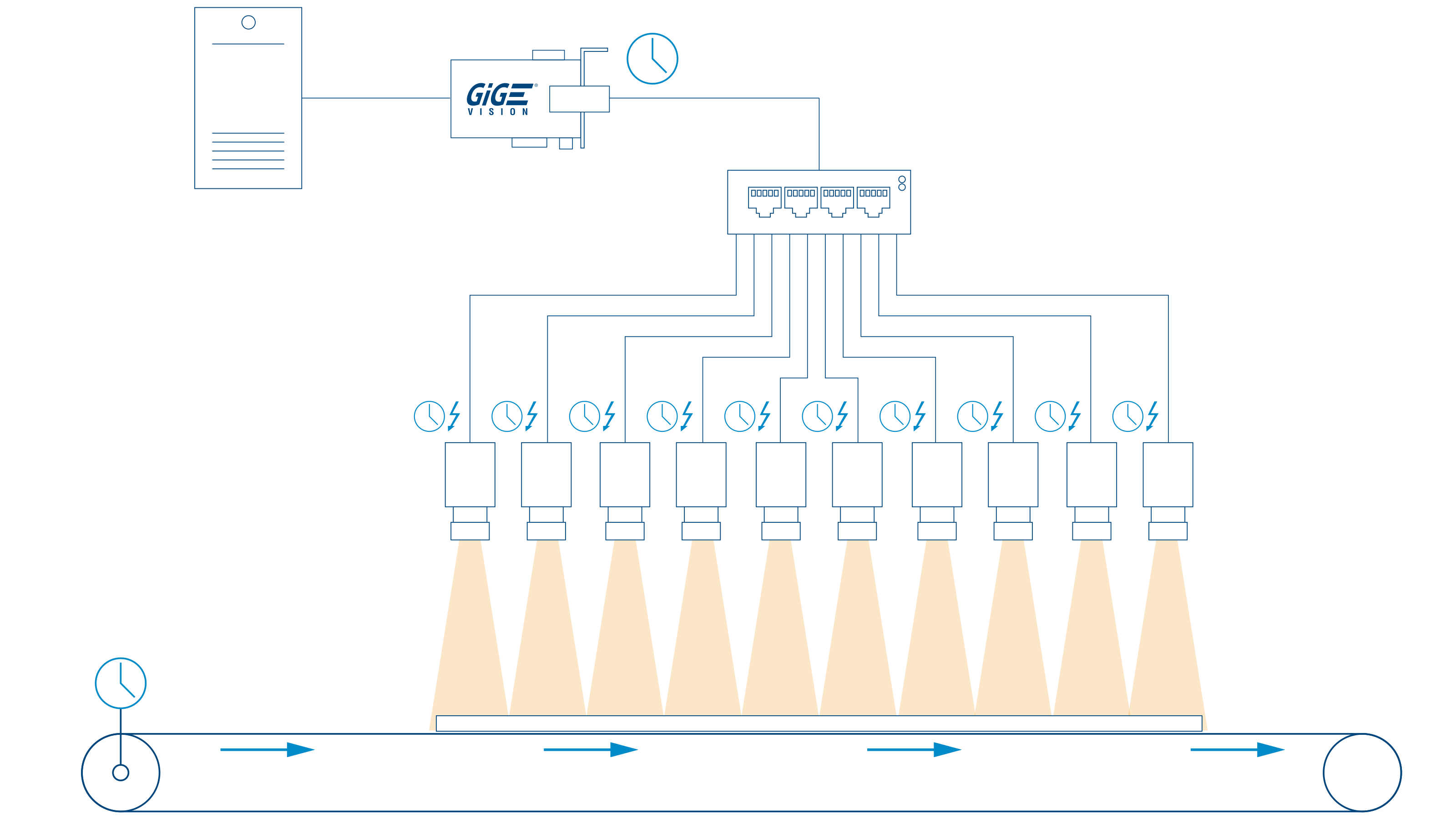
Application scenarios for multi-camera systems with GigE cameras
The decision for a direct trigger cable, PoE, or software triggering as well as the selection and number of interface cards determine the basic system architecture. As a result, the spectrum ranges from a simple solution with just one camera to a highly scalable multi-camera system.
The table shows which technology and infrastructure makes sense based on the number of cameras.
System size | Power supply / infrastructure | Triggering | benefits | Special features / Notes |
|---|---|---|---|---|
1-4 cameras | Trigger cable (direct) or optional PoE | Classic via trigger cable | Low complexity, simple cabling | PoE not absolutely necessary |
5-8 cameras | PoE of the interface card (one-cable solution) | About software triggering | Fewer cables, increased flexibility | Software triggering also possible <4 |
Up to 10 cameras | 10GigE interface card (1 port) + 10GigE switch | About Software | Scalability, full bandwidth | Each camera connected at 1 Gbit/s |
Up to 20 cameras | 10GigE interface card (2 ports) + 10GigE switch | About Software | Central management, maximum scaling | Two ports bundle up to 20 cameras |
Applications with multi-camera systems
The simultaneous use of multiple cameras is crucial in industrial image processing applications - for example for 3D triangulation, motion analysis, quality inspections, or assembly line applications. Whether its for the precise capture of a goal kick in football or for standard-compliant component inspection: multi-camera systems deliver all the relevant image data at precisely defined points in time.
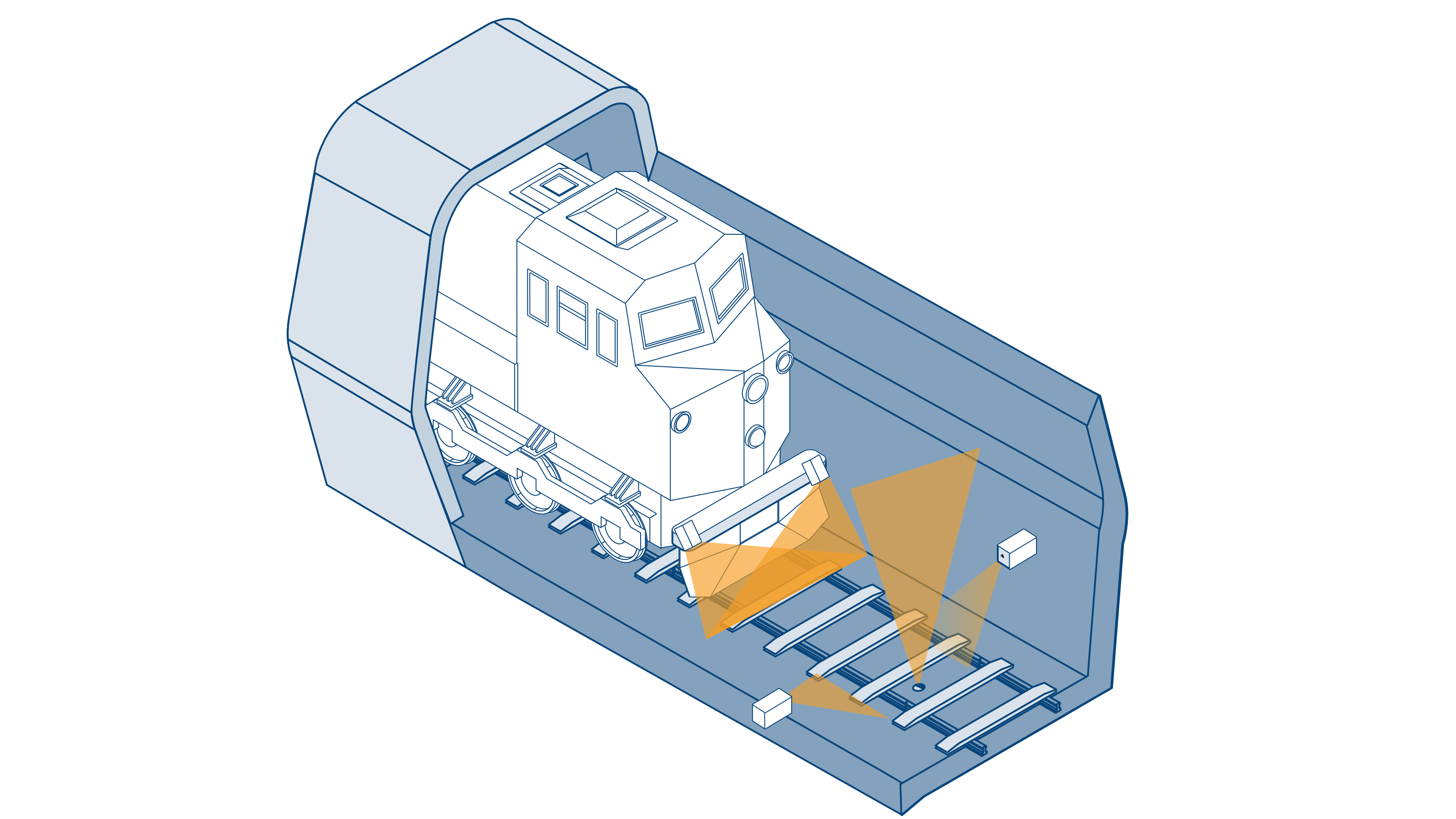
Railway Inspection
The regular inspection of railroad tracks is essential for safety in rail transportation. Modern inspection vehicles use four GigE cameras to inspect the top and sides of rails for defects.
Multi-camera setups are also used for quality control on moving trains: Three GigE cameras capture wagons and wheels from different positions - at speeds of up to 60 km/h.
The long cable runs enable a reliable connection between the vehicle system and the control room, thus ensuring efficient fault detection during operation.
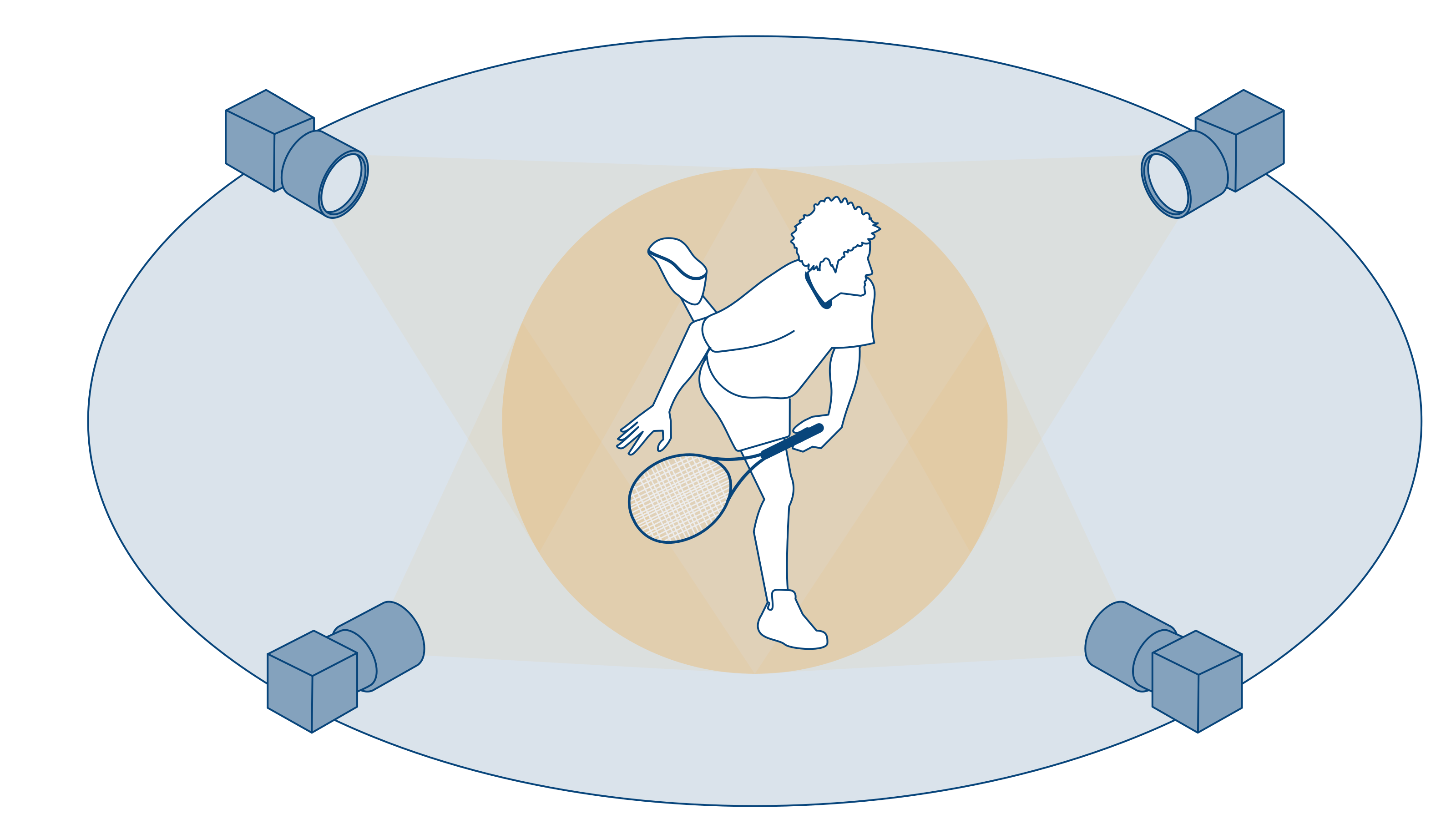
Sports applications
Camera-based analysis systems support tennis and soccer applications at the highest level. In tennis, five cameras record every movement of the ball and player and automatically evaluate all stroke variations.
In professional soccer, three GigE cameras seamlessly capture the entire pitch. The images are merged into a high-resolution video panorama in real time using software - including a pan and zoom function for complete control and detailed analysis.
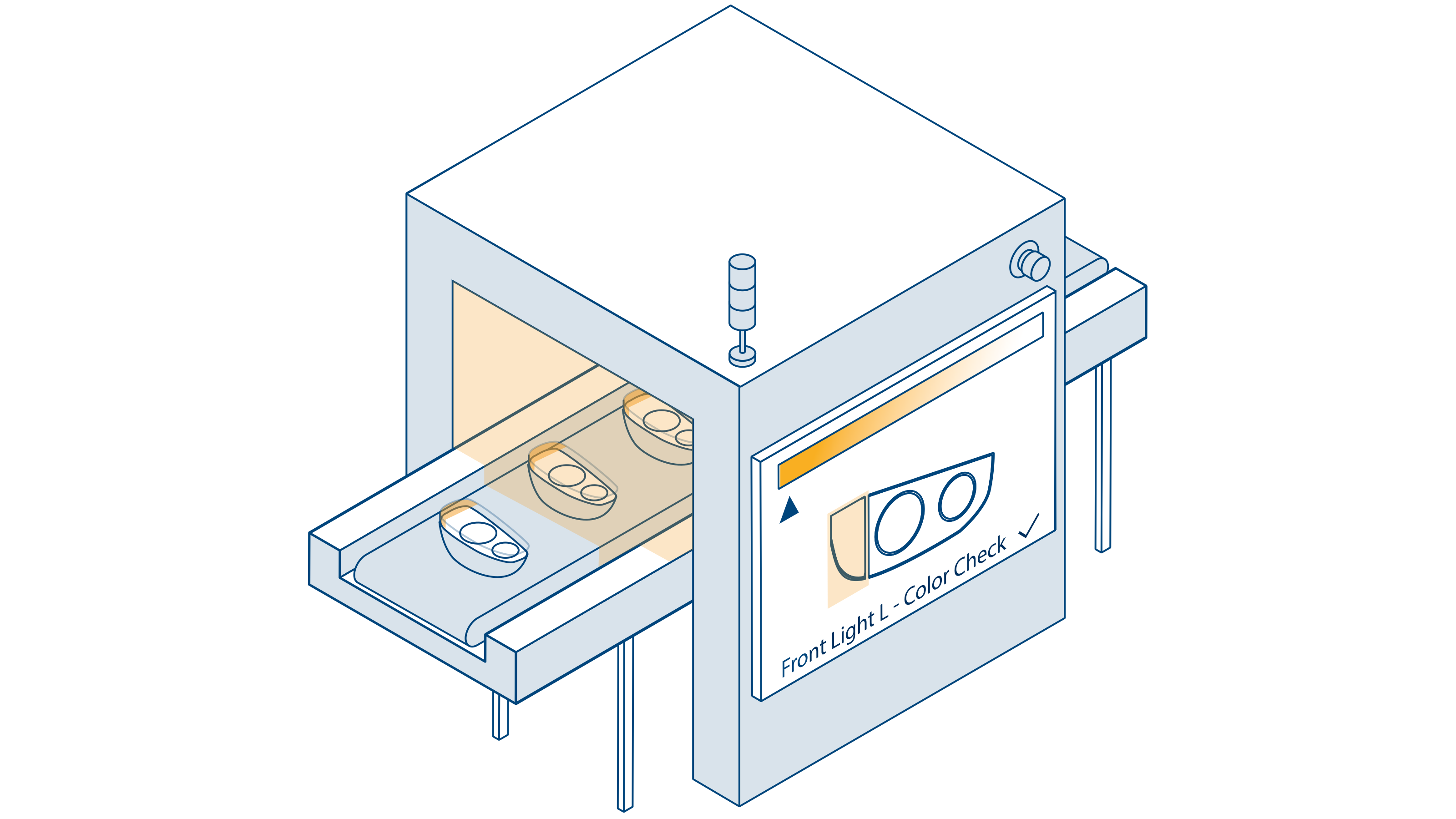
Assembly line application
In a typical automotive assembly line application, several GigE Machine Vision cameras check front frames for dimensional accuracy and completeness, for example. Optimized LED lighting ensures uniform illumination.
Each camera works in a precisely timed cycle and imaging takes just a few seconds. Power-over-Ethernet minimizes cabling effort and simplifies maintenance and installation.
It is controlled centrally via software. Fast electronic shuttering enables reliable imaging even at high belt speeds.
Logistics
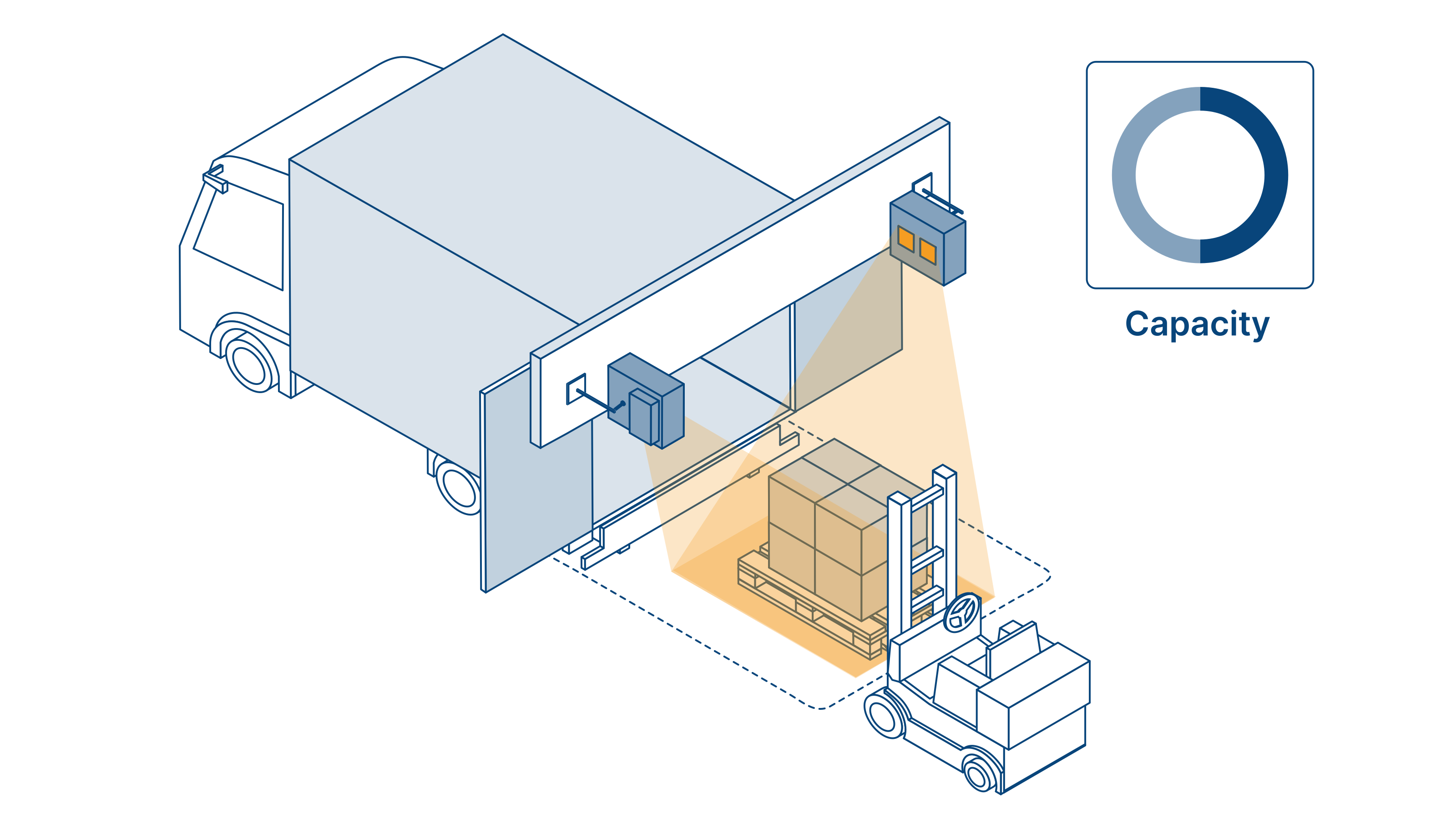
Fast and precise deliveries of goods are essential for efficient value chains.
Automated systems accelerate and secure logistics and material provision processes.
GigE interfaces with cable lengths of up to 100 meters make multi-camera systems ideal for large warehouses and contribute significantly to process optimization.
Retail
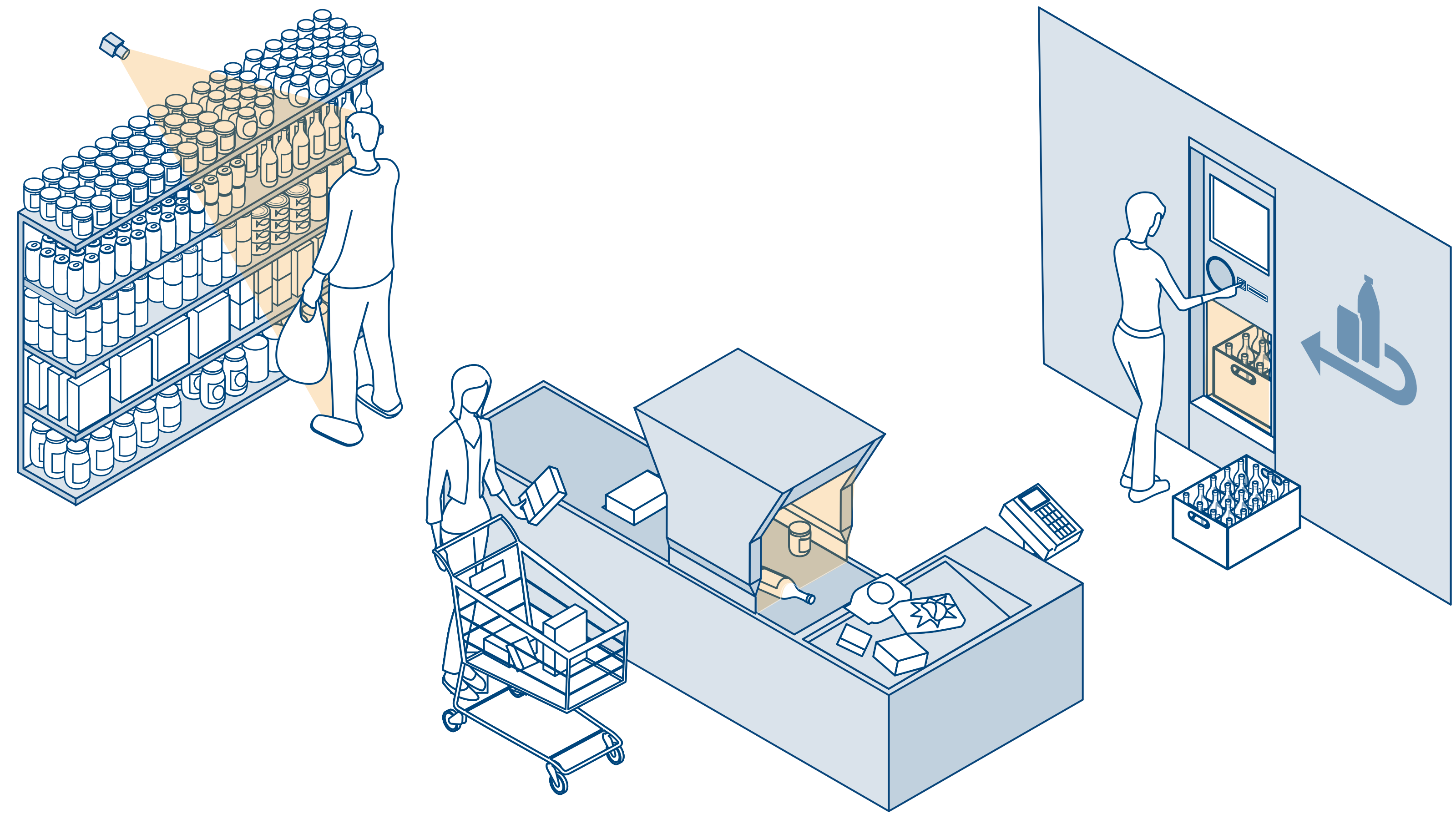
In the retail sector, camera systems are used in a variety of ways, for example in return machines, self-check-outs, and for analyzing customer behavior.
Multi-camera setups enable the recording of customer flows and dwell times and thus support the optimization of product presentation.
Thanks to GigE interfaces, the systems can be easily and flexibly integrated intolarge branches.
Summary
Unfortunately, there is no universal interface for all applications - interfaces such as GigE, USB, or CoaXPress will therefore continue to exist side by side in the future.
Tools such as the Interface Advisor help you find the optimum cameras and components for specific requirements.